
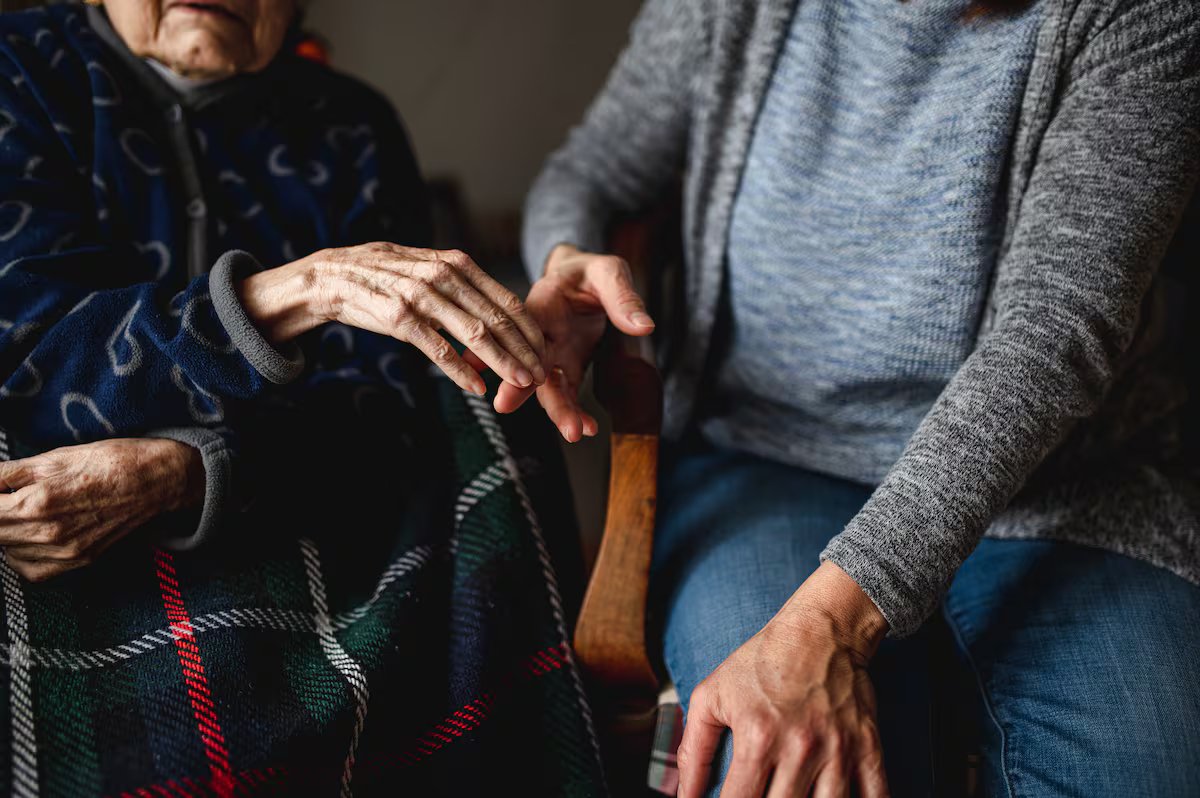
What exactly is aging? The question seems obvious, but perhaps it’s not, given that the organizers of a large scientific conference on the subject decided to pose the query to participating experts. After a week of dozens of presentations and talks during the Gordon Research Conference in Newry, Maine, 103 attendees responded to this and eight other questions that looked to gauge consensus within the industry. They received up to 10 different kinds of answers, of which the most popular was returned by just 30% of respondents. In reality, none of their study’s nine questions — which included what causes aging, when it starts and what constitutes rejuvenation — received an answer with more than 50% support from respondents. Consensus proved so elusive that respondents weren’t even in agreement on whether it was necessary in the first place.
“The most prevalent human mortality risk factor — aging — seems to still be hidden in the mist,” states the article summing up the survey’s results that was published in the journal PNAS Nexus and received coverage in Nature. The study has 82 co-authors, and recognizes that no treatment has been proven to slow the aging process in humans. The text also warns that, “When discussing the biology of aging with colleagues, we often assume we are talking about the same process, but clearly, we are not.” How can such an important process lack even an agreed-upon definition?
“This study aims to shake things up, but it stems from a desire to self-punish. Of course there are variations, but there is great consensus on aging,” says Manuel Collado, group leader of the cell senescence, cancer and aging laboratory at the Spanish National Research Center’s National Center for Biotechnology (CNB-CSIC) and Center for Research in Molecular Medicine and Chronic Diseases (CiMUS) at the University of Santiago de Compostela. Mariona Jové, professor at the University of Lleida, scientist at the Lleida Biomedical Research Institute and member of the biological sciences committee of the Spanish Society of Geriatrics and Gerontology (SEGG), says she is “surprised” by the results, because “pretty much everyone involved explains it in a similar way.” Still, for Juan Manuel Pérez Castejón, a geriatrician and vice-president of SEGG itself, although “while there is a consensus that aging can be studied experimentally, the ambiguity evident in the research may hinder studies and fragment project funding, due to the lack of a common roadmap.”
Beyond the existence of a consensus and its importance, what emerges upon reading through the survey’s questions and answers is the complexity of aging and its science. The study nods at its current state, its peculiarities of language, and the potential for debate regarding the opportunities and perhaps, obstacles contained in its philosophy and possibility of “excess.”
Questions of discord
So what is aging? “A loss of functionality of the cells and tissues with the passage of time,” sums up Collado. “A set of harmful changes that affect cells, organs and systems and leads to a loss of function and an increased risk of developing diseases,” Jové responds, in somewhat greater detail. Both definitions take function into account, and would be included in the most common group of responses given in the study, which accounted for 30%. But the study’s authors emphasize that there was no consensus on this point: among the different groups of responses, there were also those who focused on the accumulation of damage, others on overall changes, on health status, or on the increased risk of disease and mortality. A few defined the concept with a generic “deviation from the ideal state.”
And what of causes? “We know of many factors that influence aging, but we don’t know its ultimate reason,” admits Jové. For Collado, “there are many causes that ultimately lead to a general imbalance.” In the survey, the most common response to this query — provided by some 30% of those surveyed — had to do with the accumulation of damage. Others, however, referred to evolutionary issues, molecular factors or more general factors. Six people provided answers that were similar to Jové’s, with a more-or-less succinct “I don’t know.” For the authors, this lack of consensus on the definition and causes of aging “would clearly point to different research strategies and objectives.” From this, they conclude that “achieving a more unified understanding could promote progress in the field.”
This apparent lack of consensus has been around for a while. It was already being forecasted in 2020 by a team of Canadian researchers, who went even further by denying the possibility that a single word could define the concept. “We have a word to refer to aging, so we assume that science will prove us right and provide us with a phenomenon that fits our word. And, in a colloquial sense, this is undoubtedly true: no one can doubt that we see ourselves, our relatives and our friends aging. But is this colloquial usage scientifically justified? Is there really a ‘thing’ or a phenomenon we can call aging?” asked the authors, who were led by biologist Alan Cohen, in an article titled “What if there’s no such thing as ‘aging’?”
This Canadian team did not equivocate: “We argue here that our understanding of the biology is now sufficient to say definitively that this is not the case, that from a scientific perspective there is no such thing as aging, but rather a collection of disparate phenomena and mechanisms – sometimes interacting with each other – that relate in one way or another to our colloquial sense of the word. Accordingly, our desire to find a single reality of aging has created a great deal of confusion in the field.”
Their argument echoes the “What’s in a name?” posed to Romeo by Juliet, following her assertion “Thou art thyself though, not a Montague.” Or as the poet Aníbal Nuñez wrote, taking this concept to the extreme: “Para ser río, al río le sobra el nombre (To be a river, a river has no need of a name).” Language, or at least a general term, may be insufficient to capture all the nuances — known or unknown — yet at the same time, it shapes our view of the world and, in this case, of an incredibly complex field of research. We would need to add at least several qualifiers to “aging” to know exactly what we mean at any given moment. At the end of their article, the Canadian authors double down on their argument, concluding that “as the field moves toward potential anti-aging therapies, large numbers of human lives may depend on fully knowing what we are measuring and what the risks are of getting it wrong.”
Collado, however, puts such anxiety in perspective. “Almost any general biological process is difficult to define, but we know that language is not an exact representation of the world. Right now, this does not pose a real obstacle to progress.” In fact, he shifts the burden of responsibility; “What we need now is new knowledge that will allow us to gradually reconfigure that language.”
More discrepancies
The conclusions drawn from the first questions in the new study were actually somewhat misleading. Since they were open-ended questions, some responses simply emphasized one aspect over another, and could have been assigned to different groups despite essential overlaps. Many of the questions that followed, however, did not allow for such ambiguity. When asked when aging begins, the most popular answer among nine response options was at age 20, which was chosen by just 22% of respondents. 18% said it begins in the third week after conception, 16.% at conception, and 13% even earlier, with the formation of specialized sex cells. Jové says that from a biogerontological perspective, there is no doubt that it begins at age 20-25. Collado acknowledges that the definitive answer is unknown and it is logical to disagree on the matter, as it is still being studied. When asked whether aging is a disease, there were almost as many affirmative as negative or neutral responses lacking a clear opinion. Both Collado and Jové categorically state that it is not.
To measure aging, there are a number of approximate markers, some of which are known as molecular clocks. If a person quits smoking and their markers improve, does that mean they have become younger? There was no consensus among the five response options provided. The final query was whether it is necessary to reach a consensus on the definition of aging. Ironically, just over 50% said yes, with the rest answering no, or that they were unsure.
In 2023, two of the study’s authors wrote an article stating that consensus would be necessary to improve the field’s credibility and to avoid leaving space for pseudoscientific treatments. But Collado distances himself from such a view, saying instead that, “exaggerated reevaluation breeds mistrust and allows pseudoscience to take root.” The debate is not far removed from the one that inspired several famous statements. According to Einstein, “Philosophical insight is — in my opinion — the mark of distinction between a mere artisan or specialist and a real seeker after truth.” Feynman once said, “The philosophy of science is as useful to scientists as ornithology is to birds.” For Collado, the truth is somewhat more moderate, that it “is a positive thing to analyze and rethink these issues, but in this case it is not seriously hindering progress, and may indeed have negative consequences.”
Pills vs. life
At least 10 kinds of known interventions have managed to lengthen the life of laboratory rats, as well as other animals. Some of the most widely discussed and studied of these have involved the use of pharmaceuticals like metformin and rapamycin, the use of senolytics that eliminate senescent cells, cell reprogramming using so-called Yamanaka factors, and methods like calorie restriction (simply eating less). However, as the authors of the study write, “no effective treatment proved to slow down or reverse the aging process in humans.” For Collado, who acknowledges that this is the case, “calorie restriction is perhaps the closest and most recognized, but there are well-founded hopes that have been placed on other methods.”
The article attributes this scarcity of findings, in part, to the field’s lack of consensus. Collado disagrees. “Aging is a very complex problem that has only recently begun to be studied. In fact, until the late 1980s, it was considered something that was impossible to alter. However, in the last 10 to 20 years, many mechanisms and ways to act upon them have been discovered,” he says. There are now up to 12 canonical mechanisms, according to a landmark article that counts among its co-authors Spanish researchers Carlos López Otín, María Blasco and Manuel Serrano.
For its part, the conference attended by the study’s respondents was more scientific than purely clinical, and there was hardly any discussion of disease. More than half of the respondents were laboratory directors and postdoctoral researchers. Nearly a quarter were doctoral candidates, and 13% came from the private sector. At no point were healthy habits mentioned, even though their effects in countering aging have been clearly demonstrated. Nor were social determinants discussed. “In these times, in which longevity is sometimes sold as a clouded promise, we cannot ignore the importance of health determinants at any stage of life,” Pérez Castejón notes. “It may be that zip code matters more than genetic code, as our colleagues specializing in family and community care are well aware,” he adds.
Are such habits capable of “extending life”, or do they simply maximize that which is “allowed” by nature? Is there a biological limit to our existence? “There is nothing in our DNA that specifies exactly how long we can live,” says Collado. “The maximum recorded longevity is about 122 years. Given how these cases align, it seems that the theoretical maximum age would be close to that,” says Jové.
Pérez-Castejón has no doubts as to one point, “Geriatricians and gerontologists aren’t anti-aging; we believe in aging well.” Jové describes the goal as “dying of old age, not of illness,” the aim being to “age better in a healthy way.” In an era in which many billionaires seem obsessed with eternal life, writer Santiago Alba Rico has stated in these very pages, “The rich and powerful want to live forever; the poor want to live to see another day.”
Sign up for our weekly newsletter to get more English-language news coverage from EL PAÍS USA Edition
