
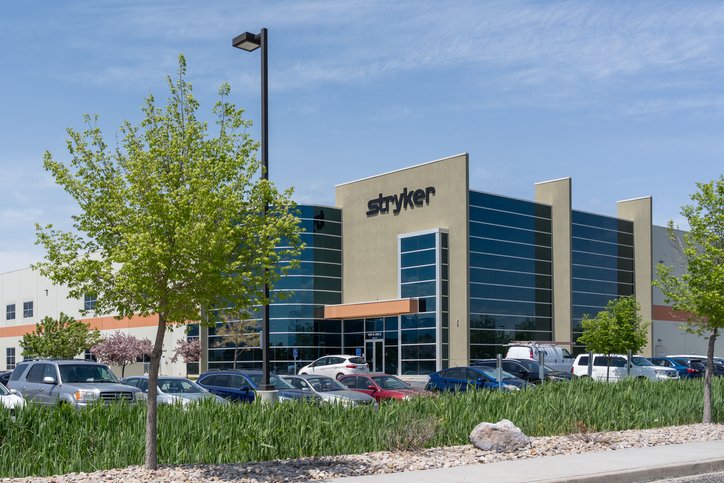
Medtech giant Stryker suffered a cyberattack this week that disrupted its internal Microsoft-based systems worldwide. As of this article’s publication, the situation remains ongoing and unresolved.
Below are six things to know about the attack.
—Systems are down and orders are stuck. The attack, which occurred on Wednesday, caused employees to lose access to their company laptops and phones, as well as to internal software. Stryker also said that the attack has disrupted order processing, manufacturing and shipping.
—Many devices and patient services are unscathed. Stryker said its patient-facing services and connected medical devices were not affected by the attack. The company also stated it has not detected ransomware or malware and believes the incident was contained to its internal environment.
—The attack may have had geopolitical motivations. Iran-linked group Handala has claimed the attack as retaliation for U.S.–Israeli military strikes in Iran. The group said it wiped 200,000 systems and stole 50 terabytes of data. Stryker has not confirmed that Handala is responsible for the hack.
—It’s difficult to gauge the true impact. Handala’s claims should be treated cautiously until independently verified, according to Ensar Seker, chief information security officer at cybersecurity firm SOCRadar.
“Hacktivist groups often exaggerate operational impact for psychological effect. However, even if the scale is smaller than claimed, a wiper-style attack against a global medical technology company is serious because it targets operational continuity rather than just data theft,” Seker said in a statement sent to MedCity News.
—In terms of stock prices, the ordeal could be a short hiccup. Debbie Wang, senior equity analyst at investment research company Morningstar, said she isn’t changing her estimate that Stryker’s stock is worth about $316. She thinks the cyberattack is just a temporary incident that won’t really affect the company’s cash or earnings in the long run. Joanne Wuensch, managing director at Citi, said she is still bullish on Stryker as well.
—More political cyberattacks could be hitting healthcare organizations this year. If the U.S. and Israel cause more civilian casualties in Iran, Wang said she wouldn’t be surprised to see other U.S. companies in critical sectors being targeted by pro-Iran cybergangs. Seker also said he expects to see more cyberattacks demonstrating that Western critical industries can be disrupted during geopolitical tensions.
Photo: JHVEPhoto, Getty Images
