
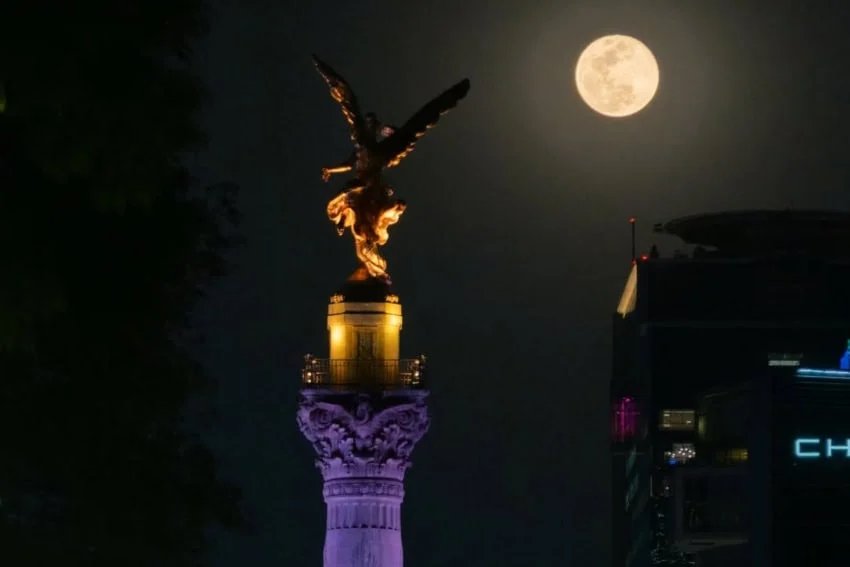
Year after year, the night sky is illuminated by the full moon’s light during the Easter celebrations in Mexico. This is no coincidence. On the contrary, it’s a decision based on astronomy, which the Catholic Church — and other Christian-affiliated religions — uses as a reference point for scheduling Holy Week celebrations. In our country, anything Easter-related is huge.
As it happens, in religions centered on the worship of Christ, Easter commemorates the series of events surrounding his death and supposed resurrection. According to Christian tradition, around A.D. 33, Jesus rose from the dead on the third day after being crucified by the Romans. This event is the reason for religious celebrations throughout the world, as it represents the victory of the Son of God over the forces of evil.
However, the dates for celebrating Easter have historically been a source of controversy. During the early years of Christianity, there was debate about when it should be celebrated, since it was observed on different days in the East and the West. After centuries of confusion, the Church reached a definitive resolution.
Why is there always a full moon during Easter in Mexico?
The year A.D. 325 marked a turning point for Christianity. The Roman Empire had already made it the official religion for all of its territories. However, the Empire was vast and complicated. The greater part of Europe, Africa and Asia around the Mediterranean Sea were a part of it, as documented by the World History Encyclopedia. To put it in perspective, approximately 40 contemporary countries would be part of what were formerly the domains of Constantine — and consequently, of the new Roman religion. No wonder it was often hard to agree on the holy dates to observe!
It was during the Council of Nicaea, held in the present-day Republic of Türkiye, that the Emperor and high-ranking church officials met to define the foundations of the new Christian faith. This included their fundamental beliefs (from which the Creed, for example, originates) and the important dates that should be celebrated in the life of Jesus.
Of course, Easter Day was among the main talking points. When would Christendom celebrate the resurrection of its Savior, the holiest of the events in their faith?! After days of discussion, the council decided that the first Sunday following the second full moon after the spring equinox was established as the day to begin the Easter festivities. Yes, that was kind of a mouthful, but it’s historically accurate!
The legacy of the Council of Nicaea
In other words, following the Old Farmer’s Almanac records, “the date of Easter is tied to the relationship between the Paschal Full Moon … and the Church’s fixed date of the March equinox.”

From then on, massive pilgrimages to Jerusalem were organized to celebrate the Easter festivities in the very place where the events are thought to have taken place. Besides bringing order to the Christian world, it established a new way of life for centuries in the countries where this faith was dominant. The legacy of this decision explains why each full moon occurs precisely during Holy Week.
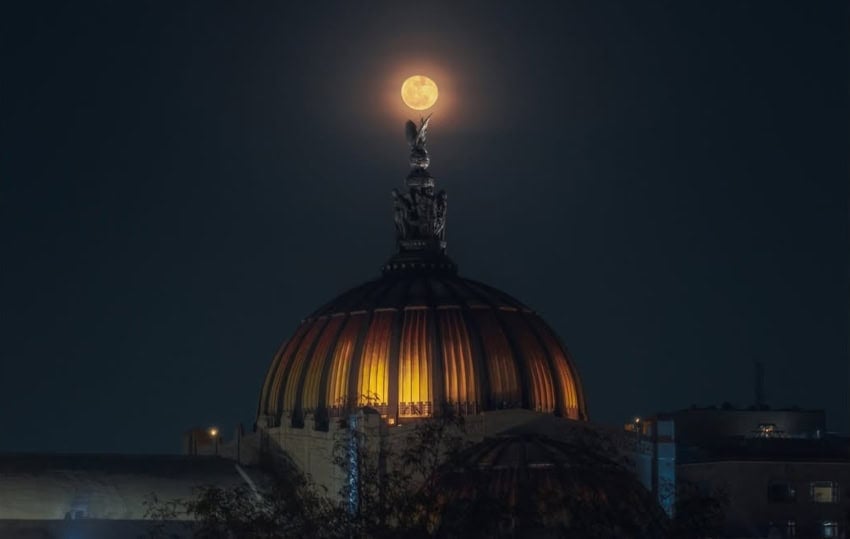
So, no. Mexico is not the only country in the world where there is a full moon during the Easter festivities. The Worm Moon, as the astronomical phenomenon is known, has accompanied these festivities for 1,700 years now!
How is Easter celebrated in Mexico City?
Mexico is no stranger to religious syncretism. On the contrary, it is the basis of our culture and social constructs. Just as Our Lady of Guadalupe is the heiress of Tonantzin, the Mexica Mother Goddess, the Spring Equinox brought religious festivities to be observed in Mexico-Tenoctitlan and her territories. Some neighborhoods remain Indigenous today. And, believe it or not, some pre-Columbian customs are preserved in our everyday lives, even centuries after the fall of the great Mexico-Tenochtitlan.
Something similar happened with the March equinox. In the ancient Mexica pantheon, the god Xipe Tótec was the embodiment of the arrival of spring: the sacred representation of light that triumphs over darkness, and life that returns once winter ends.
During Tlacaxipehualiztli, according to INAH archaeologists, the great festival welcoming spring, involved the ritual flaying of prisoners of war, representing restored life. Literally, by removing the skin of their political adversaries, they brought a message of renewal — and outright terror — to make way for a new annual cycle.
Iztapalapa’s Passion of Christ representation is thought to be a legacy of that spiritual colonization. Since there were already sacred celebrations that the Mexica observed with the arrival of spring, it was easier to incorporate the new Christian customs. There was no better way to instill the new faith — and fear of dissent — than to stage reenactments of this and other biblical passages important to the Church.
Every March, the moon after the equinox is still there, regardless of the religious tradition observed with the arrival of spring.
Andrea Fischer contributes to the features desk at Mexico News Daily. She has edited and written for National Geographic en Español and Muy Interesante México, and continues to be an advocate for anything that screams science. Or yoga. Or both.
