
Opinions expressed by Entrepreneur contributors are their own.
Key Takeaways
- Artificial intelligence is not only reshaping workflows and productivity. It is quietly destabilizing how many leaders define their value.
- This uncertainty triggers subtle reactions. Leaders may become hyper-vigilant, overwork, tighten control or compare themselves to younger talent, as it shifts them into defensive strategy.
- The leaders who thrive will be the ones who transform their internal operating system first and notice their own patterns before they start driving decisions.
- They will also be the ones who stay steady when comparison rises and tolerate not being the smartest in the room without interpreting it as a threat.
Artificial intelligence is not just changing workflows. It is destabilizing our identity. Most discussions around AI focus on efficiency, automation and competitive advantage. But working with founders and executives, I am seeing something quieter and more personal happening beneath the surface.
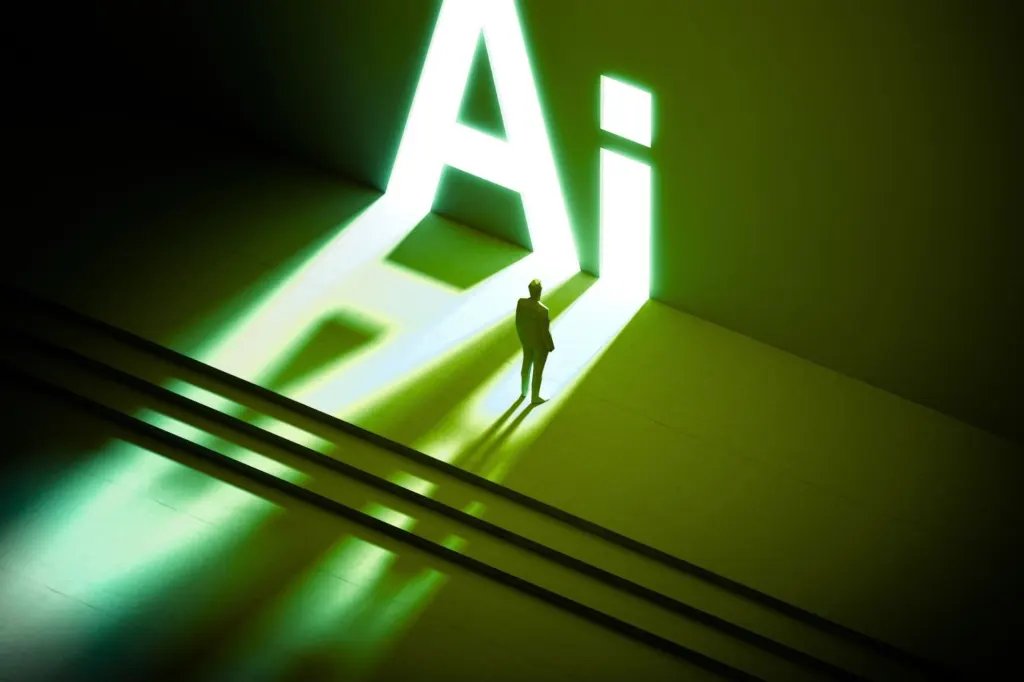
AI is confronting leaders with a question many have never had to answer: Who am I if I am not the differentiator? We live in a society where our career consciously or subconsciously becomes our identity — who do you become when there is technology at everyone’s fingertips that can be you?
For years, high performers have regulated their confidence through competence. They built authority by being the most creative, data-driven and strategic thinker in the room. Now, large language models can draft strategy outlines in seconds. Data can be analyzed instantly. Creative assets can be generated on demand.
This is not just a technological shift. It is an identity disruption, and that feels scary.
Sign up for the Entrepreneur Daily newsletter to get the news and resources you need to know today to help you run your business better. Get it in your inbox.
What’s happening beneath the surface
From my perspective as an executive psychology coach, the brain is designed to reduce uncertainty through prediction. The mind is a prediction-making machine. It constantly uses past experience and our sensory present to anticipate what will happen next. When prediction becomes difficult, the nervous system increases vigilance. This doesn’t necessarily show up as panic. It can feel like what I call “background noise” and show up behaviorally as vigilance.
You might see it in leaders who suddenly feel the need to be in every AI-related conversation, even when it’s not necessary. In executives who are checking competitors’ AI announcements late at night, not because it’s strategic, but because it’s hard to turn off the scanning. In founders who insist on personally reviewing every AI-generated output, tightening control instead of expanding trust.
It can also show up as pushing teams to “move faster” without a clear integration plan or dismissing AI publicly while privately feeling unsettled. Another example that I see happening often with seasoned leaders is this quiet comparison to younger, more tech-native talent, and wondering if you’re falling behind.
When identity has been unconsciously tied to exceptional performance, disruption feels like exposure. This is not about ego. It is about conditioning. Many high achievers developed early patterns that linked belonging and safety to output. Achievement became more than success. It became a way to regulate how they feel about themselves.
For instance: If I perform, I am valued. And if I am valuable, I am safe. Safe in what way? Safe financially, safe in relationships and safe in identity.
When a system can now perform parts of your role faster than you can, that equation destabilizes. Leaders who are unaware of this dynamic will compensate. They may overwork. Over-assert. Over-correct. They may dismiss AI publicly while privately feeling threatened. They may double down on productivity instead of expanding adaptability.
This is where executive psychology matters. Performance is not only cognitive. It is physiological. A chronically activated nervous system narrows perception. It reduces cognitive flexibility. It increases black-and-white thinking. It subtly shifts leaders into defensive strategy rather than creative expansion. In volatile markets, defensive leadership becomes expensive.
Building internal differentiation
The competitive edge in the AI era will not belong to the leader who can outproduce a machine. It will belong to the leader whose identity is not destabilized by one.
That requires internal differentiation.
-
Can you separate your worth from your output?
-
Can you notice subtle activation in your nervous system before it drives your decisions?
-
Can you allow innovation without interpreting it as personal displacement?
The leaders I see thriving right now are not the loudest adopters nor the fiercest resistors. They are the most internally stable. They can integrate new tools without unconsciously fighting for relevance. That stability comes from understanding your own patterns.
If achievement has historically been your regulator, AI will amplify that pattern. If control has been your safety strategy, unpredictability will stress it.
A word of hope: Disruption also offers opportunity.
When performance is no longer the sole differentiator, leadership shifts toward integration, discernment and relational intelligence. Toward the capacity to hold uncertainty without collapsing into urgency. In other words, the edge becomes psychological.
This is where maturity in leadership begins to separate itself from mere competence. When you are no longer competing on output alone, you are forced to compete on presence. On judgment. On the ability to regulate yourself in environments that do not offer clear answers.
The inner work that changes everything
Artificial intelligence may transform industries, but the leaders who outperform will be the ones who transform their internal operating system first. The ones who can notice their own patterns before those patterns start driving decisions. The ones who can stay steady when comparison rises. The ones who can tolerate not being the smartest voice in the room without interpreting it as a threat.
There has never been a more critical time to do the inner work, mentally, emotionally and psychologically, than right now. This has to be a non-negotiable, and it can’t be a “when I get to it” or something you do for luxury. It is now your leadership responsibility.
Because in a world that is accelerating, steadiness becomes power.
Sign up for How Success Happens and learn from well-known business leaders and celebrities, uncovering the shifts, strategies and lessons that powered their rise. Get it in your inbox.
Key Takeaways
- Artificial intelligence is not only reshaping workflows and productivity. It is quietly destabilizing how many leaders define their value.
- This uncertainty triggers subtle reactions. Leaders may become hyper-vigilant, overwork, tighten control or compare themselves to younger talent, as it shifts them into defensive strategy.
- The leaders who thrive will be the ones who transform their internal operating system first and notice their own patterns before they start driving decisions.
- They will also be the ones who stay steady when comparison rises and tolerate not being the smartest in the room without interpreting it as a threat.
Artificial intelligence is not just changing workflows. It is destabilizing our identity. Most discussions around AI focus on efficiency, automation and competitive advantage. But working with founders and executives, I am seeing something quieter and more personal happening beneath the surface.
AI is confronting leaders with a question many have never had to answer: Who am I if I am not the differentiator? We live in a society where our career consciously or subconsciously becomes our identity — who do you become when there is technology at everyone’s fingertips that can be you?
For years, high performers have regulated their confidence through competence. They built authority by being the most creative, data-driven and strategic thinker in the room. Now, large language models can draft strategy outlines in seconds. Data can be analyzed instantly. Creative assets can be generated on demand.
