
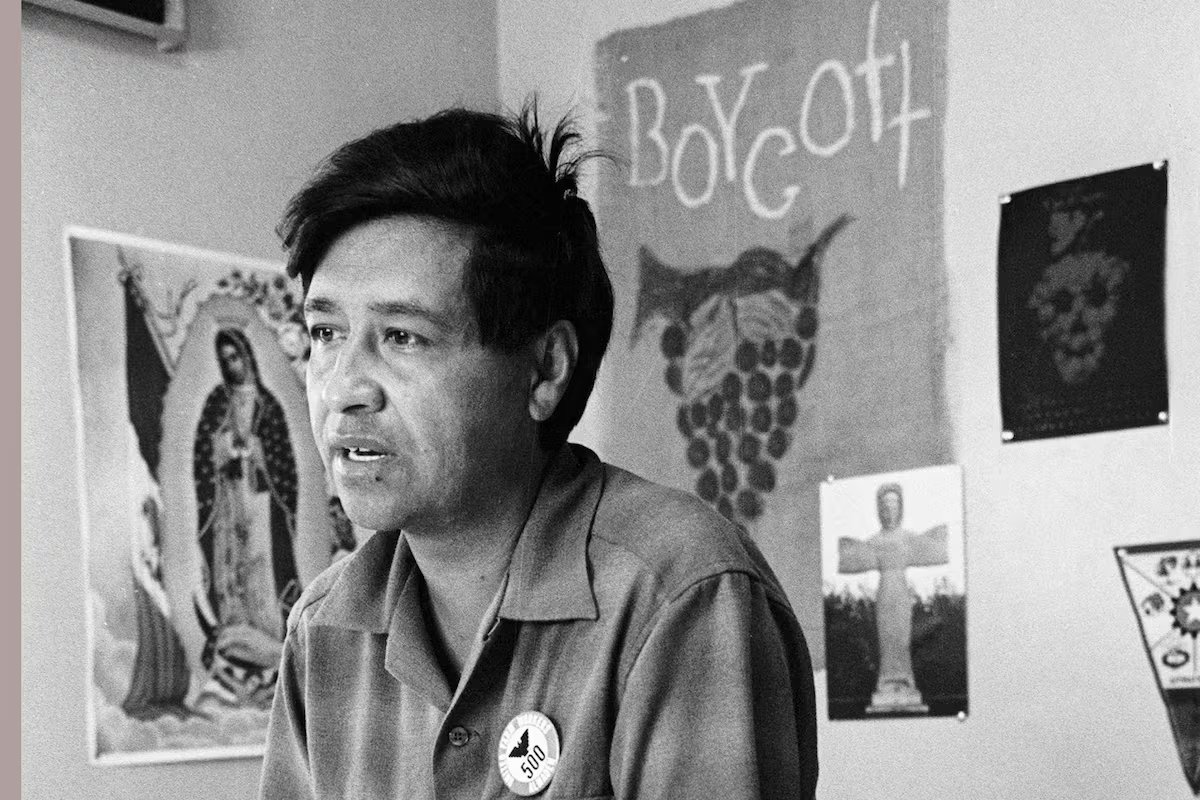
The face of the Latino civil rights movement in the United States sexually abused girls and women for decades, according to an investigation by The New York Times published Wednesday. The story reveals that César Chávez, co-founder of the United Farm Workers (UFW), the largest farmworkers union in the country, manipulated and abused minors close to the movement he led from the 1960s until his death in 1993. Dolores Huerta, the Chicana leader who founded the UFW with Chávez, alleges that she was also raped by the activist.
The newspaper reports several accusations from women, now adults, who remained silent about the abuse they suffered as children for decades, out of shame, but also out of fear of speaking out against a man who has become a historical icon of the Latino community in the United States. They even hesitated about telling their stories at a time when Latinos are being persecuted by the Trump administration and its machinery of mass deportations.
The existence of the allegations was made public on Tuesday. The union, after learning of the newspaper’s investigation, issued a statement acknowledging that it was aware of “deeply troubling” allegations against Chávez, though it did not provide further details. The UFW announced it would not participate in any of the events held in his honor each March, especially on the 31st, his birthday, and said it was working to establish a reporting channel “for those who wish to share their experiences of harm, to identify their current impacts and needs, and, if desired, to participate in a collective process to develop mechanisms for repair and accountability.”
The farmworkers’ union claimed to have received no direct complaints and to have no firsthand knowledge of these allegations. However, The New York Times maintains that it obtained access to UFW emails discussing one of the abuse allegations. The newspaper reviewed hundreds of pages of union documents, confidential emails, and photographs, and interviewed more than 60 people, including the union’s top officials at the time, family members, former union members, and victims.
Among these is a woman named Ana Murguia who recounts that Chávez began abusing her when she was 13 and continued doing so for four more years, between 1972 and 1977. Another woman, Debra Rojas, alleges that the union leader raped her when she was 15 in a California motel where he took her while she was participating in a weeks-long farmworkers’ rights march across the state. Rojas shared the abuse she suffered in a Facebook post more than a decade ago, but deleted it days later. According to her and other victims, the girls were lured by Chávez from a young age, around eight or nine years old. “I had love for him,” Rojas told the newspaper. “He did his grooming very well. He should get an Academy Award for all he did.”
Most of the abuses occurred in La Paz, the union compound located in the Tehachapi Mountains, more than 100 miles north of Los Angeles, where Chávez resided for nearly 30 years and where he had his office. Union families also lived there, such as the Murguia family, whose father was a close advisor to Chávez.
According to The New York Times, Chávez’s family members and former UFW leaders have known for years that the activist had been accused of sexual misconduct, but the newspaper found no evidence that they attempted to thoroughly investigate the allegations or apologize to the victims. Furthermore, the women claim they were discouraged from speaking out in order to preserve Chávez’s public image.
Dolores Huerta’s “secret”
Huerta was Chávez’s closest ally in the fight for farmworkers’ rights during the second half of the last century. Together, they were two of the most celebrated Latino and Mexican-American activists in the United States. They led strikes, protests, and marches denouncing the appalling working conditions endured by farmworkers in California and across the country, where the majority of workers are immigrants or descendants of immigrants.
However, the organizer remained silent for 60 years about being a victim of Chávez. At 95, she told The Times that in 1966, when she was 36, Chávez drove her to a secluded vineyard in Delano, California, and raped her inside the vehicle. Huerta did not report the rape to the police or tell anyone in the union because she thought no one would believe her.
The Chicana activist confirmed the abuse in a press release on her social media accounts this Wednesday. “As a young mother in the 1960s, I experienced two separate sexual encounters with Cesar. The first time I was manipulated and pressured into having sex with him, and I didn’t feel I could say no because he was someone that I admired, my boss and the leader of the movement I had already devoted years of my life to. The second time I was forced, against my will, and in an environment where I felt trapped,” the statement reads.
“I had experienced abuse and sexual violence before, and I convinced myself these were incidents that I had to endure alone and in secret. Both sexual encounters with Cesar led to pregnancies. I chose to keep my pregnancies secret and, after the children were born, I arranged for them to be raised by other families that could give them stable lives.”
Huerta maintains that she carried this secret for as long as she did “because building the movement and securing farmworker rights was my life’s work. The formation of a union was the only vehicle to accomplish and secure those rights and I wasn’t going to let Cesar or anyone else get in the way.”
The activist states that during those years she was unaware of any cases of sexual abuse against minors: “The knowledge that he hurt young girls sickens me. My heart aches for everyone who suffered alone and in silence for years. There are no words strong enough to condemn those deplorable actions that he did.”
Sign up for our weekly newsletter to get more English-language news coverage from EL PAÍS USA Edition
