

Rating: 4 out of 5.
Domestic violence has always been prevalent. There is often a need for one person to dominate, to empower themselves, and in doing so cause harm – not only emotional and psychological, but sometimes physical as well. What happens in these situations is that the victim eventually realizes what is happening. They reach a point where they cannot take it anymore. They are scared. It does not work. And that becomes an emotional burden they must carry and fight through, often needing support , and not only in real life, but sometimes even through other spaces where they can be heard and understood. This is why The Things You Kill is not just an ordinary drama or a slow-burning thriller. It is, more importantly, a character study.
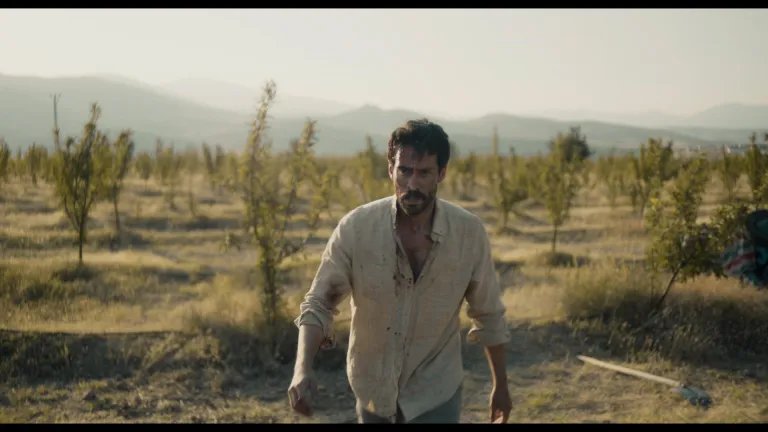
At the center of it is Ali, played by Ekin Koç, a man who is trying to hold his family together, to create a sense of stability, and to ensure that the people he loves are safe, especially his mother. There is something deeply human in the way he worries about her, sensing that she is no longer able to manage on her own. And when he begins to understand that his father, played by Ercan Kesal, has not been supportive, has not been present, and at times has even left her alone, it unsettles him in a way that he cannot ignore.
The more Ali asks questions, the more he feels that something is not right. He wants to understand what is really happening. But the truth that slowly comes to him is not what he expected. As a son, his instinct is simple – protect her. He wants to bring her into his home, to give her comfort and safety. His wife, played by Hazar Ergüçlü, supports him without hesitation, which makes that decision feel even more grounded and real. But before anything can change, everything changes.
He receives the call in the middle of the night. His mother has passed away. And that moment is the one that breaks him. You can feel how strong that bond was. It is not just loss. In fact, it is something deeper, something that leaves him with unanswered questions. At the same time, his personal life continues to weigh on him. His relationship with his wife is marked by their shared desire to have a child, yet the reality of infertility – something he struggles to accept, which adds another layer of emotional pressure. It pushes him further inward, into… himself.
But what truly consumes Ali is the sense that he knows more than he can say. He understands more than he can openly reveal about what his mother may have endured, and about what his father may have done. And he cannot ignore it. He wants answers.
He wants to understand what happened. He wants, in his own way, to see justice done. And, as the story develops, the grieving son begins to dig deeper, what he finds is not clarity, but something far more painful. And yet, he is not someone who can walk away. He is not someone who can pretend it did not happen. There is a consistency in him – in his thinking, in his need to understand, in his belief that something must be done.
And this is where the film becomes even more compelling. Through the character of Reza, played by Erkan Kolçak Köstendil, the film introduces another layer – one that quietly questions how far people are willing to go, and who ultimately carries out the actions we ourselves hesitate to take. It raises the idea that in society there are always boundaries – things we do, and things we ask others to do – but also asks who steps in to fulfill those darker impulses.
Alireza Khatami’s direction is what ultimately holds The Things You Kill together and elevates it beyond a conventional narrative. He approaches the film with restraint and precision, allowing the story to unfold gradually rather than forcing dramatic moments. There is a quiet control in the way he builds tension – nothing feels rushed, yet everything feels intentional. He does not rely on loud or obvious storytelling. Instead, he trusts silence, atmosphere, and performance. The spaces feel cold when they need to, the valley feels isolating despite its beauty, and the emotional weight is carried through stillness as much as through dialogue. This kind of direction requires patience, both from the filmmaker and the audience, but it is exactly what makes the film effective.
That being said, Khatami is not interested in giving clear answers or easy resolutions. He allows ambiguity to exist, and in doing so, he creates a film that lingers. The tension is not only in what happens, but in what is left unsaid, in what the characters choose not to confront directly. That control, that quiet intensity, is what makes the film feel so personal and so unsettling. It is a direction that does not guide you toward a conclusion but instead leaves you with questions – and that is precisely where its strength lies.
