

Rating: 3.5 out of 5.
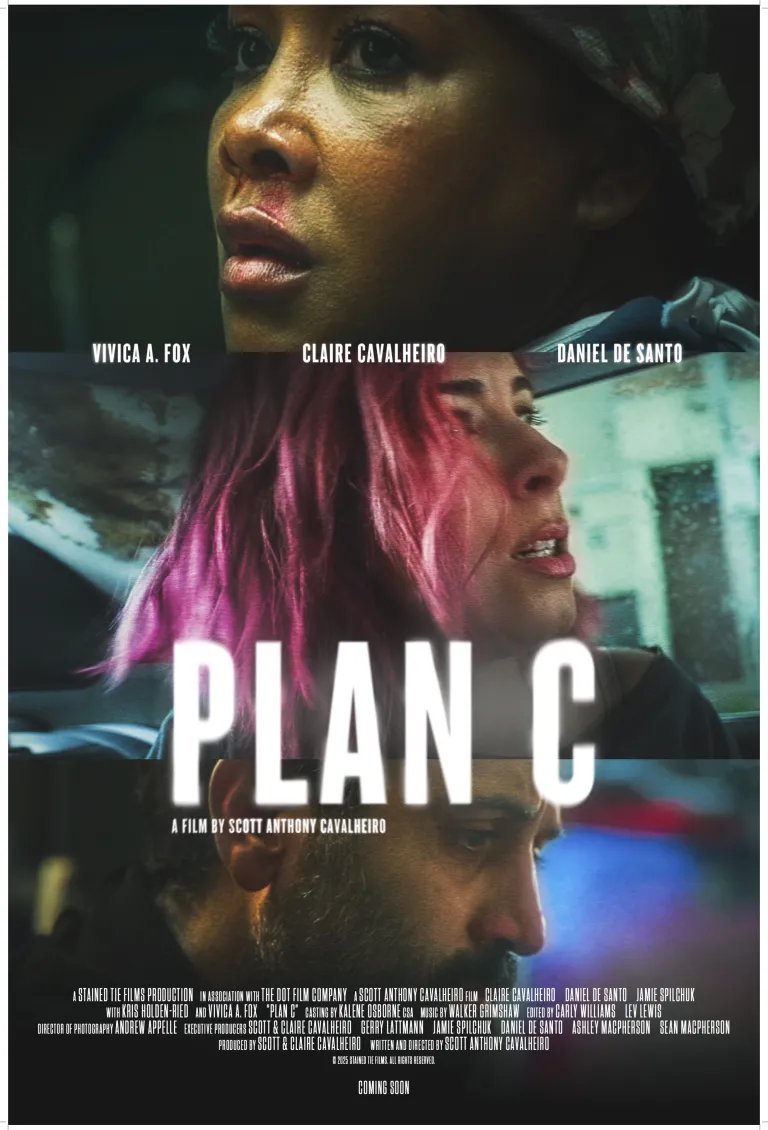
Plan C is set to premiere as the opening film at the Canadian Film Festival, and it honestly feels like the right choice. From the very beginning, the film makes it clear – it’s not here to play it safe. It throws you straight into a tense situation and keeps the pressure building until the very end. More importantly, it leaves you with something to think about long after it’s over. Directed by Scott Anthony Cavalheiro, the story follows siblings Clare and Danny Accardi – two people who are used to living on the edge. They’re not perfect, and they don’t try to be. But what they do have is each other, and that connection drives everything in this film.
When a robbery goes wrong, Danny (Daniel DeSanto) is left with a life-threatening injury, and suddenly everything becomes a race against time. Clare (Claire Cavalheiro) doesn’t have a plan. She doesn’t have the luxury to stop and think. She reacts. And in that moment, the film shifts from being just another crime story into something much more personal. She will do whatever it takes to save her brother, and she doesn’t stop to question how far is too far.
We’ve seen stories about family and loyalty before. But Plan C pushes it further. It asks uncomfortable questions. What happens when love forces you into impossible choices? How far are you willing to go to save someone? And what are you willing to lose along the way? Things take a sharp turn when Clare takes control of a plastic surgery clinic. That’s when we are introduced to Vivica A. Fox as Rita and Jamie Spilchuk as Dr. James Ings – two characters who bring a deeper, more human layer to the story than you might expect.
The setting itself is unexpected. Clean, controlled, almost too perfect, and that contrast is exactly what makes everything feel more intense. A place meant for transformation suddenly becomes a place where survival is the only thing that matters. Dr. Ings is not the kind of doctor you’d expect in a situation like this, and that’s what makes him stand out. He feels real. He’s not a hero, but he’s not disconnected either. He’s trying to do the right thing in a situation that is completely out of his control, and that creates some of the film’s most emotional moments.
The film stays very close to its characters. There’s no distance, no safe space for the audience. You feel the urgency, the pressure, and sometimes even the discomfort. The locations – from worn-down areas to the sterile clinic – don’t feel staged. They feel real, and that adds to the intensity. Vivica A. Fox brings a strong and steady presence to the film. She doesn’t take over the story, but she grounds it. In the middle of all the chaos, she feels controlled, experienced, and aware creating a contrast to the emotional decisions being made around her.
What makes Plan C stand out is how personal it feels. It’s not just about what’s happening, it’s about why it’s happening. Every decision Clare makes comes from desperation, but also from love. And that makes it difficult to judge her, even when things start going too far. There are moments of dark humor, but they don’t really ease the tension. If anything, they make everything feel sharper. You get a second to breathe, but only for a moment – before everything tightens again.
In the end, Plan C is not a polished, easy-to-watch thriller, and that’s exactly why it works. It’s raw. It’s emotional. At times, it’s uncomfortable. And it asks questions that don’t have simple answers. Because when everything falls apart, and there’s no backup plan left, what you choose to do next says everything about who you are.
