
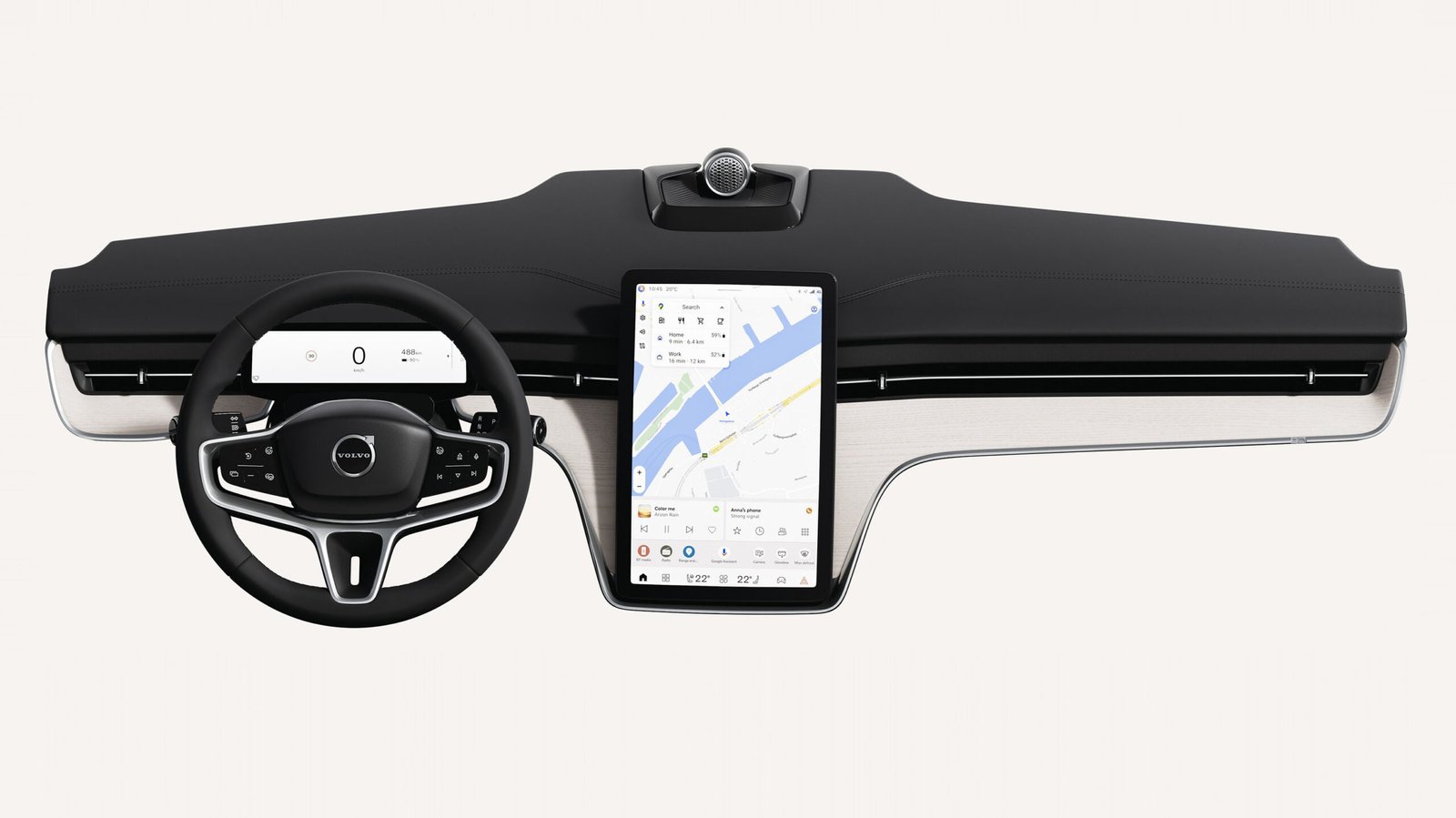
The other day, Google announced that it will release a new version of its Android Automotive Operating System (AAOS) that will be entirely open-source and focused on more “software-defined” vehicles.
To add to that, Google will provide the software’s “open infrastructure” to manufacturers, and it will now operate more “non-safety” portions of the car’s internal computer system. Essentially, it’ll control more of the car than before.
The tech giant noted in its blog post that “modern cars are quickly becoming computers on wheels.” Google also noted fragmentation in the auto industry, with software modules from different suppliers that are often mismatched.
What this means for you
Essentially, Google wants to use this new AAOS to compete with the recently-released Apple CarPlay Ultra, which has been spotted in both Porsche and Aston Martin vehicles.
Google emphasized in a blog post that the main goal of this new software is to provide a better experience for drivers, noting that the in-car experience should feel “much more cohesive,” with the latest features helping you “reach your driveway faster.”
Yes, software updates will happen with AAOS. However, Google has promised faster over-the-air updates, better voice assistants, and more proactive vehicle maintenance alerts. Other non-driving functions, such as climate control, lighting, and seat adjustment, will also fall under the new Android software’s control.
In my opinion, the new open-source OS for software-defined vehicles will mainly be used for luxury/higher-trim-level vehicles and EVs. I doubt that this will be used in more economically-focused vehicles, with customer complaints mainly centred towards digital dashes and the large screen size (see: 2026 Mazda CX-5).
The good news, though, is that this should lower software development costs for vehicles and allow manufacturers to focus mainly on branding while Google provides the base code and language. Another positive is that everything won’t be the same across brands, as Google is allowing automakers to design unique experiences for their customers.
Interestingly, Google has already secured some support from automakers for the new open-source software. The company is working with the Renault group (surprise surprise) and Qualcomm to bring the new version of Android Automotive to more cars. Interestingly, automakers like Polestar (excellent EVs imo!), Volvo, Porsche, Hyundai, and Honda use the currently-available version of AAOS.
I’m excited to see the performance of the new AAOS and how it is utilized. Hopefully, some companies can get some benefit from it, because I have sat in a lot of vehicles with extremely lacklustre operating systems.
Header image credit: Volvo
Source: Google
