
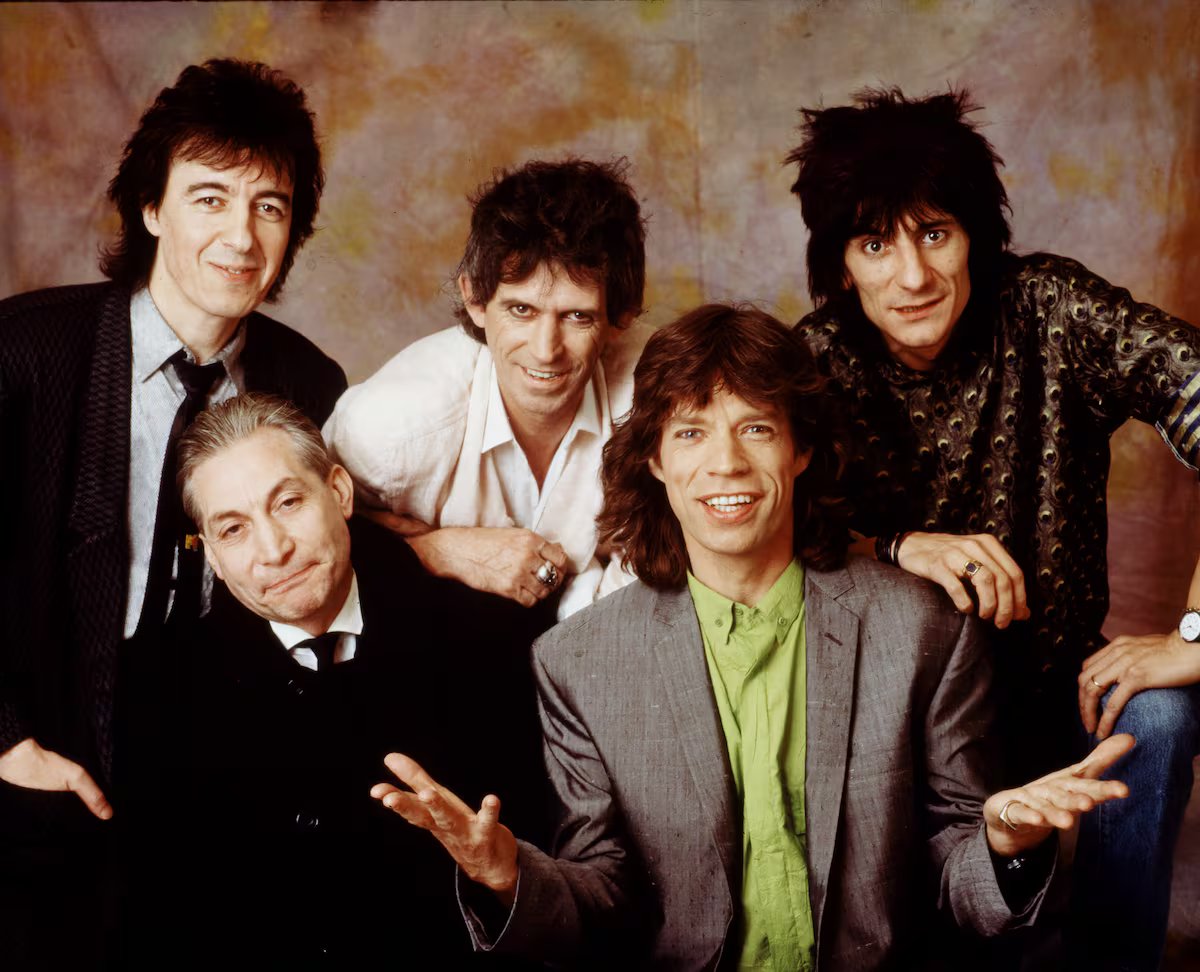
When the Rolling Stones entered Pathé Marconi Studios, outside Paris, to record their 18th album in April 1985, tension among the band members had reached a breaking point. So much so that it could be said that, at that moment, they virtually ceased to exist as a band.
The British band had just released Undercover in late 1983; the album had sold less well than expected and there was no supporting tour. With their next album, they changed labels: Dirty Work was to be the Stones’ first album with CBS, the same company that had signed Mick Jagger as a solo artist, much to Keith Richards’ anger. This anger only intensified as the latter realized that the vocalist was beginning to dedicate more attention to his solo career than to the band. In February 1985, Jagger released his first solo album, She’s The Boss. But things got even worse when, that summer, the recording of Dirty Work was put on hold to focus on other priorities. On June 29, just 12 days after leaving the Parisian studio, the singer recorded the hugely popular duet “Dancing in the Street” with David Bowie, which reached number 1 in seven countries. The schism played out in prime time and for the entire world to see at the Live Aid benefit concert on July 13. There, Jagger performed his own songs and Rolling Stones covers with Tina Turner. Keith Richards and Ronnie Wood appeared as guitarists for Bob Dylan.
When the band returned to the studio three days after Live Aid, the situation was already critical. Richards took on all the dirty work in the face of an absent Jagger, both physically (he didn’t show up for recording sessions many days) and in spirit (everyone assumed he was saving his best material for what was to be his second solo album). So much so, in fact, that the guitarist sang two of the album’s tracks. Drummer Charlie Watts, mired in his heroin and alcohol addictions, was also more out than in. The band had to resort to several session musicians to play the percussion parts, or, worse still, to assemble them electronically. Bassist Bill Wyman, fed up with the tense atmosphere, also came and went, and even more curious was the case of Ron Wood, who was recovering from alcoholism at the time.
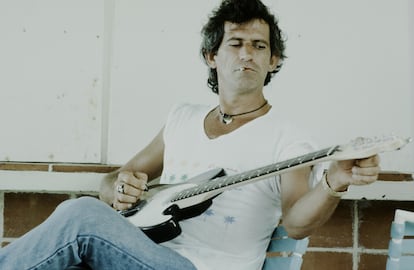
Despite this, he played bass on some tracks, drums on one song, saxophone on another, and co-wrote four of the album’s eight original tracks—the album also included two covers—with Jagger and Richards. Years later, the band’s second guitarist confessed in an interview that this last detail was a strong indication that the band’s songwriting engine wasn’t functioning well at the time. There were very few moments when all five members were actually together in the rehearsal space, something they decided to compensate for with a lineup of guest musicians that could have worked very well, but ultimately didn’t.
For the album’s production, the band decided to call on Steve Lillywhite, one of the biggest names in the music industry during the 1980s, someone who had worked with U2, Peter Gabriel, Simple Minds, Siouxsie & the Banshees and Ultravox, among many others. Jimmy Page of Led Zeppelin and Bobby Womack recorded some guitar parts, while backing vocals were provided by Tom Waits, Jimmy Cliff, Patti Scialfa (of Bruce Springsteen’s E Street Band), Kirsty MacColl, and actress Beverly D’Angelo.
“Yes, I produced the worst-ever Rolling Stones album,” Lillywhite admitted in a 2010 interview with The AV Club. “You need a good tailwind to make a great record, and there wasn’t a great tailwind with the Stones at that point. There was too much bitterness. It was the bad end of the drug-taking. It was just messy, but I had to do it. I learned a lot more from them than they learned from me, that’s all I can say about that experience.”
But the final blow was yet to come. On December 12, while the album was being mixed, Ian Stewart, their pianist, road manager and founding member, died suddenly of a heart attack. He was almost a father figure to the band, and his loss was deeply felt. Although he hadn’t participated in the recording, the group paid tribute to him with a hidden track at the end of the album showcasing his keyboard skills.
A symbol of yuppie decadence
Dirty Work was released on March 24, 1986, with art direction and photography by the renowned Annie Leibovitz, who also faced public ridicule for her work. The vinyl came wrapped in dark red cellophane, included for the first time in their career the lyrics in the sleeve—a requirement imposed by CBS—and an accompanying comic book. All of this increased the price of the record, much to the dismay of many fans. But the most striking feature was its cover, with a garishly colored portrait of each band member posing with a bored expression and looking in a different direction. Watts’ eyes are fixed on the floor, as if he were truly depressed, and Jagger seems to be trying to pull Richards off the sofa with his leg. Furthermore, they are dressed in suits, very much in the style of the television series Miami Vice, an aesthetic element that doesn’t do them any favors.
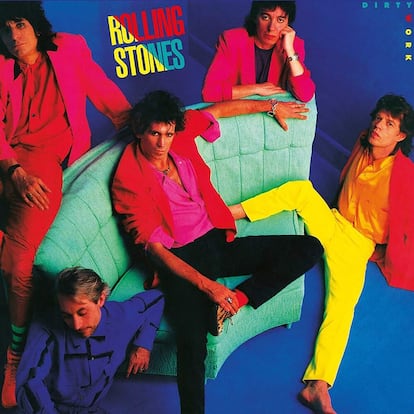
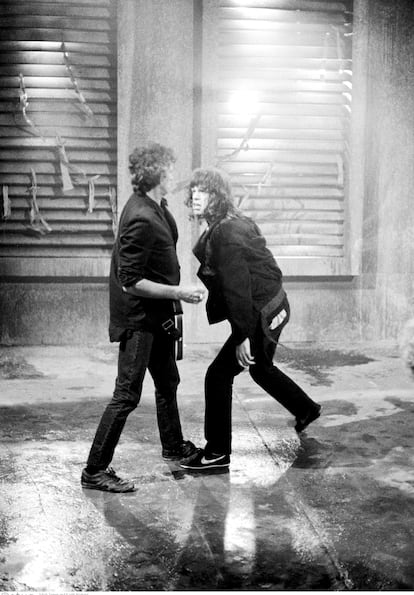
In 2005, the online magazine Pitchfork included a feature on the worst album covers of all time. “No other cover goes so far in its function of completely tarnishing the reputation of a band firmly established in Valhalla, while simultaneously demonstrating just how terribly bad eighties aesthetics really are,” wrote journalist Brent DiCrescenzo. In the significant music video for “One Hit (To The Body),” also distinctly eighties in style, the singer and guitarist perform the song facing off, almost on the verge of a fight.
If we focus solely on the music, the reviews were equally unfavorable. People magazine, for example, included it among the worst albums of 1986, with phrases like, “Baby boomers’ worst fears come true: If the Stones sound this old and tired, what does that say about their original fans?” while Rolling Stone noted that “just as ‘Gimme Shelter’ captured the crumbling hopes of the late sixties and early seventies, this is the Stones’ album for the yuppie era, defining the complacent meanness of the mid-eighties.” “There are literally no songs on this album. So much so that a cover, ‘Harlem Shuffle,’ was released as a single because there was absolutely nothing else worth releasing on 45 rpm,” said the New Musical Express. “In the pantheon of bad albums by great musicians, few are as shockingly, transcendently awful as the Rolling Stones’ “Dirty Work.” By all accounts, it’s a miracle that the band didn’t break up during this time, as tension with the band was of seismic proportions, and the album itself was promptly met with derision,” read a retrospective review on the website Sputnik Music. “The kinetic synergy that defined early classics such as “Let It Bleed” and “Sticky Fingers” is completely absent, giving the album a feel that’s excessively slick and hollow, even by 1980s’ standards. Even an impressive roster of guests (Jimmy Page, Patti Scialfa, Bobby Womack, Tom Waits, Anton Fig, Jimmy Cliff) couldn’t make up for the lack of quality control and the palpable disconnect between the band.”
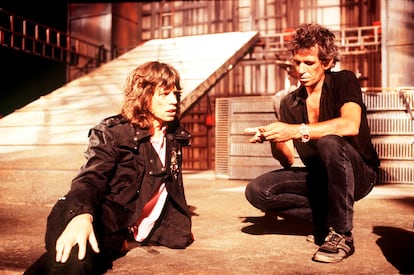
In a 1989 interview with Rolling Stone, Mick Jagger recalled that time: “Relationships were terrible. Health was atrocious. I wasn’t in great shape. The rest of the band couldn’t even walk down the Champs-Élysées, let alone go on tour. So we had a long, unpleasant experience recording that album, and the last thing I wanted was to spend another year with the same people. I just wanted to leave.” The fact that the vocalist also refused to perform the album live was taken by Keith Richards as a declaration of war. So much so that he described that era of the group as ‘World War III.’ While the Stones weren’t playing, Mick Jagger finished his second solo album, Primitive Cool (released in 1987), and the following year embarked on a solo tour filled with classic Stones songs, but with guitarist Joe Satriani playing Richards’ parts. He responded with his first solo album, Talk Is Cheap. “I was very reluctant to start my solo career,” he told director Morgan Neville in the Netflix documentary Keith Richards: Under The Influence (2015). “My thing has always been the Stones, but in the late eighties, circumstances arose where, obviously, Mick and I weren’t going to be working together for a while. I would say that between 1985 and 1989 it was like World War III in a 50-year relationship. Sure, men fight, brothers fight, they’re brothers, but there was no sign of the Stones ever being reunited, and I was really adrift.”
The other members also dedicated that wartime period to doing things on their own. Charlie Watts—the main reason, due to his erratic health, that Jagger didn’t want to tour—formed his own jazz orchestra, Ronnie Wood toured with Bo Diddley and opened a nightclub in Florida, while Wyman opened a restaurant in London called Sticky Fingers (which, incidentally, still exists).
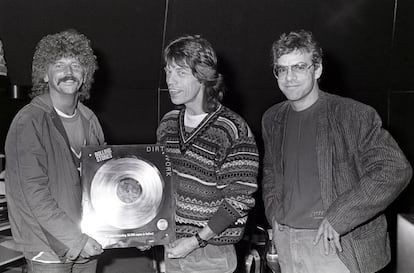
That was the moment when the Rolling Stones came closest to breaking up, the lowest point in their career. However, the crisis lasted much less than expected and, in a way, revitalized them. Richards acknowledged that recording solo made him aware of Jagger’s difficult role as frontman. After reappearing together upon their induction into the Rock and Roll Hall of Fame, the two band leaders made peace and decided to record a new album, Steel Wheels (1989), which is still considered one of their best works. With it, this time they did tour. In those concerts, the reference to Dirty Work was limited to the reprise of its two singles. But the great paradox is that what has been considered the worst Rolling Stones album ended up having a decisive impact on the longevity of a band that is still going strong, about to celebrate 65 years in business.
Sign up for our weekly newsletter to get more English-language news coverage from EL PAÍS USA Edition
