
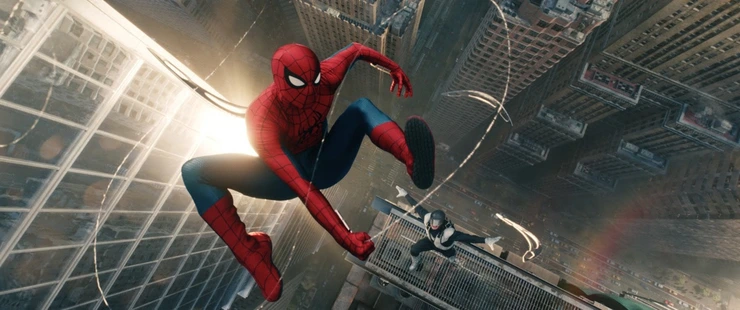
There is a specific, voyeuristic cruelty to being a Spider-Man fan: we claim to love Peter Parker, yet we only truly recognise him when he is miserable. The trailer for Spider-Man: Brand New Day understands this perfectly. It doesn’t open with a triumphant, cinematic swing through the city he loves, but with him pining after his former connections.
For a certain segment of the fanbase, this is the most relatable thing we’ve seen him do in a decade. After years of “Iron Man Jr.” accusations, multiversal road trips, and Stark-funded nanotechnology, the MCU has finally brought Peter Parker (Tom Holland) back to his natural habitat: the gutter. And while it feels cruel to cheer for a kid who has lost his aunt, his mentors, and his very identity, the truth is that Spider-Man is never more vibrant, more essential, or more himself than when he is at rock bottom.
Stan Lee and Steve Ditko didn’t design Peter to be a god among men but to be the guy readers can relate to. When Spider-Man has access to a billion-dollar satellite network or a private jet, the stakes of his life become purely external. He’s fighting to save the world, but he isn’t fighting to survive the week. By stripping away the high-tech bells and whistles in Brand New Day, the MCU is re-establishing his ‘everyman’ identity.
There is a profound, almost painful relatability in watching Peter struggle to balance the responsibility of his powers with the mundane agony of being broke. Most of us will never have to stop a runaway train, but almost all of us know the sinking feeling of an unexpected bill or commitments getting in the way of life. When Peter chooses to stop a mugging rather than make it to a job interview on time, the heroism costs him something. That cost is the engine of his morality. If he can afford the hit, it’s just a hobby, but if he can’t, it’s a sacrifice.
The trailer’s most strangely relatable image is Peter watching MJ’s (Zendaya) happy life from a distance. He has become a ghost in his own city. Being loveless is often seen as a temporary hurdle for cinematic heroes, but for Spider-Man, isolation is a major stumbling block. In No Way Home, the world forgot Peter Parker existed to save the multiverse. In Brand New Day, we see the psychological toll of that decision taking shape.
Isolation as an engine
When Peter is surrounded by a support system—The Avengers, Ned, Aunt May, Happy Hogan—he has a safety net. When he falls, someone catches him. But a Spider-Man at rock bottom has no net. Every broken rib, every existential doubt, and every lonely night in a cramped apartment reinforce the weight of his great responsibility.
This isolation forces the character to look inward. Without a mentor to guide him or a girlfriend to ground him, Peter has to decide who he is when no one is watching. The loveless Peter Parker could be seen as a tragedy, but in reality, it’s a necessary reset that allows him to rediscover his own agency. He isn’t being a hero because it’s what Tony Stark would want. He’s doing it because, despite the world giving him nothing, he still feels he owes the world everything.
There is a specific energy to a broke Spider-Man fight. When Peter’s at his lowest, like struggling with the possible organic webbing mutations hinted at in the trailer, the choreography changes. It becomes desperate. It becomes scrappy. He may even stop pulling his punches.
With this latest instalment from director Destin Daniel Cretton, audiences learn that you cannot have a triumphant moment of strength without the crushing weight of failure before it. The trailer shows a Peter who is physically and mentally exhausted. This makes every web-swing look like a struggle against gravity itself. It reminds us that being Spider-Man is a burden he chooses to carry every single day.
Why we need the struggle
In 2026, the cultural landscape has shifted. We are living in an era of burnout. The shiny, aspirational perfection of the early 2000s and even 2010s superhero cinema feels increasingly disconnected from the world now, which is grappling with economic uncertainty, political alienation, and social isolation.
Seeing a Peter Parker who is one of us (someone who is tired, lonely, and wondering if his best days are behind him) is exactly what the genre needs. It moves Spider-Man away from being a brand and back to being a person.
The Brand New Day trailer suggests a pivot toward street-level stakes. We don’t see big purple aliens or multiversal rifts. We now see rainy alleys, subway stations, and the reality of New York City. This groundedness allows the character to breathe. When Peter is at rock bottom, the city of New York stops being a backdrop and starts being a character again, just like audiences saw in the Sam Raimi trilogy. The city is the thing that breaks him, but it’s also the thing that gives him a reason to get back up.
We love a winning Spider-Man, but we need a struggling one. A Peter Parker with a stable job and a happy relationship is a character at the end of his journey. A Peter Parker at rock bottom is a character at the beginning of a transformation. The broke, loveless, and struggling version of the character inspires us the most because he proves that your circumstances do not define your integrity.
The bells and whistles are gone. The billionaire backing is a memory. All that’s left is a kid from Queens who refuses to quit. And that is exactly how it should be.
Spider-Man: Brand New Day opens in cinemas on July 31st.
Related
Discover more from
Subscribe to get the latest posts sent to your email.
