
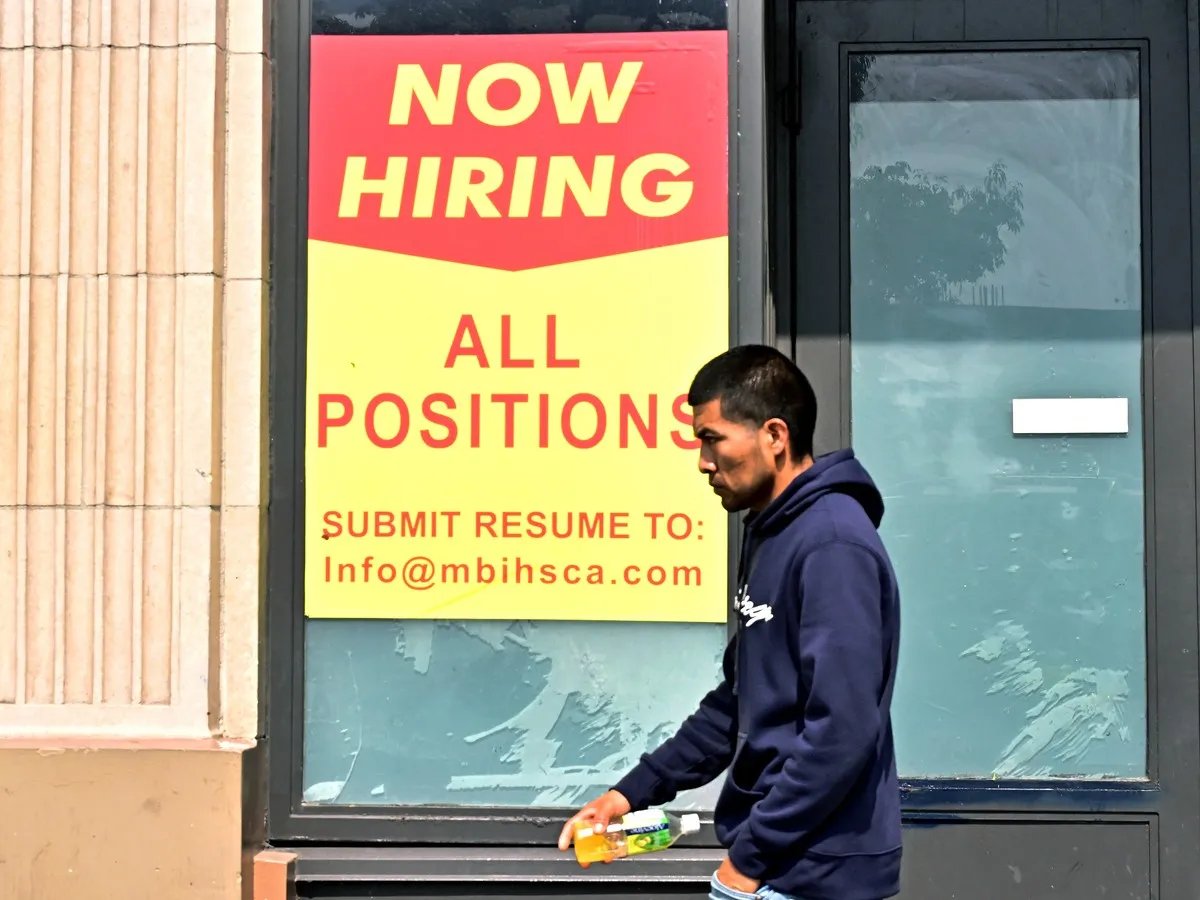
WASHINGTON, D.C. — Work teams around the world have seen their numbers dwindle, thanks to
, political volatility, and the adoption of AI, leading to layoffs and unfilled vacancies.
As a result, a former team of eight might now be down to just four or five, and if a couple of them dare to take a vacation or call in sick, that leaves just a couple of people to juggle a workload once handled by the bigger team.
Those who remain are feeling overworked, underappreciated, and are more burned out as a result. But they also feel stuck in a softening labour market where the threat of layoffs looms, which is keeping voluntary turnover low.
As a result, global employee engagement was down in 2025 for the second year in a row, hitting its lowest point since 2019, according to a
. Canada and the U.S. continue to outperform most other countries, leading the world at 31 per cent employee engagement, but those levels have dropped five percentage points since the pandemic.
Job-market optimism in the two countries, however, fell 10 points in 2025, and the region is now second-to-last globally, down 23 points since 2019. Workers — and especially managers — are feeling squeezed by smaller teams and fewer resources.
“The big change for the U.S. and Canada,” said Jim Harter, chief scientist of workplace management and well-being for the Gallup Management Practice, “is the percentage of people who say it’s a good time to find a quality job.”
Amid the “no hire, no fire” environment, staffers feel less confident looking for better jobs and want to avoid being the “last hired, first fired” if layoffs hit.
Harter said much of that is caused by the economic situation, which has some overlapping causes in both Canada and the U.S. related to low hiring rates, low firing rates, college-educated people struggling to find jobs, and an oversupply of workers.
“You could point to a lot of different factors, but clearly the biggest drop was in how people perceive the job market,” he added.
Unemployment remains low in the U.S., falling from 4.4 to 4.3 per cent in March, and it is much lower than Canada’s 6.7 per cent.
Firms are holding on to workers but not expanding, said Elise Gould, senior economist at the Economic Policy Institute, owing to economic uncertainty brought on by tariffs and policy volatility.
Employees, she said, sense that even a modest upswing in layoffs could “translate into a spike in unemployment pretty rapidly.”
Geni Peters, director of research at ECO Canada, acknowledges that demand in the Canadian job market is falling, so job vacancies are declining. But she doesn’t think that’s the reason for lower job-market optimism.
For that, she blames “political, economic, and geopolitical uncertainty.”
Pessimism over the job market and engagement can be attributed to many factors, according to Wayne Hochwarter, a business administration professor at Florida State University, including geopolitical tensions, higher gas prices, AI, the war, and other pressures. But he said the root problem is simple: inadequate and inept leadership.
“That’s a perfect storm in a lot of ways with the economy and everything else, but this is just leaders not doing their job.”
Managers are the weak spot, according to Harter, and their engagement has fallen faster than that of individual contributors.
“When manager engagement drops, it really affects the commitment of the workforce because they kind of lead the way,” he added.
Companies can improve engagement by choosing and training better managers, ensuring they are leaders who can “motivate teams, build relationships, support AI adoption, set goals, give regular feedback, and hold employees accountable.”
Peters also thinks better training could help, but she says managers are facing pressure to do more with fewer resources while often lacking the authority and support they need to succeed.
She and Hochwarter noted how most managers don’t know how to manage remote and hybrid teams, for example, which hurts performance and leads to greater disengagement.
This is all exacerbating post-pandemic burnout, leading to something Hochwarter has dubbed “
,” a situation where workers who feel stuck just do the bare minimum to keep their jobs.
“It’s similar to quiet quitting, but you don’t quit. Because the job market is not really too supportive of people leaving, people look at their job descriptions, and they look at what are the very basic things I need to do here to keep my job.”
Gallup isn’t alone in pointing to disengagement and lost optimism.
Sandra LaVoy, regional VP with staffing firm Robert Half in Canada, said she is concerned by rising burnout levels, a trend driven by heavy workloads, long hours, and shrunken teams post-COVID.
Burnout in Canada has risen to a whopping 62 per cent, according to a new Robert Half survey, which is up from 47 per cent in 2024.
The fields and demographics hit the hardest, LaVoy said, include legal (tops the list), human resources, working parents, millennials, and finance/accounting.
“I hear more about burnout now than ever,” she added.
Younger workers are among the most pessimistic, according to Gallup. Just 20 per cent of workers aged 18 to 34 say it’s a good time to look for a job, compared to 41 per cent for those 65 years old and older. For younger workers in both countries, unemployment is nearly double the national rates, which explains some of the pessimism.
“Thirty years ago, clients would … go to the universities and recruit for the summer,” said LaVoy.
But now, junior commodity transactional roles, she said, have been
, so those junior roles aren’t there for summer hires, she added.
So how do we boost engagement and job market optimism to turn things around for everyone?
Food, energy, and housing-price stability would help people feel more confident overall, said Peters, freeing workers to take on more career risks.
Hochwarter stresses the need to make resilient hires, train them properly, build trust through transparency, and build a culture that applauds lifelong learning with incentives.
“I think you have to set up that environment, and you have to motivate people, but you also have to reward it,” he said.
Many of the experts pointed to the need for stronger communication and building of trust between employers and workers.
LaVoy noted that sometimes just having some communication from leadership can go a long way.
“Just that little extra to acknowledge … ‘I know you’re working really hard’ until things turn around.”
National Post
Our website is the place for the latest breaking news, exclusive scoops, longreads and provocative commentary. Please bookmark nationalpost.com and sign up for our newsletters here.
