
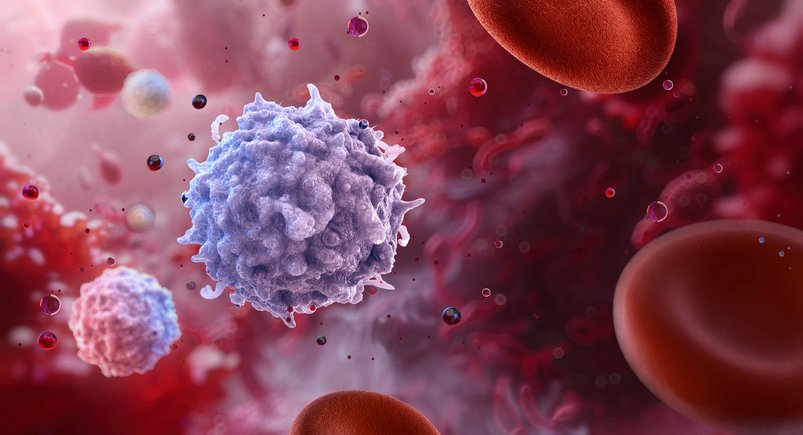
Eli Lilly is expanding its reach in genetic medicines with a multi-billion dollar deal to acquire Kelonia Therapeutics, a startup whose most advanced drug candidate is a cell therapy in development for multiple myeloma. Beyond the safety and manufacturing advantages Kelonia’s in vivo approach brings to this type of blood cancer, the biotech comes with a platform technology that could help Lilly make genetic medicines more accessible to patients as treatments for additional cancers and other diseases.
According to financial terms announced Monday, Lilly is paying $3.25 billion up front for Kelonia. Shareholders of the Boston-based startup could receive up to $3.75 billion more if Kelonia’s assets achieve milestones.
Cell therapies are made by engineering a T cell to express a receptor that targets a cancer cell. For the currently available treatments in this class of so-called CAR T therapies, the engineering steps happen in a lab. Beyond the cost and complexity associated with this ex vivo manufacturing, patient preparation to receive a cell therapy includes a preconditioning drug regimen that introduces additional toxicity and complication risks.
For Kelonia’s therapies, engineering of cells happens inside the patient. This in vivo approach avoids the complexity and costs associated with currently available cell therapies and does not require a preconditioning regimen. The startup’s drugs come from a proprietary technology platform that uses lentivirus-based particles engineered to enter T cells inside the patient, getting them to express the chimeric antigen receptor (CAR) that makes a CAR T therapy.
Kelonia spun out of the Massachusetts Institute of Technology. In a 2022 interview, then Chief Scientific Officer Kevin Friedman said Kelonia’s technology modifies the envelope of a lentivirus to “detarget” it from binding to unintended targets. Kelonia then decorates the lentivirus with antibodies that direct the virus and its genetic payload to the proper destination in the body. These therapies are intended to be one-time treatments. When Kelonia emerged from stealth, Friedman said the startup’s first indication would be a blood cancer. But he added that other indications could be addressed by engineering the lentivirus to go after a different tissue and switching out the genetic cargo. Friedman has since become Kelonia’s CEO.
Even before the Lilly acquisition announcement, Kelonia’s technology had already caught the eye of pharmaceutical companies. In 2024, Astellas Pharma began a collaboration with the startup to discover and develop in vivo CAR T therapies for targets that were not disclosed. Targets are also undisclosed for a Johnson & Johnson collaboration that started last fall.
Lead Kelonia therapeutic candidate KLN-1010 is designed to target BCMA, a protein expressed on the surface of the B cells that drive multiple myeloma. BCMA is already targeted by Abecma, from Bristol Myers Squibb, and Carvykti, from partners Johnson & Johnson and Legend Biotech. Both are ex vivo cell therapies that come with the manufacturing challenges and complication risks associated with the broader CAR T drug class.
The first human data for KLN-1010 were presented last December during the annual meeting of the American Society of Hematology. In all three patients treated with a high dose and a fourth who received a lower dose, results showed 100% minimal residual disease-negative response rate, meaning there were no detectable cancer cells. An excessive immune response called cytokine release syndrome is a known complication risk for CAR T therapy. No incidents of this complication were classified at Grade 3 or higher. Results also showed no neurotoxicity and lower rates of cytopenias, the low levels of blood cells that is another known risk of CAR T treatment. In the acquisition announcement, Jacob Van Naarden, executive vice president and president of Lilly Oncology and head of corporate business development, pointed to the potential manufacturing and safety advantages of Kelonia’s technology.
“The early clinical data for KLN-1010 are highly encouraging, both as a potential step forward for patients with multiple myeloma and as proof of concept for Kelonia’s platform, he said. “We look forward to working together with the Kelonia team to rapidly advance KLN-1010 to address patient need and recognize the full potential of their platform in other conditions where patients may benefit.”
Kelonia is Lilly’s second acquisition of an in vivo cell therapy startup this year. In February, the pharma giant struck a deal to buy Orna Therapeutics, whose lead program is an in vivo CAR T treatment designed to target the protein CD19 on the surface of disease-driving B cells. This Orna program is on track to begin Phase 1 testing in autoimmune diseases.
Lilly expects to close the Kelonia acquisition in the second half of this year. It follows Lilly’s buyout last week of CrossBridge Bio, a startup developing antibody drug conjugates for cancer. Pitchbook Senior Biotech & Pharma Analyst Ben Zercher sees the Kelonia deal as another example of Lilly building out its pipeline by deploying cash from the blockbuster sales of its metabolic drugs Mounjaro and Zepbound. In an email, Zercher said the Orna and Kelonia acquisitions are complementary. While Orna uses circular RNA to address autoimmune diseases, Kelonia’s viral vector technology is built for the durable effects needed in cancers like multiple myeloma.
“The $3.25 billion upfront for a Phase 1 program may look rich, but it reflects the scarcity of clinical-stage in vivo CAR T assets,” Zercher said. “If the modality delivers on its promise, it could dramatically expand patient access by eliminating the manufacturing and treatment burden of today’s ex vivo therapies. With new entrants likely to pressure GLP-1 pricing in the obesity space, Lilly is using today’s cash flow to fund tomorrow’s growth drivers.”
Kelonia is actually Lilly’s third in vivo genetic medicines acquisition in the past year. Last summer, the pharma company agreed to pay $1 billion to buy Verve Therapeutics, developer of in vivo gene-editing medicines for cardiovascular diseases. Lead program VERVE-102 is designed to edit the PCSK9 gene, which provides instructions for making a protein that regulates cholesterol levels. This program is currently in early-stage clinical development.
Illustration: Ruslanas Baranauskas/Science Photo Library, via Getty Images
