
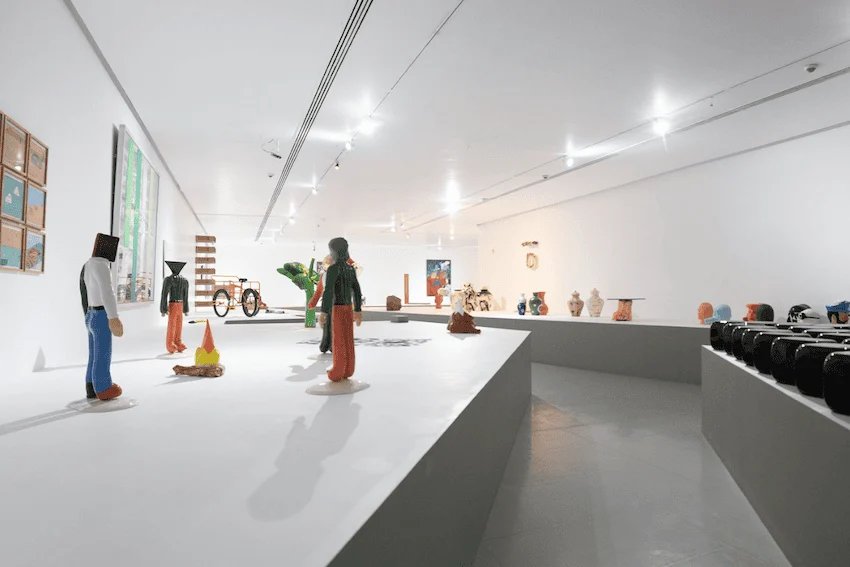
Tucked in the shadow of Guadalajara, the neighboring towns of Tonalá and Tlaquepaque have long been celebrated as the cradle of Mexican clay, their roots tracing back to pre-Columbian Tonalteca ceramics. From this tradition of kilns and workshops, one name has risen to international prominence: Suro Ceramics.
What began in the early 1960s as a modest clay workshop has evolved, across three generations of the Suro family, into a world-renowned contemporary art studio whose pieces have graced the tables of Michelin-starred restaurants, the walls of major airports and the hands of more than 700 artists from around the globe.
The founder, Noé Suro, was a craftsman with a designer’s eye. In the 1970s he created the now-classic ceramic beehive lamp, and through that decade and the next he built the business into a supplier for emerging hotel chains, including Hyatt, across Mexico.
The workshop’s transformation into something far more ambitious began in the early 1990s, when José Noé Suro — the founder’s son — brought his passions for contemporary art, design and gastronomy into the family enterprise. Tradition and centuries-old techniques became a foundation for experimentation rather than a constraint, as he invited local and international artists to work alongside the studio’s craftsmen.
A New Era
José Noé Suro became a gravitational figure in Guadalajara’s cultural scene. As a partner of Bar Américas, one of Mexico’s most influential electronic music venues since the 1990s, he moved fluidly between artistic circles. Collaborations with artists Jorge Pardo and José Dávila signaled a shift in the studio’s identity — from craft workshop to creative laboratory.
To date, more than 700 artists have worked at Suro, and José Noé has assembled a collection of more than 500 pieces. The scope of that legacy was on full display in “Suro Ceramics: A History of Collaboration, Production, and Collecting in Contemporary Art,” an exhibition organized by curator Viviana Kuri at the Zapopan Art Museum from 2021 to 2022.
The roster of collaborating artists reads like a survey of contemporary art’s most significant voices: Gabriel Orozco, Tatiana Margolles, Erwin Wurm, Marcel Dzama, Rirkrit Tiravanija, Nairy Baghramian, John Baldessari, Sarah Crowner, Nicole Eisenman, Michelle Grabner, Adam Pendleton and Jeff Gibbons, among others. Suro’s reach extends into public space as well. In Dallas, the studio’s work appears at the Marketplace Commissary in downtown — designed by Jorge Pardo — and along the walkways of Oak Cliff’s Bishop Arts District. Installations have also been mounted at John F. Kennedy International Airport in New York and at Guadalajara’s international airport.
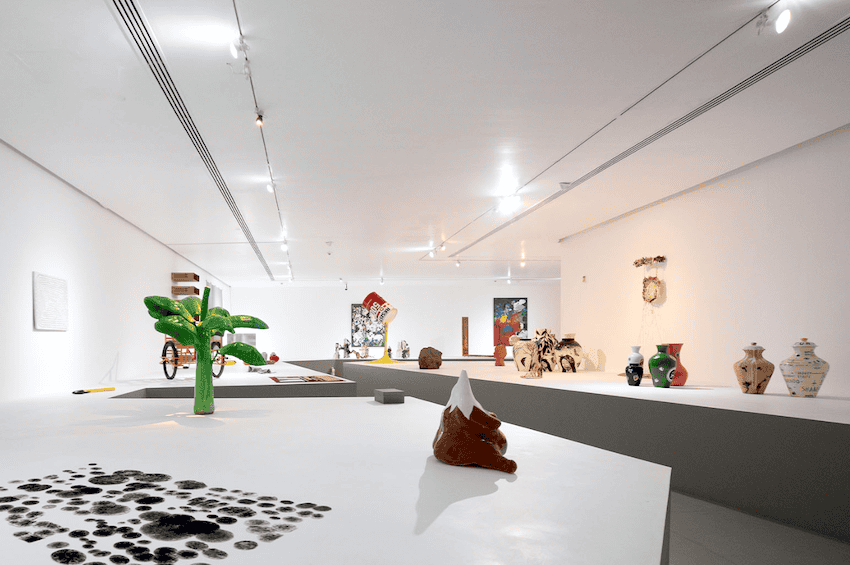
In a parallel venture, Noé Suro and Sara Pereyra founded Merkki, a design and collaboration platform that pairs Suro’s traditional craftsmanship with the visions of contemporary artists and designers, yielding functional pieces that push the boundaries of both form and technique.
At the Table
José Noé Suro’s appetite for gastronomy has made the studio a natural partner for some of the world’s most acclaimed chefs. Suro has produced tableware for restaurants led by Elena Reygadas of Rosetta, Eduardo García Guzmán, Alfonso Cadena and Francisco Ruano in Mexico, as well as Enrique Olvera of Pujol and Daniel Humm of Eleven Madison Park, the three-Michelin-star destination in New York.
A collaboration with artist José Dávila produced a custom tableware line for Casa Dragones, the celebrated tequila brand based in San Miguel de Allende.
The arc from a Jalisco clay workshop to a studio shaping the tables and walls of the world’s most discerning spaces is, in many ways, the story Tonalá and Tlaquepaque have always told — one fired slowly, shaped by hand and built to last.
Ana Paula de la Torre is a Mexican journalist and collaborator for various outlets, including Milenio, Animal Político, Vice, Newsweek en Español, Televisa and Mexico News Daily.
