
Listen to this article
Estimated 4 minutes
The audio version of this article is generated by AI-based technology. Mispronunciations can occur. We are working with our partners to continually review and improve the results.
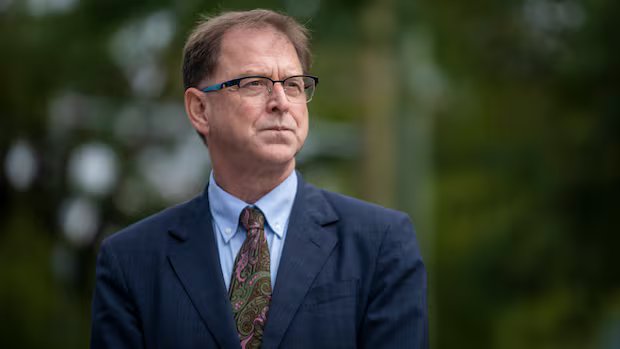
B.C.’s energy minister says that a northern route for an oil pipeline from Alberta, which was recently proposed as part of a memorandum of understanding (MOU) signed with Ottawa, is simply not realistic.
Adrian Dix was commenting on a recent story in the Globe and Mail, which cited two federal government sources who said that Ottawa prefers a southern route for the proposed pipeline, which does not yet have a private sector proponent.
The B.C. government has expressed firm opposition to any pipeline to the northern coast, citing a decade-old oil tanker ban along the North Coast, and the fact it wasn’t included in any discussions before the Alberta-Ottawa MOU was signed.
A First Nations leader says that the pipeline project would still require free and informed consent from nations, regardless of whether it’s a northern or southern route.

B.C. Energy Minister Adrian Dix said a northern route for a pipeline from Alberta is ‘not a realistic option,’ amid reporting from The Globe and Mail that Ottawa may be considering a southern route for the project. Dix said consultations continue with the federal government as volatility from the war in Iran increases pressure for Canadian energy projects.
For his part, Dix says he is happy to work with the federal government as they consider the proposal.
“The northern route, in my view, is not a realistic proposal. It’s not realistic because the tanker ban’s in place for a good reason, for communities and for the economy,” Dix told reporters on Tuesday.

Prime Minister Mark Carney and Alberta Premier Danielle Smith announced an energy agreement that includes a path forward for a new bitumen pipeline to the B.C. coast. Smith tells Power & Politics that she has ‘every expectation that once it’s on the major projects list that we will have one or more companies step forward to build it.’ B.C. Premier David Eby says he’s concerned the pipeline project will be an ‘energy vampire for limited federal attention.’
The energy minister added a northern pipeline route was not a good idea because there was very little support, and that “no person would pay for it.”
“We’ve been really clear on some of these issues, particularly as you’ll note on the tanker ban,” he said.
“And if this report indicates a federal government acceptance to that point of view, I think that’s a good development.”

With news that the federal government and Alberta are closing in on a new energy deal that reportedly includes a path for a new oil pipeline to the West Coast, B.C. is now reversing course and backing plans to expand Trans Mountain’s capacity.
Dix and the B.C. government continue to push for existing pipelines, such as the recently-expanded Trans Mountain Pipeline, to be used to their full capacity instead of building a new one proposed by Alberta.
The MOU signed in November gives Alberta special exemptions from federal environmental laws, while stating a new pipeline can only be built with the development of a major carbon-capture project and that it would be privately financed.
In a statement, a spokesperson for Alberta Premier Danielle Smith said it was evaluating all possible routes for the new pipeline proposal, as it prepared a submission to the federal Major Projects Office.
“As the proponent, Alberta is leading the evaluation of all practical routes to ensure the proposal is economically viable, socially responsible, and respectful of First Nations,” the spokesperson wrote.

B.C. officials are reacting today to a Globe and Mail report that says the federal government is eyeing a pipeline route from Alberta to B.C.’s South Coast, bypassing the controversy over a proposed northern route. The CBC’s Jessica Cheung has more on the reaction from Victoria.
Heightened interest
Terry Teegee, the regional chief of the B.C. Assembly of First Nations, says there’s heightened interest in a new oil pipeline due to the gas price crisis sparked by the war in the Middle East, as well as ongoing trade tensions with the U.S.
He reiterated a stance expressed by many First Nations at the time of the MOU signing — that they were left out of any discussions.
“Whether it’s a northern, southern route … it’s unceded, unsurrendered territory,” Teegee said.
“We need to be consulted, accommodated and free, prior and informed consent needs to be lived up to.”

Teegee, much like Dix, questioned the viability of the pipeline proposal — pointing to the tens of millions spent on the failed Northern Gateway pipeline.
“It’s going to be difficult to get a proponent. I think they, the citizens of British Columbia and Canada, already own a pipeline right now,” he said.
“And I’m certain that, considering where we’re at with the economy, the cost of living, et cetera, we’re not interested in owning another pipeline.”
