
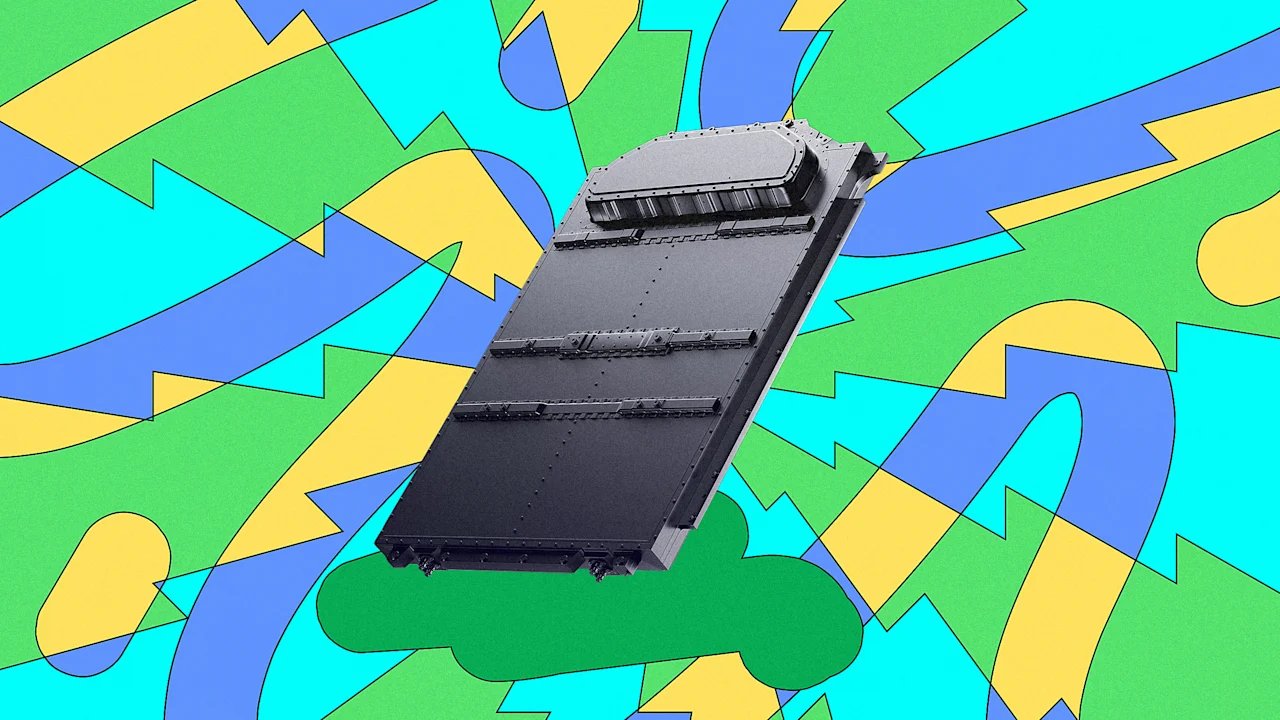
A new battery from Chinese company CATL, the world’s largest electric vehicle battery manufacturer, can be fully recharged in under seven minutes.
Charging that battery from 10% to 80%—often considered an ideal maximum charge to protect the battery’s health—takes less than four minutes.
It’s a striking technological advancement that closes the gap between EVs and gas vehicles—and beats out a recent battery advancement by Chinese EV giant BYD.
China has come to dominate the electric vehicle and battery industries, and companies there are continuing to make impressive leaps forward.
Shenzhen Stock Exchange-listed shares of CATL (Contemporary Amperex Technology Co., Ltd.) are up more than 89% over the last 12 months, compared with a 53% increase for the Dow Jones U.S. Auto Manufacturers Index over the same period.
The ultrafast battery arms race
In March, BYD announced its Blade Battery 2.0, a new battery that can go from a 10% to 80% charge in six minutes and 30 seconds, or from 10% to 97% in nine minutes.
Now, CATL has its own ultrafast option: At a Tech Day Event on April 21, the battery manufacturer debuted its third-generation Shenxing Superfast Charging Battery.
That battery can charge from 10% to 35% in one minute, from 10% to 80% in 3 minutes and 44 seconds, and from 10% to 98% in 6 minutes and 27 seconds.
“This effectively closes the gap with [internal combustion engine] vehicles,” Bernstein analysts wrote in a note, according to The Wall Street Journal.
EV batteries often struggle in extremely cold temperatures, because the bitter cold slows down the chemical reactions inside them. That means this kind of weather can both reduce a vehicle’s range and slow down the time it takes to recharge.
But CATL’s Shenxing Superfast Charging Battery works in freezing temps, too. At minus 30 degrees Celcius, or minus 22 degrees Fahrenheit, the battery can charge from 20% to 98% in about nine minutes.
BYD’s Blade Battery 2.0, for comparison, takes about 12 minutes to charge to 97% at minus 20 degrees Celsius.
Both CATL’s Shenxing and BYD’s Blade batteries are lithium-iron-phosphate (LFP) batteries, which contain no nickel or cobalt. These batteries are already common in Chinese EVs, because they use less expensive ingredients than lithium-iron batteries, and they’re durable and safe.
More American automakers have been considering LFP batteries, too. Ford Motor Co. will use one in its forthcoming midsize EV. Tesla also uses LFP batteries—though it stopped using them in many of its EVs sold in North America because of tariffs. Elon Musk’s electric car company gets LFP batteries from both CATL and BYD.
