
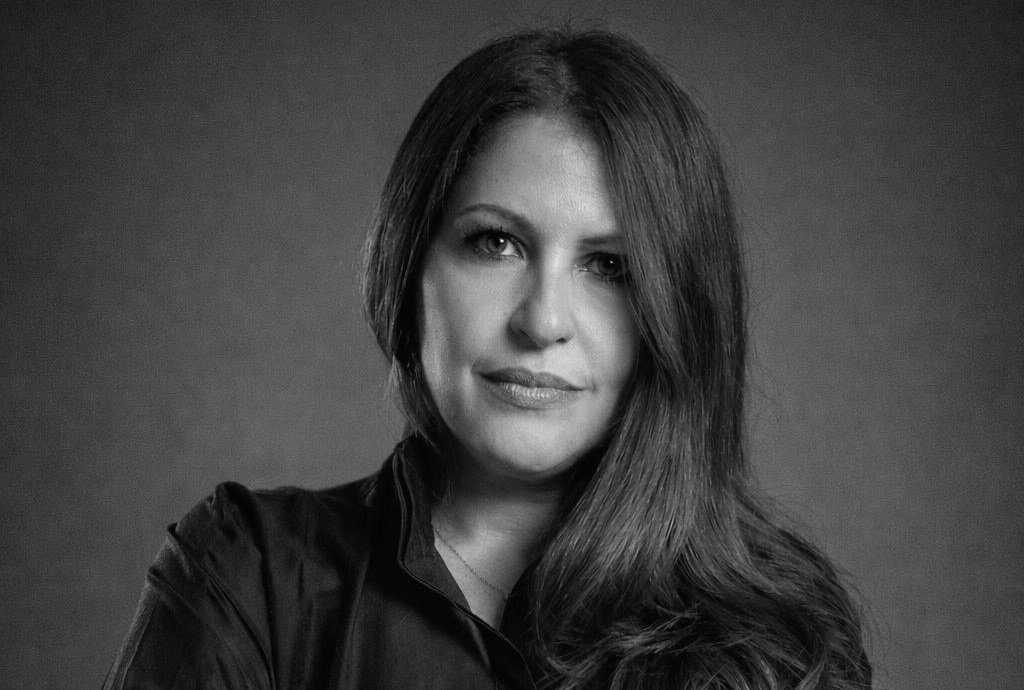
“It’s not just a film festival; it is a celebration of the image in all its forms”
– The renowned actress and director tells us more about the gathering located in the Tunisian coastal town of Gabès, following her appointment as its new head honcho
(© Yaluna X Ghassen Barkaoui)
Cineuropa chatted to renowned Tunisian actress and director Afef Ben Mahmoud, who has been appointed as the new director of the Gabès Cinema Fen festival. She is best known for her roles in The Scarecrows by Nouri Bouzid and Streams by Mehdi Hmili, for which she received the Best Actress Award at the Cairo Film Festival. She also founded Mésanges Films, a production company through which she produced The Scarecrows, which was presented at the 76th Venice Film Festival and received the Special Human Rights Prize.

The event, set in the coastal town of Gabès, is gearing up for its eighth edition, unspooling from 26 April-2 May. Ben Mahmoud discusses the programme, which combines different art forms and aims to raise awareness about environmental crises.
Cineuropa: The festival is called Gabès Cinema Fen. Fen means “art” in Arabic, which suggests a broader artistic scope beyond cinema. Could you elaborate?
Afef Ben Mahmoud: Absolutely. It’s not just a film festival; it is a celebration of the image in all its forms. We bring together cinema, video art and XR, so the focus is really on image and movement, rather than cinema alone. That’s why we use the word fen, or “art”. Also, the festival is deeply rooted in the city of Gabès. It’s not just a location; it’s an essential part of our identity. Its geography, its light and its relationship to the sea all shape how we think about programming.
When people ask if the festival has a theme, I often say that our “theme” is the dialogue between our three main sections – cinema, video art and XR – and the city itself. Our goal is to create a kind of fusion between these elements. We look for works that resonate across disciplines and connect with the environment of Gabès. For example, this year, we welcome Philippe Griffo, who curates our XR section. His background is in video art, and he now specialises in XR, which perfectly embodies this crossing of forms. We also try to highlight artists who move between different practices, like in the case of the Iranian film Oh, What Happy Days!: it features Shirin Neshat, who is widely known as a visual artist and filmmaker, but who here appears as an actress. This kind of fluidity between roles and disciplines is something we actively encourage. Another example is Nicola Vadimov’s film on Gaza. The film itself has a very strong visual language, almost like an installation. When I spoke with him, he mentioned that he had always imagined presenting it as an installation as well. I told him: “You are in the right place.”
Gabès has also faced environmental challenges, particularly pollution. How can a festival like yours engage with these issues and connect with local audiences?
This is a very important question for us. One of our sections, Cine Terre, is dedicated to environmental themes. It takes place outdoors, in a beautiful oasis, where we screen films. The audience can camp overnight, and after the screenings, we open a discussion about environmental issues. Art can’t solve these problems directly, but it can open conversations, raise awareness and create a shared space for reflection. We hope that by bringing together local communities, artists and audiences, we can contribute to a broader awareness that might lead to change. We are screening the short Accumulation, which reflects on waste and environmental degradation on a global scale. It’s a visually striking work that could easily be presented in a museum context, and it aligns perfectly with our approach of bridging cinema and contemporary art. We also have a Korean feature, The Fin, which is a remarkable film both visually and emotionally. It begins with a simple line about the sea and fishing – something that resonates deeply in Gabès, where environmental damage has affected the coastline and local livelihoods. When audiences here hear that, they immediately connect it to their own reality. For us, it’s important to show that these issues are not isolated. Environmental crises are global, and cinema can help us see those connections. At the same time, we are aware that change must come from people.
Tunisian cinema has garnered increasing international visibility in recent years. There is also a strong presence of female directors. How do you see this development?
What we are witnessing is part of a broader movement across the Arab world, where many women filmmakers are emerging and gaining recognition. If you look at recent international selections, including the Oscars, you see several works by female directors from the region. That says a lot about the moment we are in. In Tunisia, however, there is also a specific historical context. The reforms introduced by Habib Bourguiba gave women significant rights early on, and this has had a lasting impact. Growing up in an environment where you have a certain degree of freedom shapes your mindset. And art, fundamentally, is about freedom – the freedom to think, to create, to express. This doesn’t mean that challenges don’t exist. The question of representation is global, not limited to the Arab world. But in Tunisia, this early foundation has allowed many women to develop strong artistic voices, including in cinema.
Another important factor is education. Tunisia established film schools relatively early, in the 1960s and 1970s. This created a solid infrastructure for the industry. Cinema isn’t just about directors; it’s about the entire ecosystem, the crews, the technicians, the collaborators. Having access to training and professional networks has been crucial. So, the success of Tunisian cinema today is not only about individual talents, but also about this collective foundation. And I think that is what gives it its strength.
