
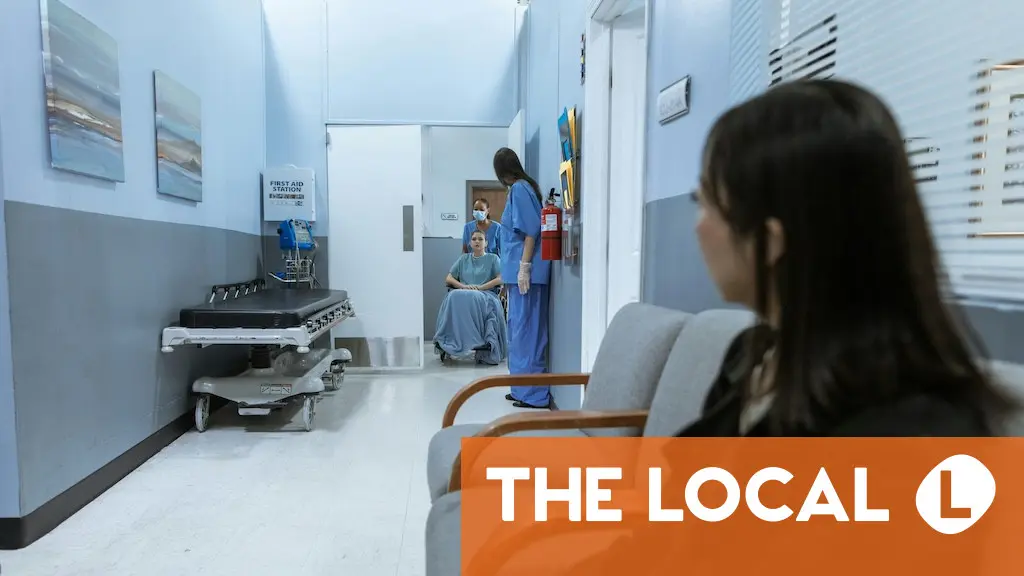
Spaniards often go to ‘urgencias’ (the ER) even when it’s not a serious medical emergency. So when is it really acceptable to turn up at A&E and when do you need to book an appointment first?
It’s important to know that there are different types of public healthcare facilities where you can get emergency help in Spain.
The two main ones are the local health centres (Centros de Salud de Atención Primaria) where GPs are, and then the large hospitals with all the different healthcare units for real medical emergencies.
The general consensus among doctors in Spain is that people should only go to urgencias (ER) at a major public hospital if they experience the following:
- Chest pain – particularly in males over aged 50. This can also be accompanied by cold sweats and dizziness.
- Weakness or numbness – particularly in the case of a stroke or other accident.
- Bleeding – Including vomiting blood, rectal bleeding, coughing up blood, or heavy bleeding after an injury anywhere on the body
- Fractures or broken bones
- Loss of consciousness
- Stroke symptoms like one-sided facial paralysis, one-sided body weakness or slurred speech
- Anaphylactic shock or severe allergic reactions
- Injuries after a bad accident
- Worrying symptoms like pain or bleeding during pregnancy
You will typically be seen in order of severity so you may have to wait a long time if you go for an issue that is less serious than those above.
READ ALSO: Spain’s public health system given a ‘fail’ for first time on record
Advertisement
You should not go to the ER at the hospital for minor issues like stomach bugs (unless extremely severe), toothaches, or colds, even though they can be very unpleasant.
It’s all about common sense and civic responsibility, really. Think whether you should really be using up doctors’ time and resources for this problem or if it can wait until you get an appointment with a GP or it’s not so serious.
This is where the second type of emergencies come in. These are emergency appointments at your local clinic, the same one where you go to see your GP. Keep in mind that some smaller neighbourhoods might have smaller local health centres and refer you to a larger health centre in a neighbourhood close by when you need something outside the hours of 8:00 and 15:00.
This type is to be used when you have an urgent health issue like you suspect a urinary tract infection, you have continuous and bothersome pain or you have mild breathing issues.
And if you need a prescription to get medicine from a pharmacy for a non-serious condition; you should book a cita (appointment) with your GP, not just turn up at the urgencias unit at your local clinic.
READ ALSO: Is it worth getting private insurance in Spain if you have access to public healthcare?
Advertisement
You may need to wait a few days or weeks even to see your GP if you live in one of Spain’s bigger cities. This can be too long to wait for many health issues.
In this case, as long as you don’t require urgent treatment at the big hospitals, you can request an emergency appointment at your local clinic. You can’t book these in advance, you’ll just have to turn up and see when they have availability.
It’s important to remember though that these emergency appointments at your local clinic or centro médico are only during opening hours. If something happens out of hours, you’ll have to go to a bigger 24-hour emergency centre (there are a few that serve several neighbourhoods), usually at a local health centre or wait until the next day if it’s not that urgent.
Advertisement
You also need to consider what is appropriate for an emergency appointment at your local clinic though. For example, as no treatments for the common cold exist – only the suppression of symptoms for which you can buy medicine for over the counter at pharmacies – it is not considered an emergency.
Likewise, simple coughs and other viral infections which have no cure might not warrant a visit either, unless they get very serious or have other complications.
If in doubt, you can call 061, which is available 24 hours a day. This will enable you to speak with someone trained in medical care who can give you health advice and let you know if it’s necessary to go to the ER or not or if you should ask for an emergency appointment at your local clinic. If they deem it to be a proper emergency, they can also put you through to the ambulance services.
Keep in mind, this is for the public health system in Spain. If you have private health insurance, your insurer should give you information on where to go in an emergency and what type of emergency care is covered. This may mean going to the ER at a private hospital or making an emergency appointment at a private clinic.
READ ALSO: Is it mandatory to vaccinate your children in Spain?
