
– Jacqueline Zünd takes a clinical yet poetic approach to examine the profoundly shocking consequences of climate change
After tackling the consequences of climactic changes which aren’t only impacting the world at large but also interpersonal relationships in her first fiction feature film Don’t Let the Sun, which was presented in Locarno’s Filmmakers of the Present section last year, Swiss director Jacqueline Zünd is returning to the documentary form with Heat, which has been selected in Visions du Réel’s International Feature Film Competition. The movie sees her returning to the themes running through Don’t Let the Sun, this time transposing them to the real world, a dystopian world where heat is engulfing everything in an increasingly mortal embrace.

Set in the Gulf states where temperatures can soar above 50°C, Jacqueline Zünd’s incisive and penetrating movie, which is never short on a healthy dose of empathy, depicts the horror endured by individuals who don’t have the resources to protect themselves from the heat which is consuming them. The film sees society divided into two distinct groups: the few privileged people who are still able to protect themselves from the sun which has now become their enemy and the migrants from southern countries who are forced to endure and try to combat – with the scant resources at their disposal – a heat which is slowly destroying their bodies and their minds. Reduced to ghosts, silent shadows who trudge across the searing-hot tarmac with a step both decisive and resigned, these human beings, considered second class citizens, are trying to survive as best they can in a suffocating, agonising, insidiously mocking heat. By way of her film, Zünd restores the dignity of these forgotten souls and allows them to express a malaise which is eating them up inside, much like the sun itself. Whether we’re dealing with a delivery man who’s refused access to the air-conditioned rooms of the restaurants for which he works, a young woman working as a waitress in an igloo bar where her body is devastated by repeated sessions of freezing and thawing, or a woman who’s trying to save a group of stray cats, treating them to food and ice each and every evening, everyone is trying to survive in whichever way they can in a dystopian world which no longer follows any rules.
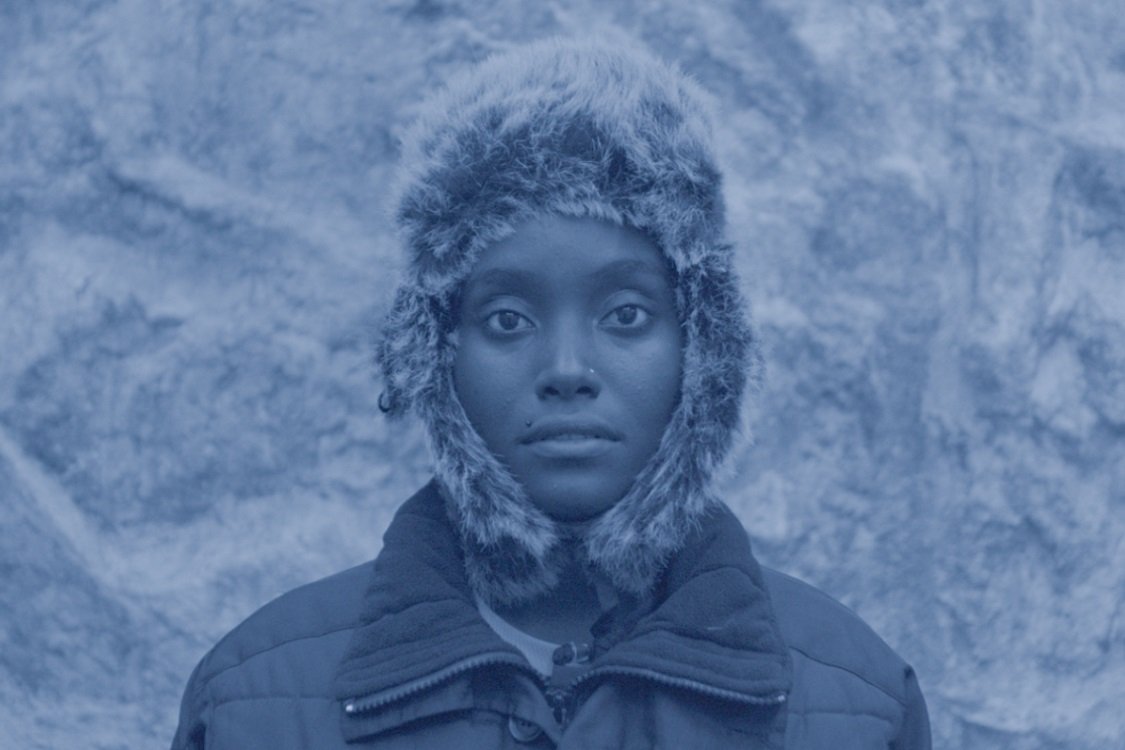
Thanks to her incredibly well-judged use of deep tones ranging from yellow (the blinding outside-areas of cities surrounded by the desert) to blue (the interiors of super-modern buildings where air conditioning systems act like artificial lungs), Jacqueline Zünd successfully conveys what it means – to the point we feel it on our skin – to live in a world so hot it’s unlivable. Sometimes, though only very rarely, these yellow and blue shades come into contact with one another, reminding us that outside of these buildings, which have become climatised strongholds, the sun never stops burning, consuming everything and everyone.
The immersive soundscape accompanying these images, which might be described as science-fiction-like, further accentuates the feeling of suffocation and claustrophobic captivity. Shots of the sun are almost always accompanied by an obsessively persistent metallic sound, amplifying its destructive power. When Zünd films the city, the sounds are almost always muffled rather than real, as if reality were being filtered through the madness of a heat which is obliterating everything.
“No lifeform can withstand such heat,” is a statement which seems to sum up the resigned malaise of these human beings who are the victims of the excesses of a capitalist society which has sacked and exploited the natural world to the point of destruction. In short, Heat is a cruelly fascinating and aesthetically powerful film which confronts us with the devastating consequences of human greed.
Heat was produced by Lomotion AG, real Film GmbH, SRF Scweizer Radio und Fernsehen and ARTE G.E.I.E and is sold worldwide by Taskovski Films Ltd.
(Translated from Italian)
