
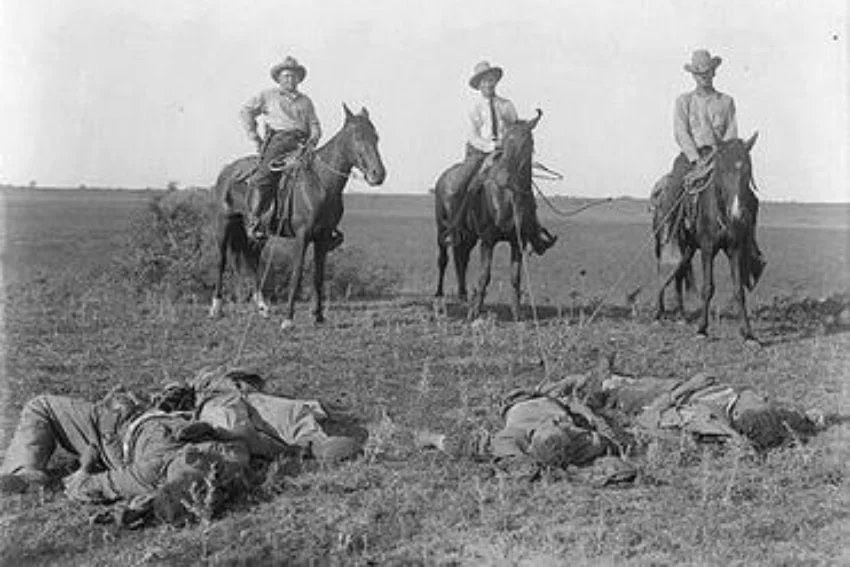
You almost certainly have never heard of the early-20th-century crusading newspaperman Carlos M. Wood, whose star-crossed, peripatetic life met an early end in 1914 at the hands of the Texas Rangers. But his story — which began in his birthplace of Matamoros, Tamaulipas, and ended in Marfa, Texas — was filled with controversy, conflict and even a historical mystery.
Wood’s story is that of a young man who, in the space of a decade, went from attending rallies for the Mexican conservative dictator Porfirio Díaz to using his border newspaper in Marfa, Texas, to call out local politicians, as well as the Texas Rangers, for bad behavior — particularly the Rangers, who had a local reputation among Mexicans in Texas at the time for brutality and impunity.
And, as a newly discovered report found in Mexico’s archives reveals, Wood may have paid the ultimate price for his words: He died in 1914 after being shot multiple times by Rangers who had been serving him with an arrest warrant — most likely for criminal libel. According to a report made at the time by one of the arresting officers, they shot Wood because he resisted arrest.
Testimony in the newly discovered Mexican report, however, suggests that Wood did not resist arrest but was rather stalked and assassinated by the Rangers sent to serve him the warrant.
Killed with ‘malicious premeditation’?
Last fall, a new and unexpected chapter unfolded in the mystery of Wood’s killing, thanks to the discovery of a 1914 report sitting unnoticed for over 100 years in Mexico’s Diplomatic History Collection in Mexico City.
Fernando Serrano, the Mexican consul in Marfa at the time, investigated Wood’s death. What he learned, according to his report to his superiors in Mexico, was that Wood had been stalked and assassinated by the Texas Rangers sent to serve the warrant, H.L. Roberson and Ira W. Cline.
According to Serrano’s report, Wood was “gravely wounded” by four bullets on June 22 and died two days later at 4 a.m. More importantly, Serrano’s report included a damning, never previously published statement by Presidio County sheriff Milton B. Chastain against one of the Rangers involved in the shooting.

In his statement for Serrano’s report, Chastain, himself an ex-Ranger, told Serrano that the Rangers who had served the warrant — H.L. Roberson and Ira W. Cline — had killed Wood “with malicious premeditation.”
Who was Carlos M. Wood?
Virtually nothing is known of Carlos’ early life. He was born to a Mexican father and an American mother in Tamaulipas, thanks in part to a decision made many years before by his grandfather, David L. Wood — himself a Texas newspaperman of some note.
David emigrated in 1856 from Texas to Reynosa, Tamaulipas, out of concern for his family’s safety: His wife, Sophronia Primm, was biracial, and while miscegenation laws were not consistently enforced in Texas, the family felt vulnerable enough that it decamped to more egalitarian climes over the border in Mexico.
Carlos first appears in the historical record in Mexico City periodicals in September 1901, at age 26, identified as a member of the Guild of Lithographers, Printers and Book Binders, at a rally in Monterrey, Nuevo León. The rally Carlos attended supported then Mexican president Porfirio Díaz, suggesting that at this point, Wood’s politics were establishmentarian.
Wood launches El Relámpago
By May 1904, Carlos Morales Wood was in the United States, publishing a heartfelt ode to his mother, Laura, in the Santa Fe, New Mexico, publication La Voz del Pueblo (The Voice of the People). Two months later, now 175 miles north in Ratón, New Mexico, he launched a Spanish-language weekly, El Relámpago (The Lightning), now as Carlos M. Wood.
Surviving issues from the newspaper’s several-month run show Wood as a stalwart of the Progressive wing of the Republican party at the time, backing Theodore Roosevelt and still supporting Porfirio Díaz — Roosevelt and Díaz were cordial allies.
The news sections of El Relámpago paid sparse attention to local issues, such as New Mexico statehood, but inexplicably devoted much space to the Russo-Japanese War. A small story about defense funds being organized for a young Mexican facing a murder prosecution in Texas was a singular hint of social justice concerns.
The ‘jailbird’ journalist
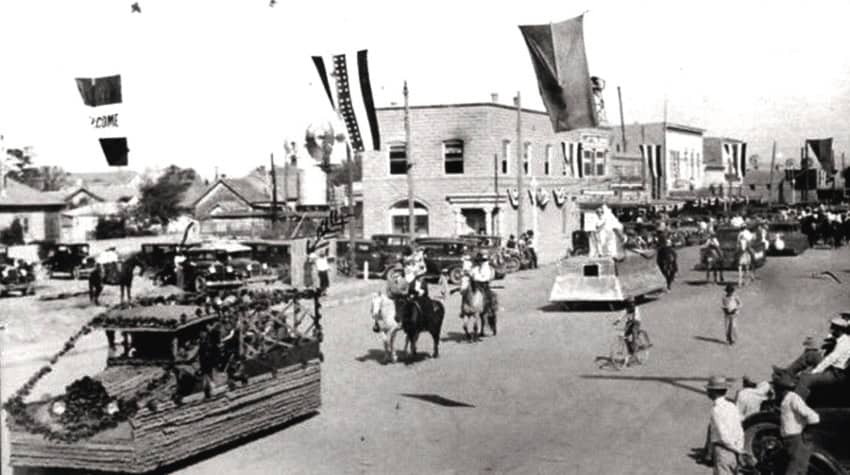
Wood abandoned El Relámpago that fall, and for the next decade led a star-crossed life full of movement. He was affiliated in one capacity or another with at least seven southwestern newspapers, including several in New Mexico: La Voz del Pueblo (1904) and La Unión Social (1914?) in Santa Fe; El Relámpago in Raton (1904); and El Independiente (1904-1906) in Las Vegas, New Mexico. He also had connections to three other publications in Colorado and Texas, and perhaps a few more.
Wood’s life was star-crossed in that he was jailed for adultery in Colorado and New Mexico, as well as for sneaking into the home of a married woman he was wooing and for assaulting an angry reader.
His transgressions drew occasional brickbats from his Spanish-language press rivals. One called him a “jailbird,” and another referred to him in a headline as “the junior hack writer in disgrace.”
A new newspaper — and an arrest warrant — in Texas
By 1914, Wood had gone to Valentine in Jeff Davis County, Texas, far from his New Mexico and Colorado haunts. In 1910, Jeff Davis County hosted 1,678 people and 74,961 cattle, a 1-to-44 ratio. Wood installed himself as the publisher-editor of La Pátria Mexicana, a newspaper run off on a borrowed press in nearby Marfa.
By this time, the Mexican Revolution was in full steam, bringing border raids, cattle rustling, banditry, Texas Ranger retaliations and refugee diasporas along the Rio Grande, a few scant miles from Marfa. At this point, it seems that Wood’s social justice sentiments had been aroused.
Within four years of opening La Pátria Mexicana, Wood found himself the subject of an arrest warrant, possibly for criminal libel — a vague but handy cudgel used by thin-skinned local authorities before First Amendment guarantees were extended to the southern states. The Texas Rangers, the state’s law enforcement arm, was given the job of serving the warrant and arresting Wood.
It would lead to his death.
The official account of the shooting
Arresting officer H.L. Roberson’s report of Wood’s shooting for the Rangers was matter-of-fact.
“June 22 (1914): Scouted from Marfa to Valentine with warrant for the arrest of Carlos Morales Wood. Trailed him back to Marfa. While resisting arrest, he was killed by Cline and myself.”
It should be noted that “resisting arrest” was a widely used euphemism of the day, excusing a range of behavior by authorities, including murder. It’s also worth noting that by the time Roberson and Cline served the warrant, Roberson already had a notoriously violent reputation: He was said to have killed 38 men, a number certainly exaggerated, but one to which we might assume Wood would offer no demur.
A smear campaign and forgotten accounts
The newspapers, including reactionary elements of the Spanish-language press, blamed Wood’s death on Wood himself — for having incited “prejudice among the Mexicans against the American people in general and the Rangers in particular.”
These newspapers also said that Wood’s La Pátria Mexicana newspaper had accused the Rangers, as well as soldiers and Americans in Texas, of being “cutthroats and thieves.” They also said Wood had “attacked roughshod” a politician in an editorial article. The press also haphazardly located the death scene, claiming that Carlos was shot either while entering his house, in front of the Palace Drugstore, or at the door of the local post office.
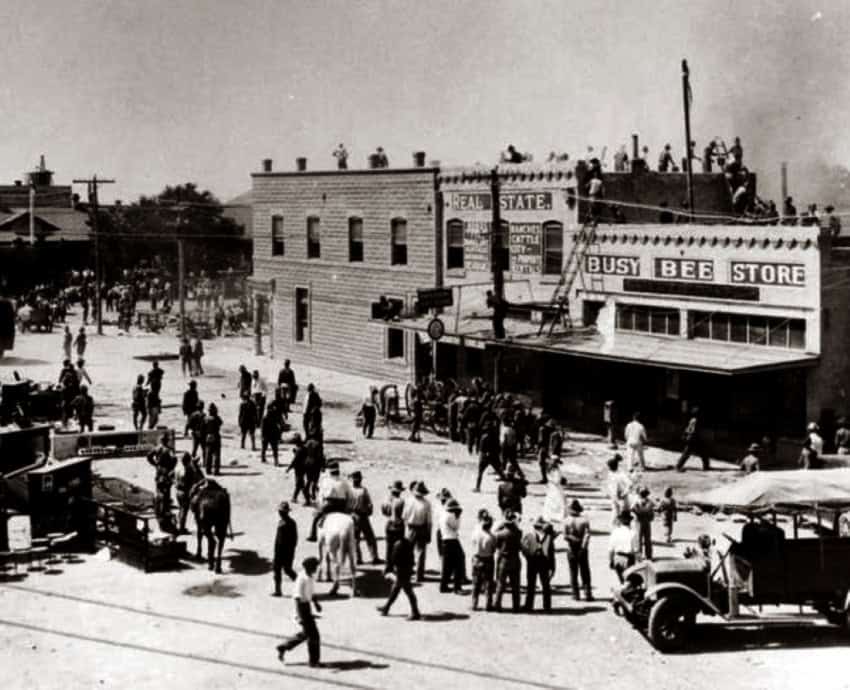
The judicial inquiry was brief, uneventful and unclear to history; possibly it was no more than a grand jury no-bill.
For a century, the story of Wood’s death was a largely forgotten bit of local Texas history. Years later, borderland folklorist Joyce E. Means did, however, collect two accounts of Wood’s shooting.
Resident Mance Bomar told Means, “They (the Rangers) saw (Wood) go by Winn’s Busy Bee Confection and past Mack’s drugstore … He was shot nine times and didn’t have time to shoot back. I just wondered what his name was.”
Bomar also said that Wood had been printing things Roberson and Cline didn’t like.
“They told him to stop or they’d kill him. He didn’t stop,” he said.
Another account that Means recorded said Wood “came to the post office to get his mail. They may have told him to surrender in English. The man didn’t even have a pocketknife.”
Ambushed on the street?
However, Serrano’s recently rediscovered report now provides much more context for Wood’s arrest and more details about the incident.
“With some of his friends,” said one statement Serrano took from an unnamed eyewitness, “Morales was walking along the sidewalk opposite the Post Office and told them to wait for him there, as he was going to pick up his mail. After he left and headed to where his friends were halfway down the street, he was called by the Rangers, and then Morales backed up and headed to the place where the voice had come from.
“Immediately, the Rangers, from behind a car, fired shots at him, and as Morales fell, he dropped his pistol.”
An irresponsible rabble rouser or warrior for justice?
Local rancher Riley Robert Smith told Serrano that Wood had been distributing literature “calculated to excite the Mexican people of Pilares to rise up against officials, that is, the State Rangers, and [to] produce an illegal tumult.”
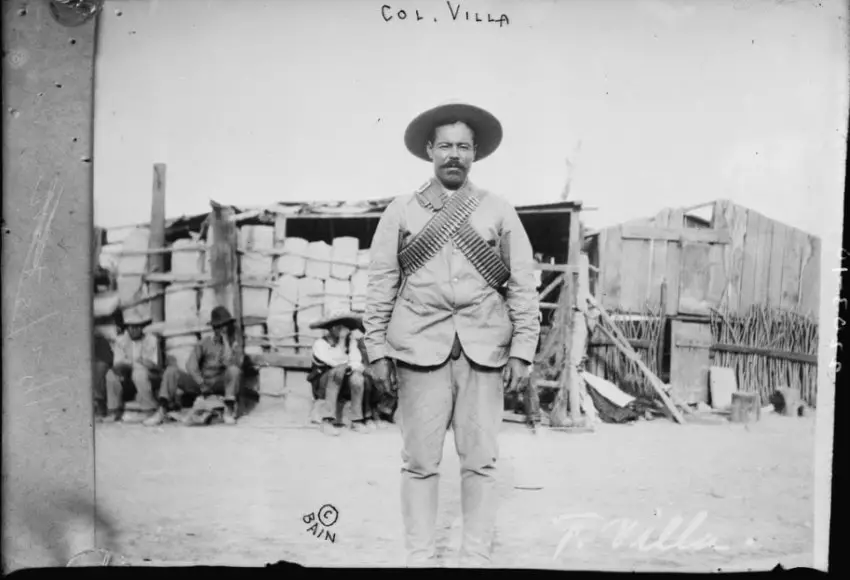
Serrano also reported that Wood’s newspaper had “severely attacked the Texas Rangers for the murder of Lino Baeze, a young Mexican outlaw accused — some say wrongly — of the 1913 ambush and killing of customs Inspector Jack Howard while Howard had been part of a posse escorting Chico Cano, a much-wanted rustler and brigand of fortune alternately in the service of Mexican insurrectionist Pancho Villa and Mexican presidents Francisco Madero and Venustiano Carranza, but mostly allied with himself.
Baeze was fatally shot on an island in the Rio Grande in early April 1914 while being pursued by Texas Cattle Raisers’ Association Chief Inspector John R. Banister, Presidio County Sheriff Milton Chastain and others.
‘An individual with a bad record who should be feared’
It’s worth noting that the Texas Rangers, officially founded in 1835, were for decades more irregular paramilitary than law enforcement, often serving at the whim of politicians, and did not become a professional police force until the 1930s.
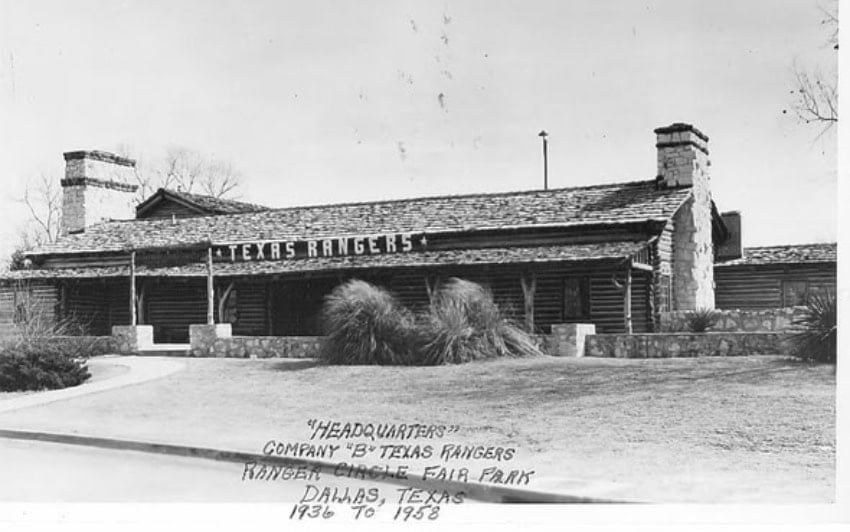
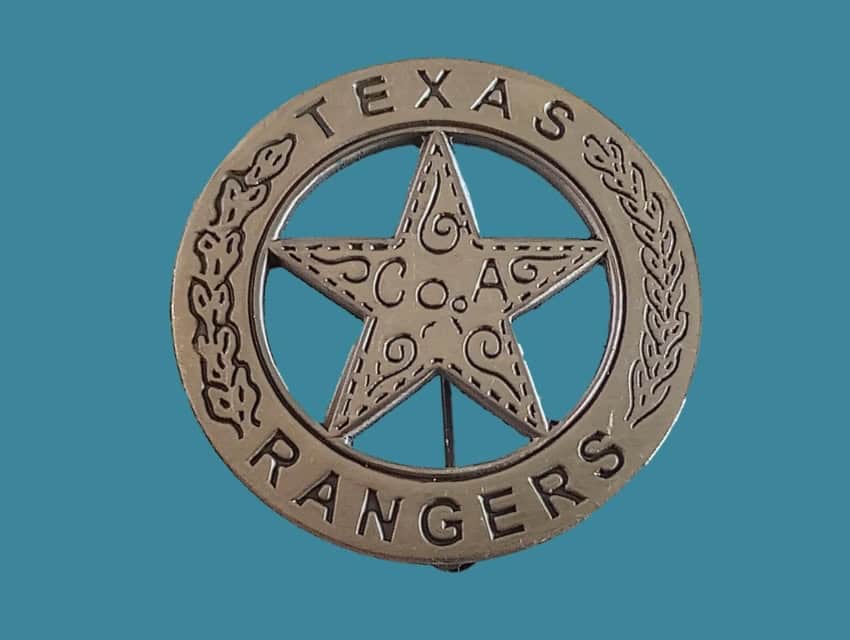
Ranger violence against Hispanics is thought to have peaked in the 1910s, the decade of the Mexican Revolution and the Bandit Wars, known as “La Matanza.” During that bloody period, the number of Hispanics killed by vigilantes, local law enforcement and the Rangers is estimated at between 300 and several thousand.
“If a Mexican were to testify against the Rangers,” Serrano lamented in his report, “his statement would have no weight, and he would undoubtedly expose himself to death at the hands of the Rangers.”
Serrano also singled out Cline as an especially problematic figure.
“I also wish to inform you,” Serrano’s report said, ”that the Ranger, Ira Cline, according to confidential information provided, is an individual with a bad record and should be feared.”
The fate of the men who shot Wood
As Serrano alluded, Cline was not a known choirboy. Apparently, neither was Roberson: In January 1915, a year after Wood’s death, Roberson — then working as foreman of the T. O. Ranch in Chihuahua — fatally shot a popular rancher during a stockyard squabble in Sierra Blanca, Texas. In the fray, an errant bullet also killed Walter Sitter, a 19-year-old cowboy in Roberson’s employ.
Roberson weathered several trials, with progressively more agreeable verdicts: murder, manslaughter and acquittal. He was never tried for the teenager’s death.
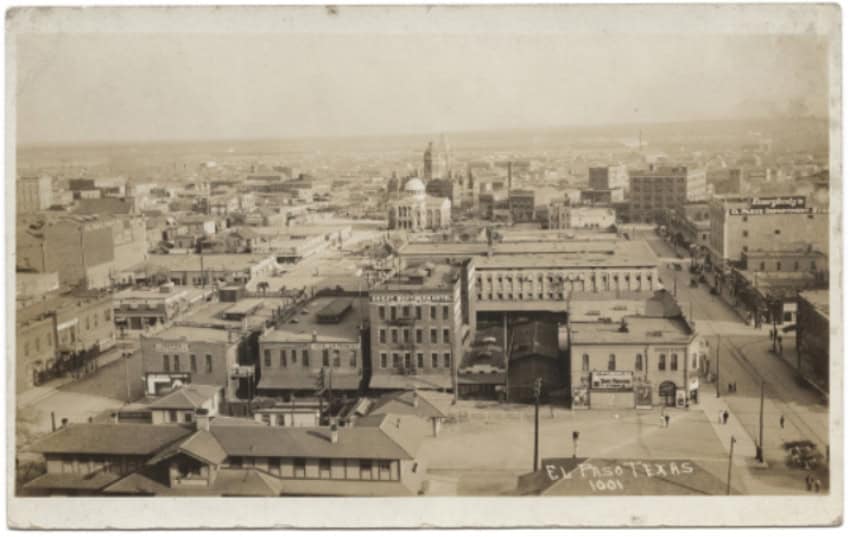
Roberson himself died of gunshot wounds in 1923, after he was shot and killed in the lobby of a hotel in Seminole, Texas, by two ranchers facing a grand jury investigation for cattle poaching. Roberson was scheduled to testify in the court case the next day.
Both men pleaded self-defense, claiming that Roberson had been threatening them, a not-implausible notion. During their trial, Roberson’s killing of Wood and others, along with a perhaps apocryphal anecdote of him having shot a Black railroad conductor and tossing his body off a train, were offered by the defense as evidence of Roberson’s homicidal inclinations. Nevertheless, both men were convicted and imprisoned for Roberson’s murder.
Cline lived longer than Roberson — he would eventually become Presidio County sheriff after the man who had accused Cline of murdering Wood, Milton B. Chastain, died in a fall off a windmill on his ranch in 1917 — but Cline’s police career had its bumps.
While serving as deputy constable in El Paso, Texas, in 1927, he and two colleagues were accused of plotting to kidnap “Mexican revolutionaries and shanghai them into Mexico,” where presumably they would be shot. He was not prosecuted. The following year, Cline was prosecuted on multiple charges of extorting money from El Paso sex workers, but he was acquitted.
Cline died in El Paso in 1965, at 82, the last link in a several-decade cycle of mayhem, murder and tragedy.
This article was adapted from the previously published article: “David L. Wood and Carlos Morales Wood: History Repeats Itself, First as Tragedy and Again as Tragedy,” Daniel Buck, Wild West History Association (WWHA) Saddlebag Newsletter, April 2026.
Daniel Buck is a member of the WWHA Journal editorial board.
