
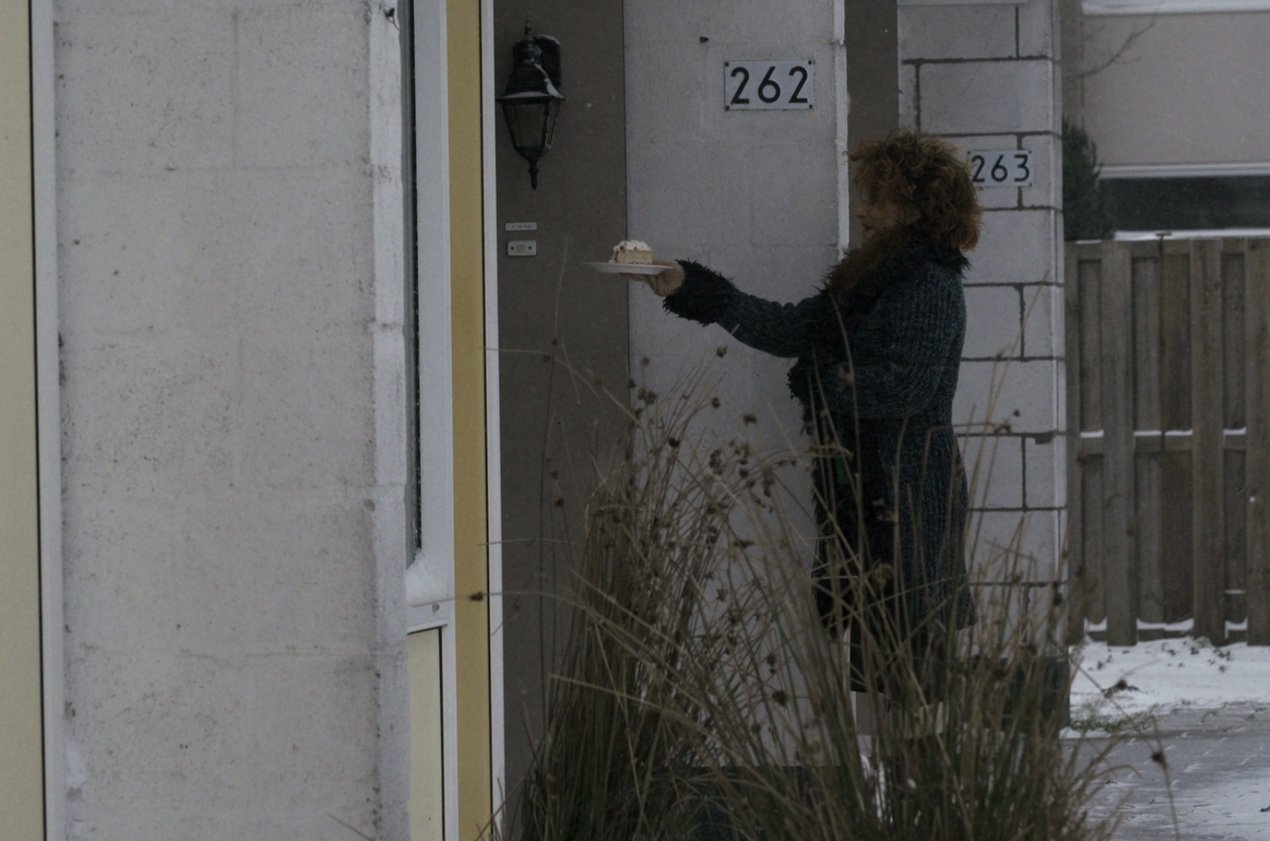
– Tatjana Božić examines the concepts of belonging, immigration and integration from her own perspective, and via the examples of her friends and family members
Ideally, belonging is a two-way agreement defined by two parties – the individual and the collective – in good faith and on the basis of free will. In practice, however, belonging is a one-way street in which the individual submits entirely to the collective. The trouble is that, since childhood, we have been taught that we need to belong to a nation, religion, political system or language group, and to take pride in belonging to one group or another.
But what if we move around, even wander for a while, only to realise that we still want to belong somewhere, but on terms we can negotiate and only to a certain extent, so that we do not have to surrender completely? That is one of the key questions posed by Tatjana Božić’s documentary Fragments of Belonging, which has just premiered in the regional competition at ZagrebDox, and it serves as the film’s starting point.

As the filmmaker states in her own narration, she spent much of her life on the move, relocating roughly every ten years. She lived with her grandparents in Bosnia, with her parents in Croatia, moved with them to the Soviet Union, then went alone to London, returned to Zagreb in the newly independent Croatia, and eventually settled in Amsterdam, where she married, gave birth to her son Waldemar, separated from her partner and remained to care for him. She wants and needs to belong, but does not know how: her manner is too quirky and direct for otherwise restrained Dutch etiquette, yet too artsy and refined for the usually working-class circles of the former Yugoslavia. She therefore visits a number of relatives and friends who moved abroad, successfully integrated or failed to integrate into their new environments, and either stayed there or returned, in order to examine their experiences and reach her own conclusions about belonging.
In that process, however, Božić also touches on other important issues surrounding immigration and integration, such as the different labels one may be assigned according to perceived “desirability”. For instance, a single woman with a good job is an expat; a friend’s foreign wife is charmingly exotic; but a single mother doing odd jobs to survive is simply an immigrant, and potentially a problem or a burden to society. Ultimately, what if she does not truly want to belong somewhere, but simply feels pressured to do so?
Fragments of Belonging is certainly a deeply personal and emotionally charged documentary that touches on a number of topics and issues in the modern world. As such, it will ring painfully true for those who have uprooted their lives and moved to environments that cannot fully understand them and are not always welcoming. Yet even viewers who have not experienced such circumstances should have no trouble relating to the film and the emotional landscape it paints.
Truth be told, it is quite a “talky”, energetic, slightly hyperactive and even unfocused piece of work, in which its author and narrator jumps from one topic to another in seemingly no order at all, yet it remains faithful to the personality – or at least the screen persona – of Božić. The line between the filmmaker and the film character is considerably blurred, and this ultimately works in the film’s favour. The blending of newly shot footage (by cinematographers Sven Jacobs and Ton Peters) with material from the personal archive is dynamic, yet smoothly handled in the editing by Jacobs, Božić, Vanja Kovačević and Frank Müller. In the end, Fragments of Belonging is at times a little chaotic, but remains a documentary that leaves a lasting impression and raises important questions.
Fragments of Belonging is a Croatian-Dutch-German production staged by LEWA Productions, in co-production with HBO, Doppelplusultra Film Productions and Spacedust Productions.
