
– Attempting to marry a ferocious satire on trash TV and a romantic melodrama, Pupi Avati returns to a more intimist form of film with the parable of a TV presenter laid low by a scandal
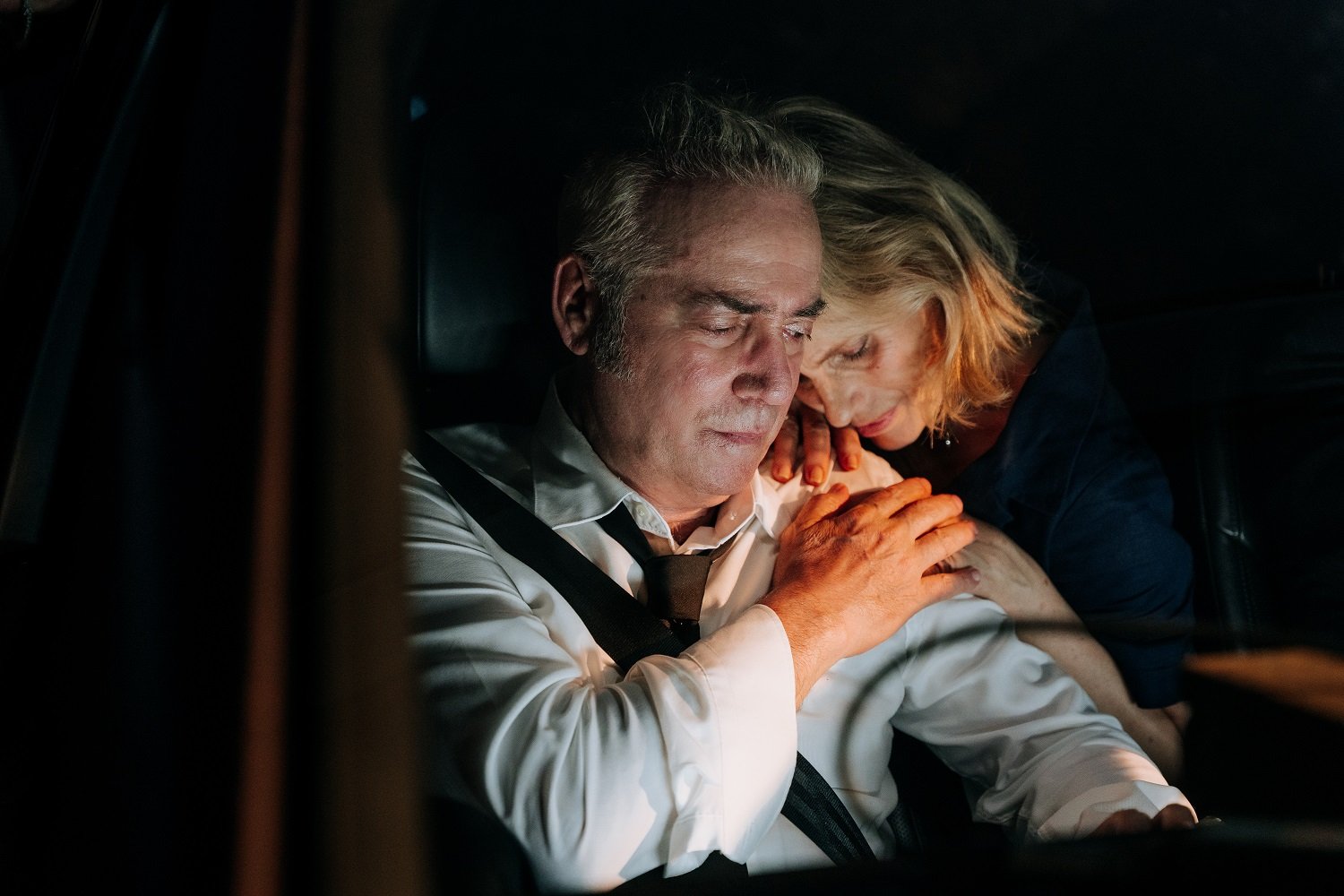
Massimo Ghini and Isabella Ferrari in The Warmth of Dance
Gianni Riccio (Massimo Ghini) is a famous TV presenter at the apex of his career. During an episode of Porta a Porta presented by real-life TV journalist Bruno Vespa, the Financial Intelligence Unit arrest him live on TV on money laundering charges. In a matter of days, he loses everything: his wife, his son and his fair-weather friends. The only glimmer of hope comes from his trusty assistant, Morè (Sebastiano Somma), and a letter from his old flame, Clara (Isabella Ferrari), whom he left on account of his ambitions. Sent to live with his aunt (Lina Sastri) in Jesolo, under house arrest in anticipation of the trial, Gianni looks back on his childhood marked by his mother’s death during childbirth, his mean-spirited, heartbreaker-lifeguard father (Raoul Bova), and everything he’s sacrificed. But maybe starting over isn’t impossible.
Barely a year on from American Backyard, 87-year-old Pupi Avati is returning to intimist drama with The Warmth of Dance, which is hitting Italian cinemas on 30 April courtesy of 01 Distribution. It’s a film which tries to be a ferocious satire on the world of TV, as well as an elegiac tale about falling in love in the autumnal years of life. But these two genres fail to speak to one another. On the one hand, there’s a kind of TV described as grotesque: nipped and tucked presenters with dyed hair, yes-men with no dignity, freak-show-programmes where humiliation is a commodity. On the other, there’s an attempt to create a parable about redemption through the rediscovery of genuine feelings.
The satire on the TV world does work at certain points, such as in the shower scene where Gianni’s hair dye trickles down his body like blood, an effective metaphor for the melting of pretence, but not in scenes revolving around the ruthless presenter known as “Death” (Giuliana De Sio), who’s looking to exploit him in her programme Cuori in Diretta, but who’s reduced to an over-the-top character who’s basically overcome by the reality unleashed by our TV sets on a daily basis.
Massimo Ghini tries to hold the character’s contradictions together, but the screenplay by Tommaso Avati and Pupi Avati (based on a subject by Marco Molendini) doesn’t equip him with the tools to dig deeper. Gianni is left hovering between victim and torturer, between a pole-climbing cynic and a wounded man looking for redemption, without the film ever really choosing which of the two characters to favour.
The director’s attempt to graft a melodrama – the recovery of lost love, the possibility to change one’s life – onto a film exploring TV cynicism results in a jarring clash of tones. The melancholy side of the film, hinted at by the title, fails to meld organically into the story, which ultimately prioritises caricature right on through to the bitter end. Other films have explored the dog-eat-dog TV world with greater ferocity: almost fifteen years ago and with devastating lucidity, Reality by Matteo Garrone focused on society’s obsession with trash TV. But The Warmth of Dance adds a layer of human compassion, incorporating what Avati describes in his director’s notes as that “mysterious feeling which permeates all of us in the twilight years of our lives”.
Cesare Bastelli’s photography prioritises cold tones for Rome and warmer shades for Jesolo, underscoring the contrast between the hellish nature of public life and the potential for private redemption, while Ivan Zuccon’s editing holds the different registers together. The cast also stars Pino Quartullo, Morena Gentile, Manuela Morabito and, playing themselves, comedy actor Jerry Calà and journalist Pascal Vicedomini.
The Warmth of Dance was produced by DueA Film in league with Rai Cinema, in association with Wich Production and Film Club Distribution. Minerva Pictures are handling international sales.
(Translated from Italian)
