
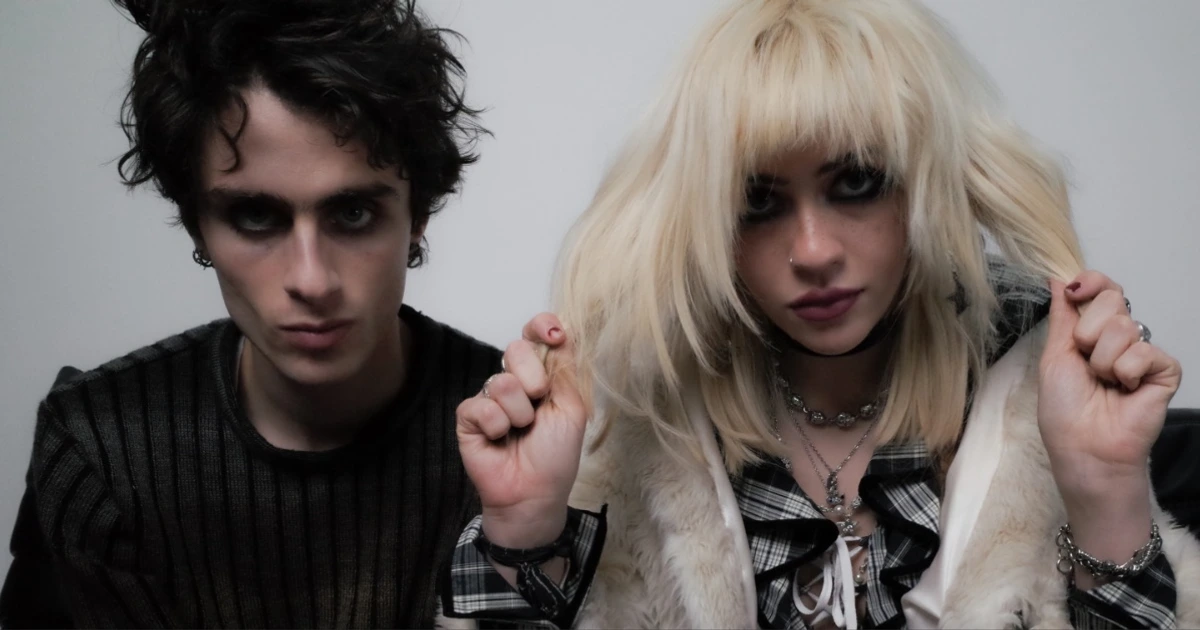
Lowertown needed to fall apart a little to figure out how to stay together. Over the last few years, the New York-based duo of Olivia Osby and Avsha Weinberg were caught in a cycle that’s become all too familiar for young artists moving too fast. The constant touring of their 2022 debut album, I Love to Lie, inevitably turned into burnout, the pressing expectations from the industry crept into their creative process, and their once-instinctive partnership — first built on friendship and a shared love of music — began to strain under the pressure. They no longer had the answer to why they loved music and chose to become a band. What started as something pure turned into something optimized and misunderstood. By their early 20s, it was clear: they hit a breaking point.
They eventually found the answer. Instead of looking ahead or pushing forward, they chose to look back on their past — their roots in Atlanta, the DIY venues, and the community spaces that shaped them. They reflected on a specific era of the internet, when Tumblr pages, Reddit threads, and niche fandoms thrived before algorithms co-opted everything. It was an era when obsessive interests were encouraged and online connections felt genuine, eventually turning into an IRL connection. Those were the formative experiences that guided Osby and Weinberg to understand both art and belonging. They just needed to find a way back to that.
Read more: beabadoobee is slipping into the future
“Most of my friends were online, especially before I met Avsha,” Osby says from her apartment a few weeks before their headline tour begins in support of Ugly Duckling Union, their third album. “Those communities were honestly super important for my mental health. I’m also a very escapist person, so it was really comforting to dive into another world and forget the one around me. That was a huge part of my childhood.”
The pandemic changed those spaces. Now, the internet and physical music scenes have become more fragmented, more commercial, and feel less communal. The places where young people once gathered have slowly disappeared or become harder to access. After rediscovering who they were and coming back to the reason they fell in love with making music together in the first place, Lowertown decided to build a new space for connection.
Ugly Duckling Union represents that new communal space. The project, which draws inspiration from the conceptual storytelling of Gorillaz and the DIY ethos of Fugazi, introduces a narrative universe focused on Dale, a duckling navigating a corporate monolith designed to isolate rather than connect. The story, though, isn’t just confined to the music — it extends outward into a playable Minecraft server, illustrated comics, physical objects, and an active online community that has the same intimate, collective spaces the band grew up in.
More than anything, Ugly Duckling Union is an attempt to rebuild what’s been lost: a place to belong, create, and connect — all because Lowertown decided to slow down and return to why they started creating together in the first place. Speaking with AP, they discuss how community, identity, and the internet shaped the world of Ugly Duckling Union.
Reno Silver
How would you describe the way you’ve grown as artists since the release of 2022’s I Love to Lie?
AVSHA WEINBERG: We wrote it over a month-and-a-half or so, but it feels like such a lifetime ago. We were in London, making it, and we didn’t really have a home base yet. We’re a little bit more stable in ourselves right now, and there’s more of an ability to process our feelings. It’s not like everything is moving a thousand miles a second, where everything is raw and right there. That’s quintessential to our music — it’s very raw and unfiltered.
It still is that way, but now we’ve had the chance to really understand what’s happening with us. There’s a new level of maturity in the lyrics and the songwriting in general. It feels a little less — not rushed — but more understanding, more comfortable, more processed, if anything.
We’ve also gotten a lot more confident. I think there’s way less ego now — I feel like I’m OK if Avsha doesn’t like something I’ve done, and I’m OK sharing a million things and failing a million times with him, and it’s not a big deal. Our songwriting process and the way we communicate are a lot looser and freer. I think we’re just so bonded at this point that there’s no judgment, so we’re able to try new things and experiment more.
I’m also able to articulate what I want and what I want things to sound like way better, because I understand music more and how to describe things like that. I feel like you’re way more confident in your lyricism and your voice, and I’m way more confident in my musicianship with instruments. I’ve also learned the flute since the last album, and that’s integrated into everything now.
WEINBERG: I’m really proud of this project because it also takes elements from our very first album. We didn’t work with an external producer, which we hadn’t done since the first one. We went back to that style of writing where everything happened in my basement. We moved between a couple of different places, but it was always just the two of us sitting down and writing together.
It opened up a whole new world for us. We had cracked the door open on that at the beginning, but we were so young we didn’t really understand how beautiful what we were doing actually was — just sitting down, without time constraints or outside validation, just the two of us bouncing ideas off each other.
I think artists tend to return to that childlike sense of wonder, especially after a few albums, which it feels like you did here. Was that a freeing experience?
OLIVIA OSBY: We usually write from such an emotionally intense place a lot of the time that going back to silly, fun songs has been nice. With the last album, we tapped into that a bit — we love songs that are just made for the concept of having a good time. I really like joke music, too. Music doesn’t always have to be “I’m depressed” or “I’m angry at the world.”
It’s hard for me to tap into “I’m having a good time. I want to write a song.” I feel like that’s why I relate to that Fiona Apple quote where she’s like, “I only write when I’m depressed. I don’t want to write when I’m having a good time.” I honestly relate to that. I’m trying to relate to it a little less, where music is such an outlet for intense emotions. A lot of the time, it’s about trying to expel some kind of negative emotion for me, which is why I started making music.
I think there’s a good balance of that intense, darker energy on this one, but also the most lightness we’ve ever had. I’m excited to play these songs because whenever you play music live, I’m always thinking about the actual song and what it means to me. There are certain songs I don’t want to play live anymore because they make me too emotional. With this album, a lot of these songs will just make me really happy to play. I’m not going to go to that emotional place when I perform them.
WEINBERG: Yeah, it’s also really important for us, because those two feelings — the fact that it’s not just darkness — that reflects our friendship and our relationship in the music. Most of the time, we’re having a lot of fun. Our friendship is such a positive in each other’s lives. There have been darker parts and brighter parts, but it’s those two elements together that make our friendship, which is the core of the band.
Depending on how we feel about each other, that changes how the music comes out. If we don’t have those fun elements — because when we sit down to write together, it usually starts as fun songs — we’re not immediately going into the really dark stuff. We’re just messing around. If that’s in our friendship, it naturally comes out in the songs.
OSBY: I don’t want to be characterized as just a sad, serious person. I have that side of me, but I don’t want to be defined as an artist who only makes sad and serious music.
Reno Silver
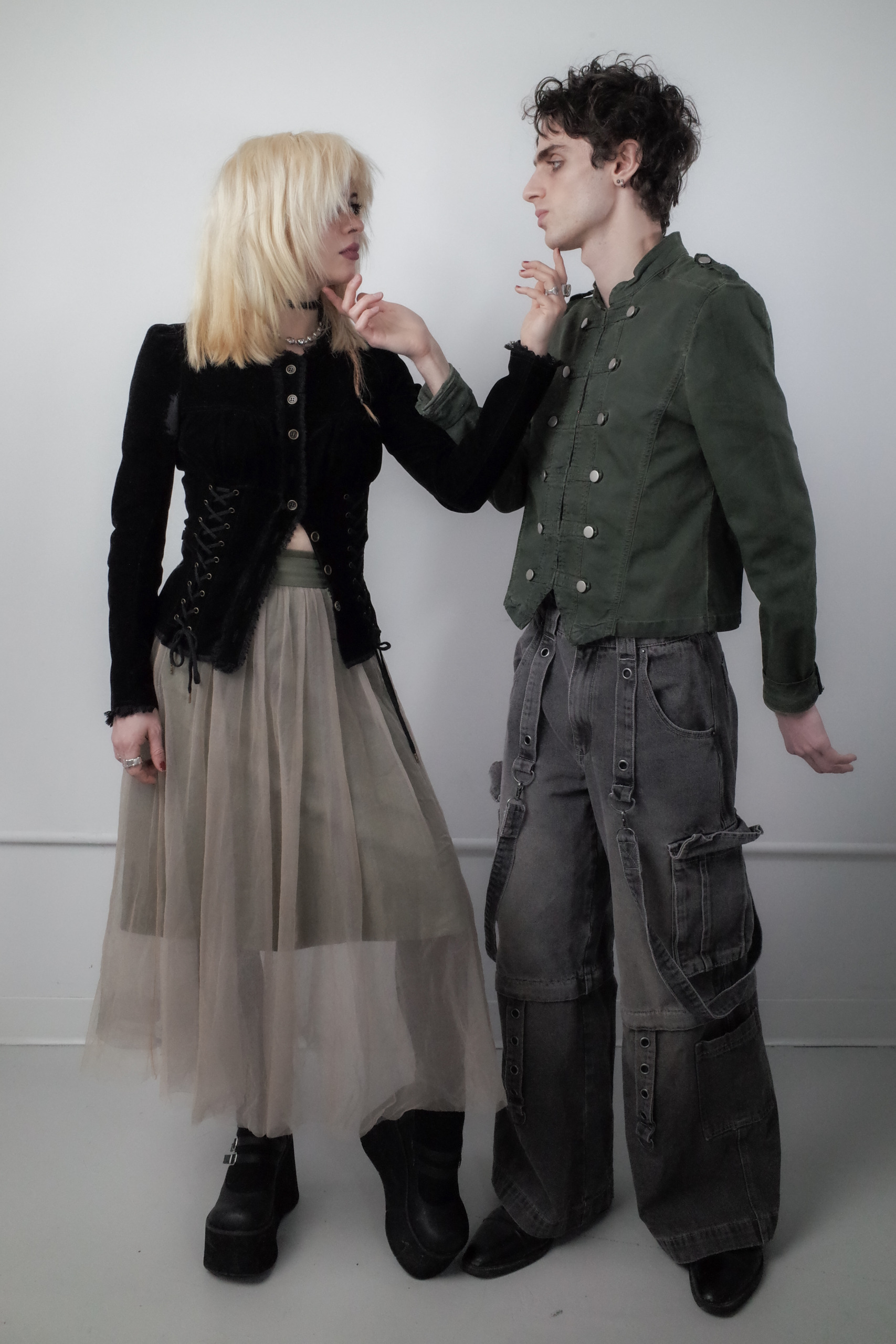
Speaking with you both right now, it seems like you’re in a really good place individually and as a unit. I know there was a point where your partnership was a little rocky, and you had to go back to your roots. As somebody who also grew up on Tumblr and in fandom communities, I understand how integral those spaces are — they’re very formative experiences. How did those spaces shape the way you approached Ugly Duckling Union? And what was it like returning to that time period?
OSBY: I feel like we have this beautiful attachment to early social media and internet spaces, because it was before there was as much monetary incentive. It felt more based on the social and community aspect. Even if platforms were still trying to grow, it felt different. I grew up not really having many friends. I was bullied a lot and felt really out of place, so I went to the internet. Most of my friends were online, especially before I met Avsha. Those communities were honestly super important for my mental health. I’m also a very escapist person, so it was really comforting to dive into another world and forget the one around me. That was a huge part of my childhood.
It sucks because the internet has shifted — especially post-COVID — and the same goes for shows. Shows were where I met the first people I really connected with in a big way, especially in Atlanta. The nature of shows, especially DIY music spaces, has changed. A lot of those spaces have died out because they haven’t been able to sustain themselves financially. That’s really sad, because they’re such positive and important places, especially for young people. They’re spaces where there isn’t a big paywall or strict age restriction, where you can just exist and experience art. That was such a big part of our friendship growing up in Atlanta.
When we came back after COVID and started playing shows again, we realized how important those spaces were. We also noticed how much the internet had changed, and we started asking, “Where are these communal spaces now?” They’re important, and they need to be protected. When we play shows, people meet each other and become friends. We’ve always had a strong online community, too — we’d have a Discord, hang out with people, and stay connected.
We realized we should try to be a positive part of facilitating that kind of community. When I was younger, those spaces felt life-saving. We thought that should be part of the mission statement for this album, because it’s something really important and something we can directly impact.
WEINBERG: Yeah, it’s definitely about that trajectory and our own trajectory, too. Starting out online, if you don’t feel like you fit in or don’t have a community around you — especially growing up in the South — being into art can feel really alienating. Then there’s that transition from the internet to finding your person in real life, and then building a community from there. It’s such a healthy way to make friends and find connections.
A lot of younger people, especially those growing up during the pandemic, didn’t really have the chance to experience that. We want to help recreate that process — where people can start online, come to shows, meet people, and build real-life community. That’s how we did it, and it was really formative for us — not just as musicians, but as people.
You created an entire world around it — Minecraft, plushies, comics — that fits with the album. That type of world-building is really interesting. Why was that so important to you to do? Is that connected to the internet aspect of it, or did you just want to approach the album that way?
OSBY: I feel like we’re both people who love to build things. We love creatives who go above and beyond to create a world you can escape into. We’ve always been really tied to visuals and world-building, and for the first time since starting the band, we had the time to fully integrate those skills and expand that world even further. As friends, we already create stories and worlds like this, so we thought, why not bring that into the project?
Some of my favorite artists create things that are super detailed and deep. Like Gorillaz — they were one of my favorite bands growing up. Before I even met Avsha, I was obsessed with them. I’d be at school feeling really down, listening to their albums, then going home and diving into their Wiki and watching all their videos. That kind of world-building is so cool. It shows what’s possible as an artist.
How are you going to translate all this world-building into the live shows?
WEINBERG: We’re incorporating more conceptual elements — we’re structuring the show in three acts, each with story elements.
OSBY: We’re also using animated backdrops that tie into the world. But more than anything, it’s about creating a space where people feel free and connected. That’s what makes live music so special — it lets people step outside themselves and feel less self-conscious.
WEINBERG: Olivia’s really good at getting people to open up. Once one person loosens up, it spreads through the whole crowd.
Reno Silver
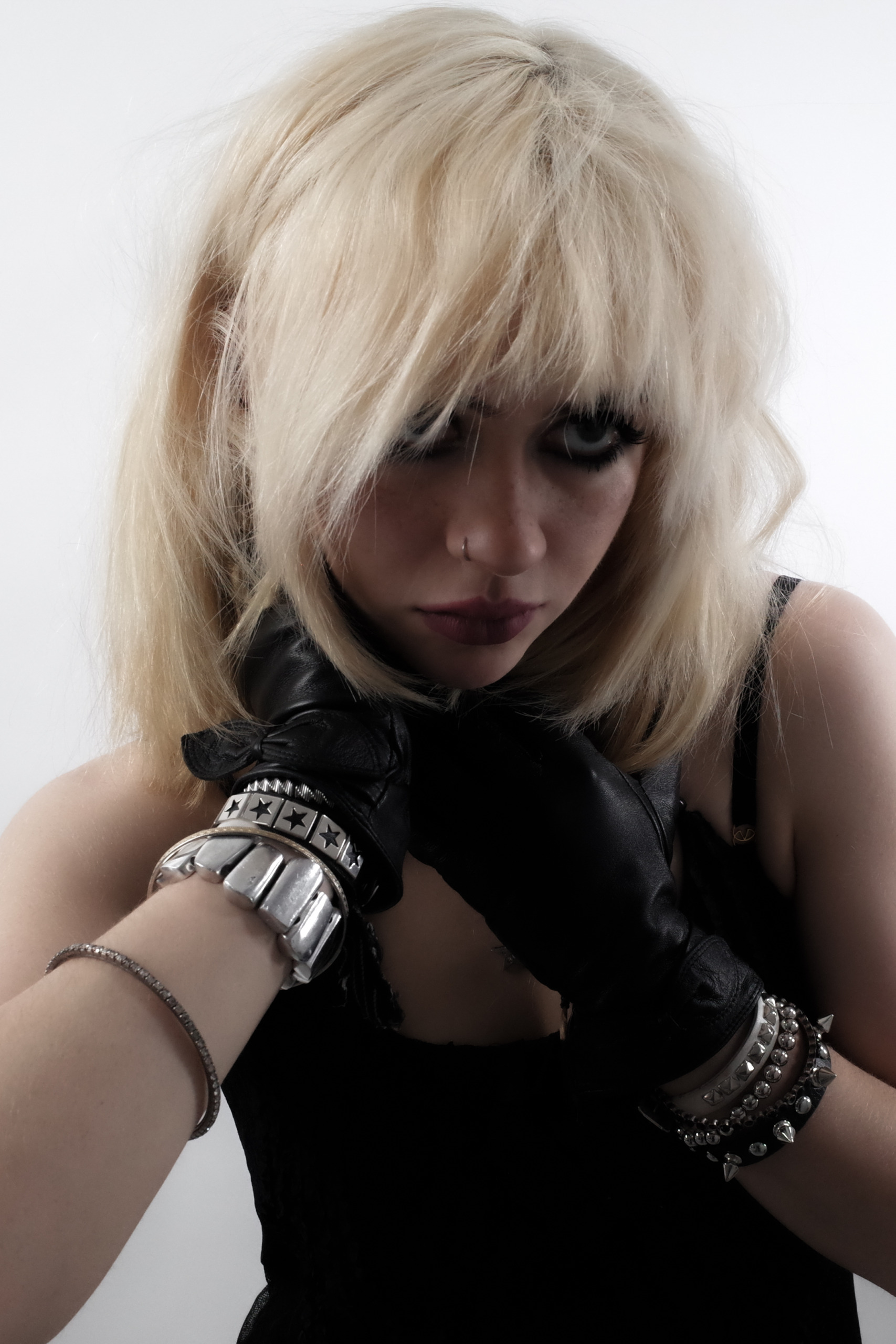
A big theme across the album, in songs like “Mice Protection” and “Worst Friend,” is identity. Do you see the album as trying to understand identity or letting go of identity as something fixed? Is it something that’s constantly evolving?
OSBY: After we dropped [I Love to Lie] and came back from touring, I got really depressed. We had just entered the music industry after graduating, and everything happened really quickly. We experienced so much nonstop, without time to process anything. Neither of us got into music to be famous or to be the biggest band. Now that it’s our career, I’m like, “Let’s go, I want this band to thrive,” but that wasn’t the original intention.
After a few years of seeing all sides of being a musician — including the industry side, and sometimes the darker side — we finally had time to process everything. I think we both developed a bit of a negative reaction to certain aspects of it. Anything that feels fake or phony just doesn’t sit right with us. It makes you stop and think: What does it mean to be a musician? Why did I start doing this? Do I still want to do this? Am I losing myself in it? I think this album is us coming out the other side of those questions.
This album feels like finding that childlike wonder again. Now I know where the music is coming from — it’s from a pure place, from love, without external pressure. That’s a big part of the album’s identity, but there’s also the idea that identity isn’t fixed — everything exists in a gray area. There’s a maturity in understanding that people and situations aren’t black and white. Reality can be different depending on perspective. What you believe isn’t the only truth.
WEINBERG: A big part of the Ugly Duckling Union story mirrors that idea. It’s about how systems push you to move so fast that you don’t have time to think. In the story, Dale [the ducking] moves slowly, which allows him to notice things others miss, because the larger system encourages people to move too fast to really see anything. That reflects our experience in the music industry. We were moving so fast, we didn’t have time to think about our relationship or what we were doing.
Yeah, they don’t want you to question what’s happening. They don’t want you to say, “Wait, why are we doing this?”
WEINBERG: Exactly. There’s this constant pressure to compare yourself to other artists so you can keep growing. But for us, it was never about comparison — it was about our relationship and sharing music we love. That’s the core of the band. We realized we had started thinking about things we never used to care about, and that created tension between us. That’s where a lot of the story came from — our relationship and that friction.
Reno Silver
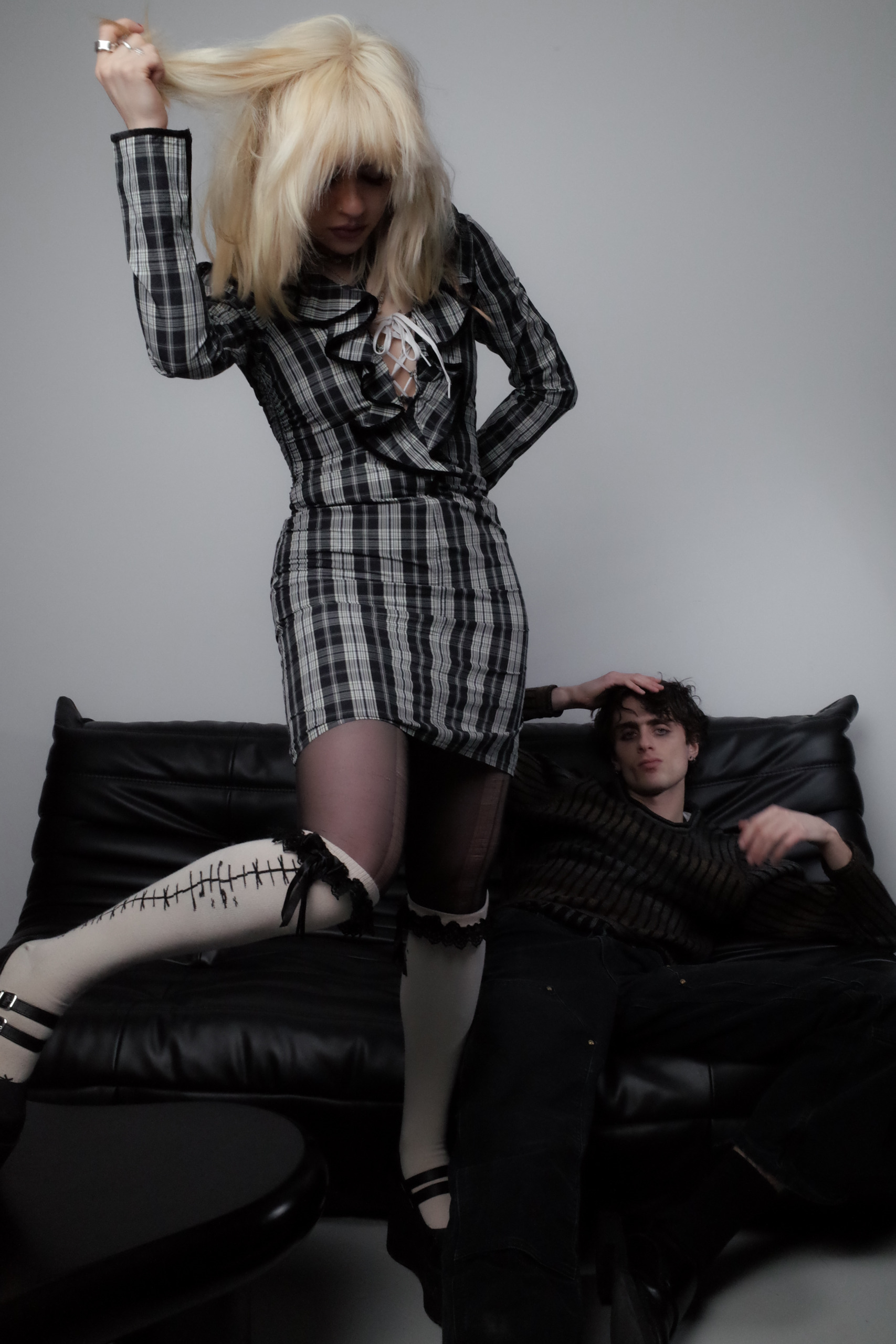
Were you both having these realizations separately? Were you scared to talk to each other about it?
WEINBERG: Yeah, we had to come to those realizations individually first. We’d been in that system since we were 18. I think we were both a little hesitant to bring it up — you don’t want to make it real by saying it out loud.
And you don’t want to put ideas in each other’s heads that aren’t already there.
OSBY: Exactly. There’s so much pressure now to constantly produce, but you need time to live and grow. If you don’t have new experiences, how can you create something meaningful? Especially when you’re young — you’re changing so much. But there’s also pressure to keep going, like you’re running out of time.
Taking a break felt scary, but sometimes you need to step away to make your best work. Art shouldn’t just be a product. Of course, there’s a business side — but if you’re surrounded by that mindset constantly, it can make you think of art as something to mass-produce. That’s not the kind of art I like. I like things that take time to understand — things that challenge you.
Bring back critical thinking.
WEINBERG: And challenging people.
OSBY: People want that. They’re craving it.
WEINBERG: That’s how you build a real connection with an artist.
