
Listen to this article
Estimated 3 minutes
The audio version of this article is generated by AI-based technology. Mispronunciations can occur. We are working with our partners to continually review and improve the results.
Newfoundland and Labrador is once again forecasting a hefty budgetary shortfall, but is expected to lead the country by a wide margin this year when it comes to growth in the value of goods and services produced in the province.
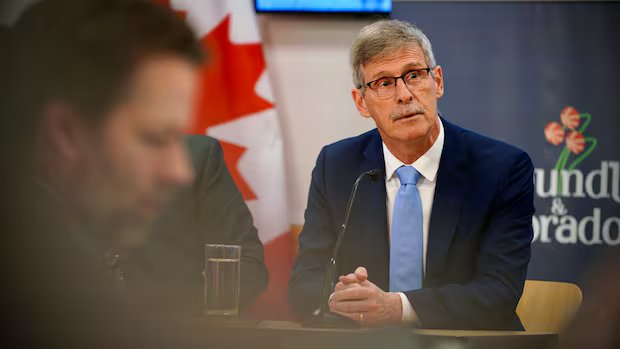
Finance Minister Craig Pardy revealed Wednesday that the government is forecasting a nearly $700 million deficit for the 2026-27 fiscal year, and that level of red ink is a pattern across the country, with every province spending more than it takes in in revenue.
But Newfoundland and Labrador is setting the standard when it comes to economic performance, with GDP growth forecasted to hit 5.5 per cent, which Pardy says “speaks volumes” for the province’s economy.
Industries like oil extraction, mining and the fishery are humming at — or near — record levels.
“Demand for our seafood has never been better and we have some of the highest value seafood products in the world,” Fish, Food & Allied Workers union president Dwan Street said of the record $1.3-billion landed value of seafood last year.
And Street believes that record will be short-lived.
“We’re such a major player in global seafood,” she noted.

But once again, oil is the economic driver, with $2 billion in royalties forecasted for the coming fiscal year. That’s 19 per cent of the province’s revenues, second only to taxation.
“There’s no portfolio I’d rather be in. It’s an exciting time to be here,” Energy and Mines Minister Lloyd Parrott told reporters on Wednesday.
Much of that oil windfall can be attributed to a spike in prices caused by war and economic blockades in the Middle East, and a total production of nearly 100 million barrels, which is an increase of 14 per cent over the previous year.

While Newfoundland and Labrador’s 2026 budget forecasts another large deficit, the province’s GDP growth is expected to hit 5.5 per cent. Cabinet ministers and industry leaders say that’s largely thanks to the province’s mining, fishing and oil and gas industries. The CBC’s Terry Roberts reports.
The oil industry will get another boost this year when the West White Rose platform starts producing, and Equinor’s massive Bay du Nord project is moving closer to sanction.
“We have a lot of development and a lot of people that are interested in increasing production,” Pardy said.
The mining industry is also expanding rapidly, with well-established sectors such as iron ore and nickel getting a boost from a sharp increase in gold production.
The government is also offering up millions in subsidies to entice oil companies to explore the deeps for new discoveries, with Parrott saying “we have an opportunity to turn the corner.”
