
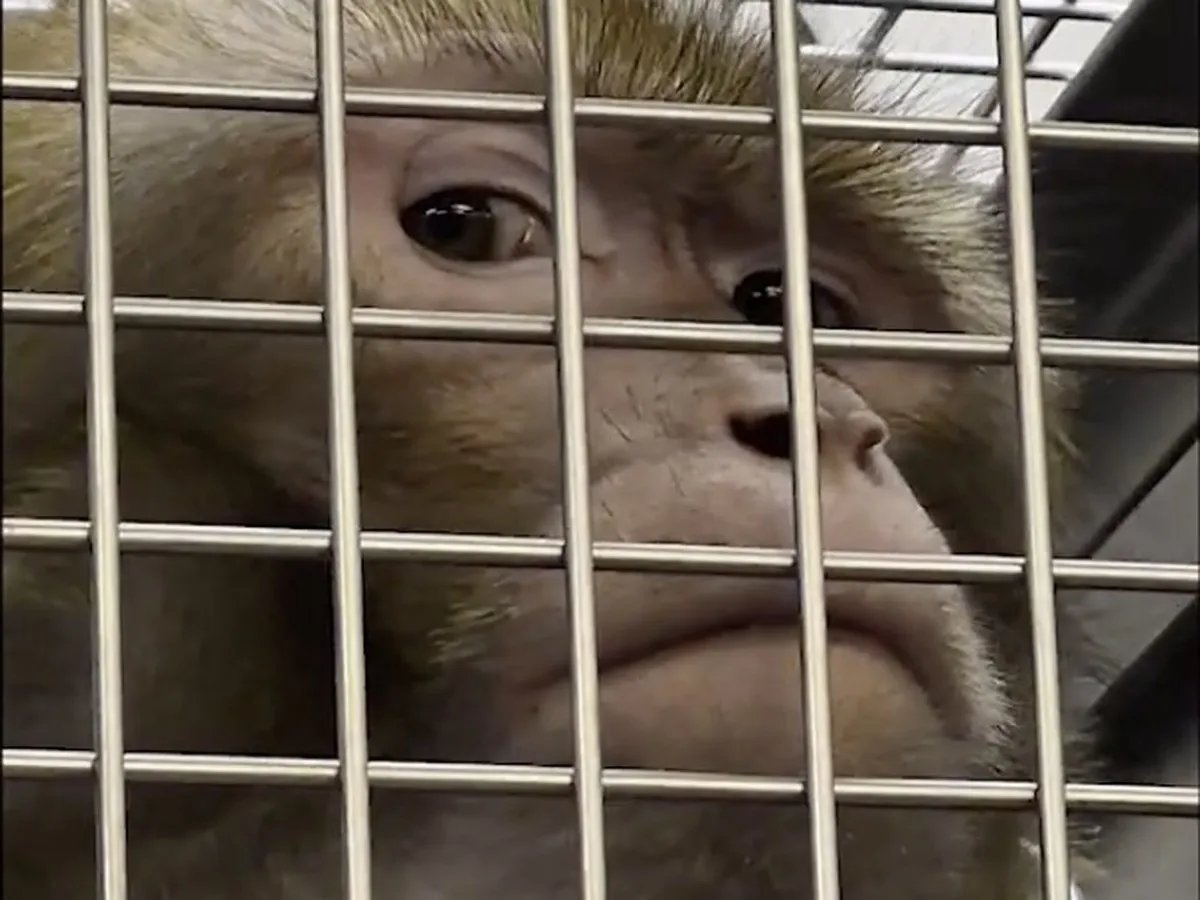
After more than a day of scratching at his protruding brain implant until it bled, Kenny, a research macaque who lives inside a York University lab, reportedly pulled out the implant from his right ear, revealing an oozing wound.
Kenny is one of at least nine research macaques held at York — Canada’s fourth largest university — as part of its biomedical research into brain systems controlling vision and actions of the eyes, head and hand. The treatment of those macaques is the subject of a formal inquiry by the Canadian Council on Animal Care ( CCAC ).
Video footage recorded inside the lab between September 2024 and March 2025 by a whistleblower working with the U.S.-based group Last Chance for Animals ( LCA) revealed macaques outfitted with metal head posts extending upward from the top of their heads, protected by acrylic caps.
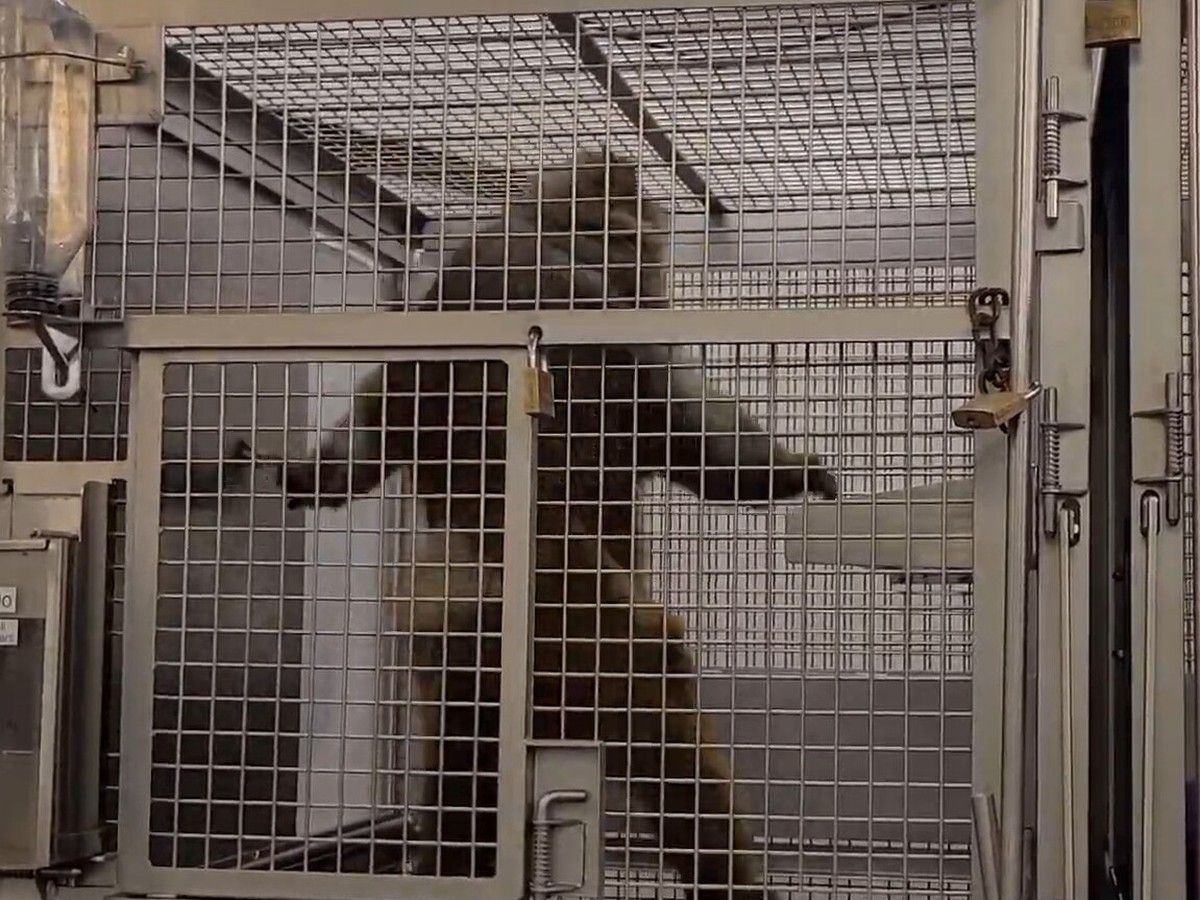
Some macaques were recorded constantly pacing and swaying in their cages, scratching at the implants, and struggling to swallow in tight collar restraints.
York University said that the macaques in the footage, which the Investigative Journalism Bureau (IJB) shared with it, are in its care and currently healthy.
IJB reporters also examined health records that the whistleblower says were photographed at the lab from 2009 to 2025. The records cited several health issues, including injuries due to repeated escapes and infections in the head and eye area where research implants, such as eye coils, were installed.
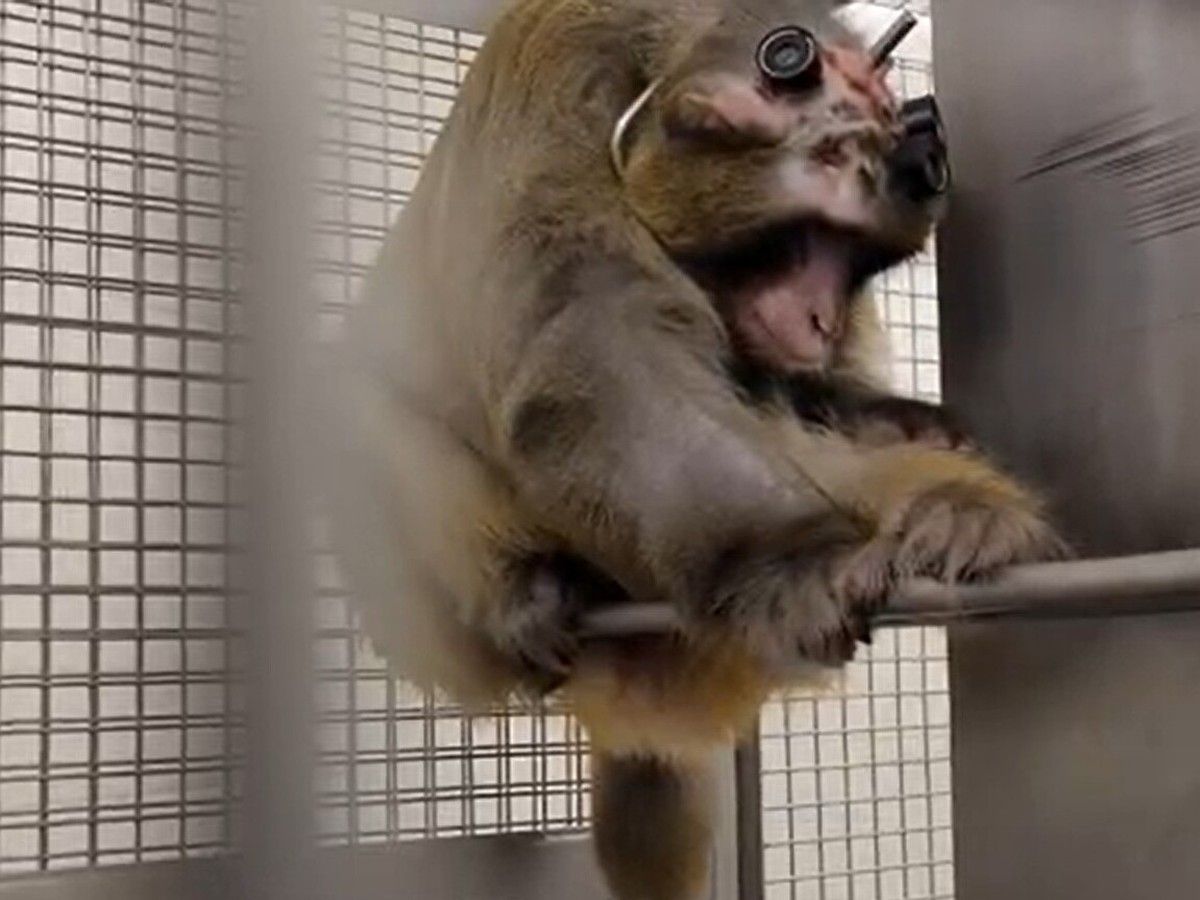
Between 2015 and 2023, five separate infections of head implants were recorded in the macaques, with some involving bleeding, according to the records the whistleblower says are from York.
Between 2010 and 2023, the alleged health records noted 15 incidents of macaques escaping, with some incidents resulting in injuries to the animals.
The IJB is not able to independently verify the health records provided by the whistleblower.
Last Chance for Animals has filed a formal complaint against York to the CCAC, an oversight body that sets guidelines for the treatment of animals used for research. That prompted the current inquiry.
One macaque’s alleged health record details at least seven instances when the surgical eye implant broke or stuck out between 2012 and 2015.
The records detail incidents of “inferior environmental stimulation, excessive water deprivation, and psychological distress,” said John Gluck, a psychology professor emeritus at the University of New Mexico with experience of macaque laboratory work. He reviewed the materials at the request of the IJB.
“The monkeys depicted in the video records capture all the relevant indicators of mistreatment,” which “likely pollute the value of the behavioural science topics under study,” said Gluck, now an animal rights advocate.
In an expert opinion submitted as part of the complaint to the CCAC, Erin Zamzow, a veterinarian of record for the Washington-based Chimpanzee Sanctuary North, called the apparent “social, mental, physical and nutritional deprivation” of the macaques “inhumane” and said it likely “impairs accurate and reliable scientific results.”
In response to questions and an interview request from the IJB, York University spokesperson Yanni Dagonas said “research that involves animals is monitored continuously by veterinarians and highly trained animal care staff,” and that “any health concerns that are detected are addressed promptly by qualified veterinarians.”
“The university remains confident in the integrity of research conducted on our campuses, the welfare of the animals in care, and the full compliance of our research programs with regulatory standards,” Dagonas said in a statement.
The value of macaque research in neuroscience has been recognized by experts for its applicability to humans.
“Genetic, functional, and anatomical properties of the macaque brain resemble those of the human more closely than other animal models, which can be used in biomedical research,” according to a 2024 study published by MIT Press.
York University’s statement said that its research “informs vital clinical interventions into many neurological conditions,” including autism spectrum disorder, inner ear disorders, stroke, dementia, depression and disorders of posture and movement.
“We recognize that some research topics and methods are debated. However, the institution takes seriously our commitments both to academic freedom and to ensuring research carried out at York complies with all applicable laws and regulations,” Dagonas wrote.
York University is certified by the CCAC, meaning it must comply with the council’s guidelines for animal treatment in order to obtain federal funding. While the CCAC sets the national standards for animal care in research, it cannot enforce compliance or shut down facilities.
Among the CCAC guidelines for nonhuman primates are requirements to ensure the primates are healthy, not experiencing pain, that stress is minimized in the use of restraints, and the animals are provided appropriate socializing.
In its February complaint to the CCA, LCA alleged York University had failed to provide the macaques with sufficient space, failed to restrain macaques in a safe way and failed to ensure the animals are not experiencing pain.
Lori Sheeran, a primatologist at the Central Washington University, provided an expert opinion as part of the LCA complaint.
“The materials that I reviewed for this report indicate the rhesus macaques are suffering pain, anxiety and depression related to the surgical and experimental procedures they are forced to undergo,” Sheeran’s opinion reads.
In the video footage from the whistleblower, one macaque appeared to be drinking its own urine, suggesting “acute water dehydration,” according to Sheeran’s written opinion.
“CCAC guidelines for animal welfare are not being applied in this situation, to the detriment of the lives of these nine rhesus macaques,” Sheeran writes.
CCAC executive director Pierre Verreault told the IJB “we recognize that Canadians would be concerned about the welfare of the research macaques referenced in the IJB’s inquiry.
“We have begun our inquiry, including meetings with the institution, and are waiting to hear from all parties involved,” he said in a written statement.
York University’s written response says the complaint allegations “do not accurately reflect the context or the standards of animal care at York.”
The University is “actively participating in CCAC’s review,” the statement from Dagonas adds.
***
Kenny, one of the youngest members of the macaque lab, has been residing at York since 2015 and is still alive.
Macaque ID cards, which the whistleblower says were photographed at York, show that at least six of the current nine macaques arrived at York together on March 31, 2009, from a Florida-based primate supplier. They also are still alive.
In response to the IJB’s questions about how the university ensures the reputability of its suppliers, York’s Dagonas provided a follow-up statement that said: “macaques used in research programs are identified through channels that have been vetted by external regulatory bodies,” which “include collaborations with other accredited research institutions and, in some cases, as is common across the research sector, with established and approved suppliers.”
Together, the York researchers involved in the program have received hundreds of thousands of dollars in federal funding for their work, according to publicly listed research funding records.
According to photographs supplied by the whistleblower, among the researchers listed as investigators on York’s animal care records was John Douglas Crawford, a neuroscience professor at the university. Crawford received the largest amount of federal funding of his colleagues listed on the animal care records — a grant of more than $1 million from the Canadian Institutes of Health Research for the neurophysiology research on primates at York, and a grant of $61,000 from the Natural Sciences and Engineering Research Council of Canada (NSERC) for vision research on monkeys at York between 2016 and 2021.
Reporters do not know if Crawford is still conducting research on macaques at York.
A research abstract submitted as part of Crawford’s grant application stated that “neural recordings in monkeys are still needed, because they are very close to the human in brain and behavior,” because “despite advances in human brain science, it is still very limited in what it can test.”
Crawford did not respond to the IJB’s questions about the protocols he followed to ensure the animals’ safety. The university said its statement to the IJB was also sent on his behalf.
The Investigative Journalism Bureau (IJB) at the University of Toronto’s Dalla Lana School of Public Health is a collaborative investigative newsroom supported by Postmedia that partners with academics, researchers and journalists while training the next generation of investigative reporters.
Our website is the place for the latest breaking news, exclusive scoops, longreads and provocative commentary. Please bookmark nationalpost.com and sign up for our newsletters here.
