
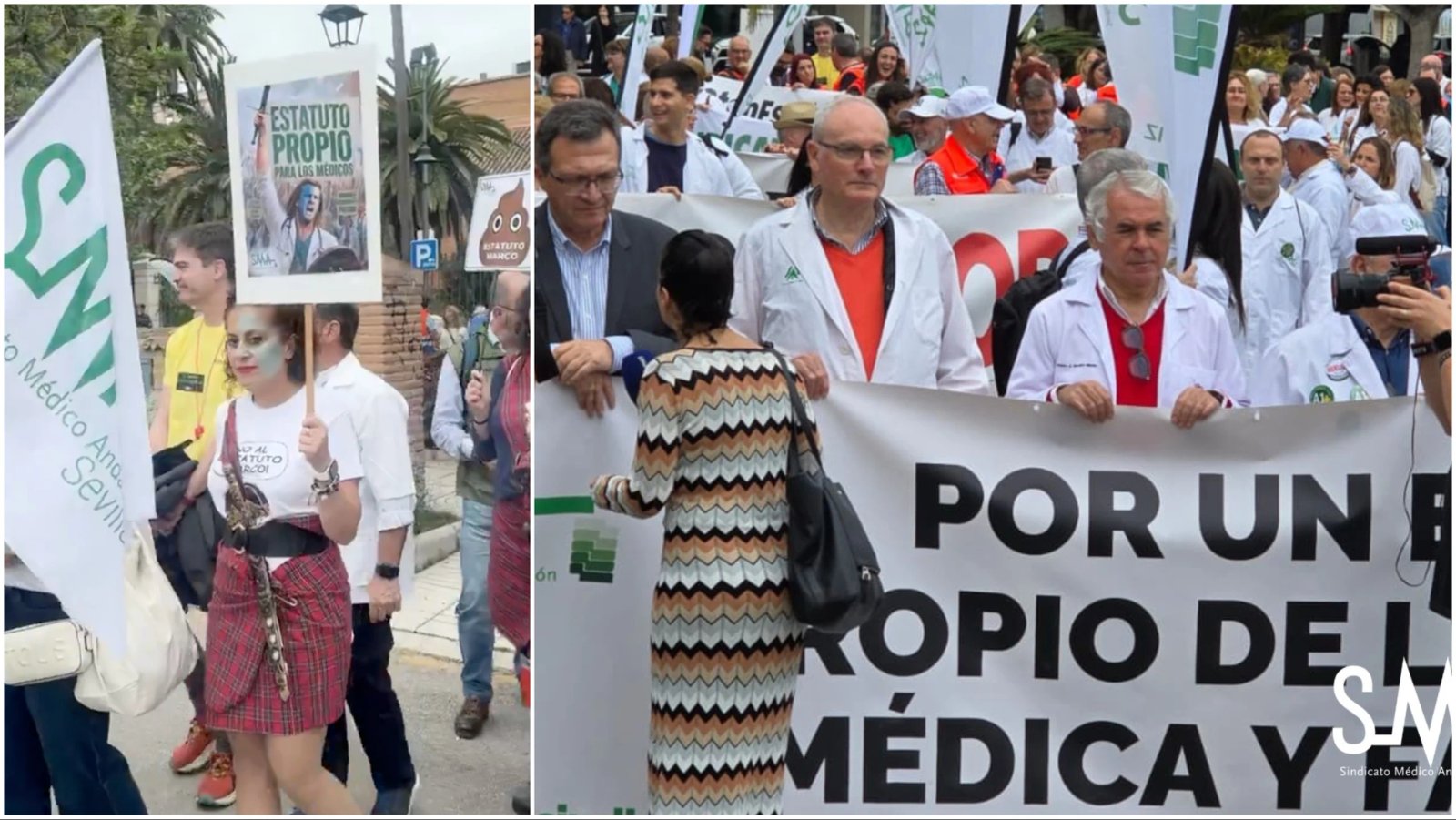
CANCELLATIONS and postponed medical treatment continue as Spanish doctors carry on with strikes across the nation.
A number of them even dressed up as the iconic movie character Braveheart in Motril, Granada this week.
They bellowed the iconic line while they marched: “They may take our lives, but they’ll never take our freedom!”
While Spanish doctors fight for better working conditions and hours, concerned residents may have to reschedule appointments.
READ MORE: Relief for holidaymakers as Spanish airport strikes are called off ahead of Easter getaway rush
The Spanish strike operates as scheduled blocks rather than continuous action, with planned nationwide strike weeks running through June 2026.
Strikes have already been held between February 16–20 and March 16–20, while the current strikes run from April 27 until today.
Future strikes are planned for May 18–22 and June 15–19.
Today marks day four of this month’s nationwide strikes put together by the Spanish Confederation of Medical Unions (CESM).
More doctor’s visits are expected to be postponed or moved to a later date with another round of protests taking place nationally through the next week.
Areas such as Andalucia, Catalunya, and Valencia and Alicante have their strikes scheduled from April 27-30.
The Canary Islands will have protests running from April 30-May 4.
READ MORE: Spanish airports introduce new rules to help families amid EES border queue chaos

Since the initial set of protests, there have been around 767,000 appointments that were suspended.
Last month’s protests alone resulted in over 250,00 healthcare services unattended, with a projected economic impact over 110 million euros.
Some outlets are warning people of continued cancellations and how to manage them.
READ MORE: Spain’s impressive GDP growth slows down in first three months of 2026 as impact of Iran war takes hold
Spain’s Citizens Advice Bureau has addressed the legal position during a strike, with Spanish law stating that a strike directly affecting essential public healthcare services must be able to still provide servicios minimos, or legally mandated minimum services.
Minimum services include urgent and life-preserving care, along with maternity wards, oncology treatments and other critical services.
However, it is the non-urgent or routine services that are likely to remain disrupted by the continued strikes.
READ MORE: WATCH: Police arrest ‘young’ counterfeiter in Malaga selling fake €50 and €100 notes to buyers in Germany through the dark web
Patients seeking medical care that is not deemed immediate may face longer wait times, delays, rescheduling, or a full-on cancellation.
Health Plan Spain has claimed that the private sector will also feel the impact of strikes.
If you’ve had an appointment cancelled due to the strike, you should wait for the health centre to contact you to reschedule. In cases of emergencies, contact 112 or go to the emergency department.
In the past week, examples of important medical care getting postponed were already felt, with two people in Costa del Sol having their surgeries postponed after waiting a year and a half.
READ MORE: The rising – and transparent – standards in Marbella’s luxury property market
At the heart of the row is a controversial government reform that unions say fails to recognise doctors’ unique training, responsibilities and legal risks.
Medics are now demanding a dedicated statute for their profession, warning that without real change – amid long hours, staff shortages and mounting pressure – the system risks being pushed to breaking point.
Spain’s Health Minister, Monica Garcia, has since proposed further tweaks to the law, but unions have blasted them as ‘insufficient.’
Click here to read more Health News from The Olive Press.
