
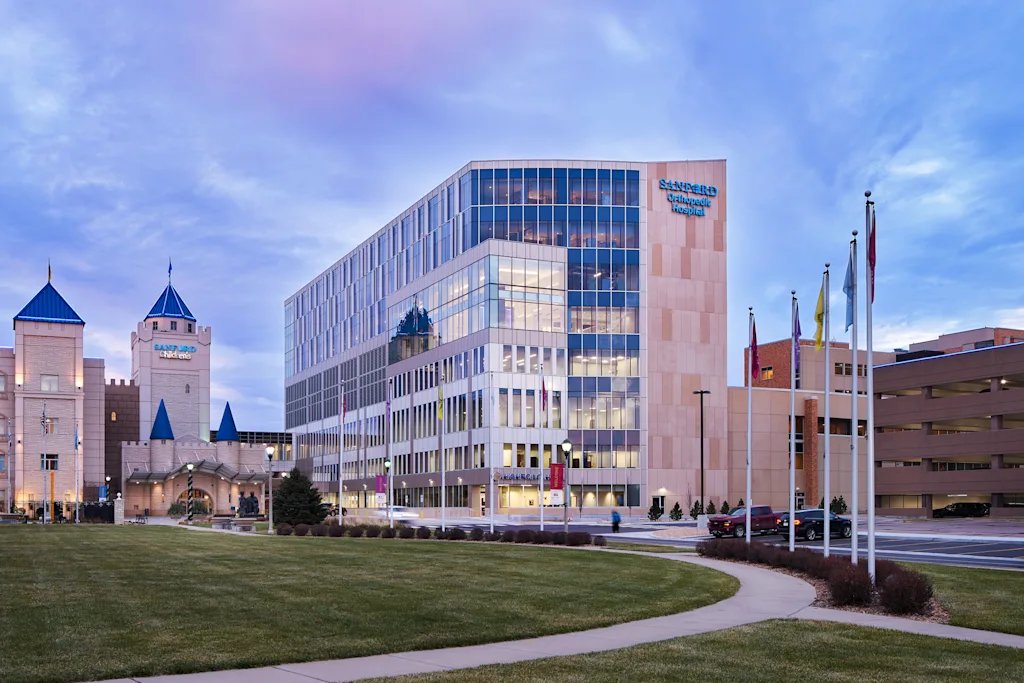
The new orthopedic wing at Sanford Health’s hospital campus in Sioux Falls, South Dakota, has a unique patient-centric amenity that few other hospitals can offer. On the top two floors of the facility, which conducts surgeries and emergency services and connects to a nearby delivery ward, there is now a hotel. In largely rural South Dakota, where a trip to the hospital often means a drive halfway across the state, hospital patients now have the option to stay overnight ahead of a big procedure under the same roof as the hospital.
“It’s much more convenient for patients to go down an elevator ride for eight floors and check in for surgery than commuting across town or in some cases commuting hundreds of miles,” says Andy Munce, president and CEO of Sanford Health’s Sioux Falls region. “Really, the thought process was How do we make it easy for them?”
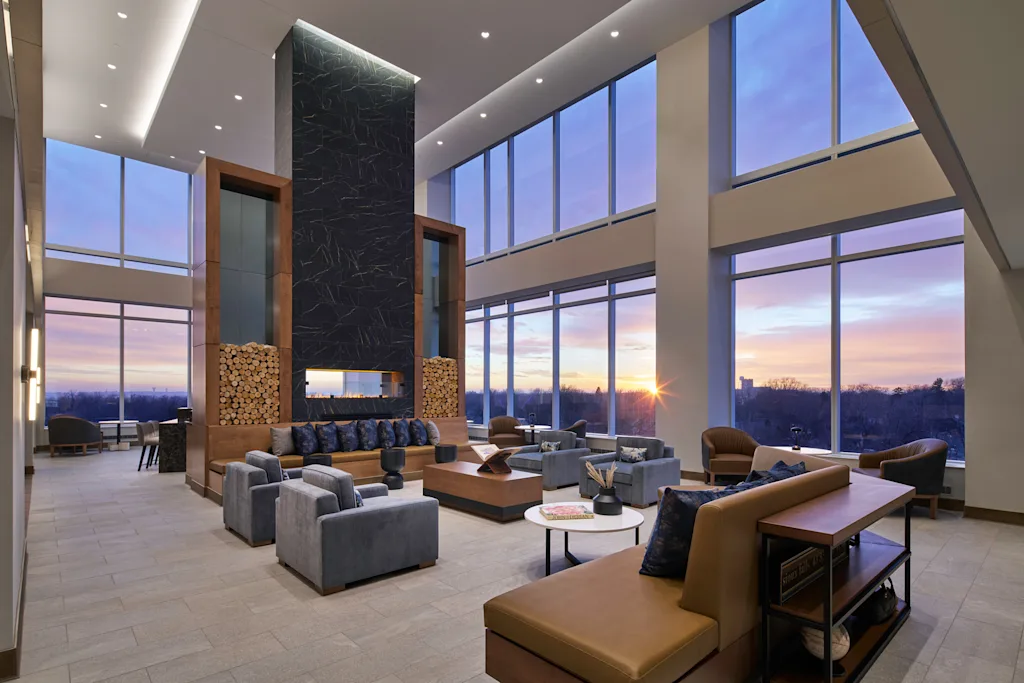
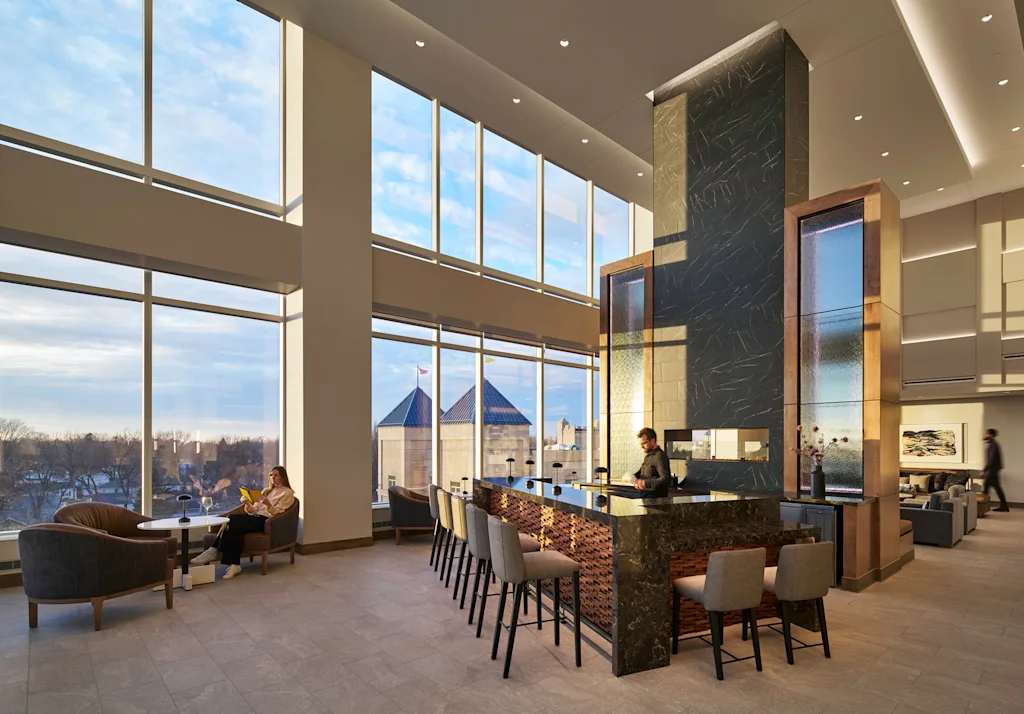
The campus’s new Sanford Orthopedic Hospital and Highpoint Hotel opened earlier this year. It rises nine stories and includes 12 operating rooms, 19 inpatient rooms, an intraoperative MRI, as well as 56 hotel rooms, a bar and restaurant, and a sky lobby with a fireplace.
The combination hospital-hotel is a rarity in the healthcare space and hospital architecture, but one that meets a need many hospital systems overlook, according to Luis Zapiain, director of hospitality at HKS, the architecture firm that designed the building.
“Hotels in close proximity to hospitals is nothing new. You can see that all over the country,” he says. “But they’re just a place to stay. I think what Sanford was looking for was an elevated experience that they could also operate themselves and offer those services to their patients in a holistic way.”
Munce sees the hotel as an extension of the hospital, and part of the way it can provide better healthcare to its patients. “When they’re traveling for procedures, for subspecialty care, for ICU-type scenarios, they have a lot on their minds,” he says. “It can be a very stressful situation. How can we as a health system help them with that?”
HKS brought together its hospitality studio and its healthcare specialists for a rare joint effort. They developed a design for the hospital-hotel combination that blends the firm’s varied expertise while also working closely with Sanford Health to not have one part of the building step on the toes of the other.
Ensuring the spaces have their own character was important, according to Zapaian. People expect certain things from a hospital, like cleanliness and professionalism, and other things from a hotel, like comfort and calm.
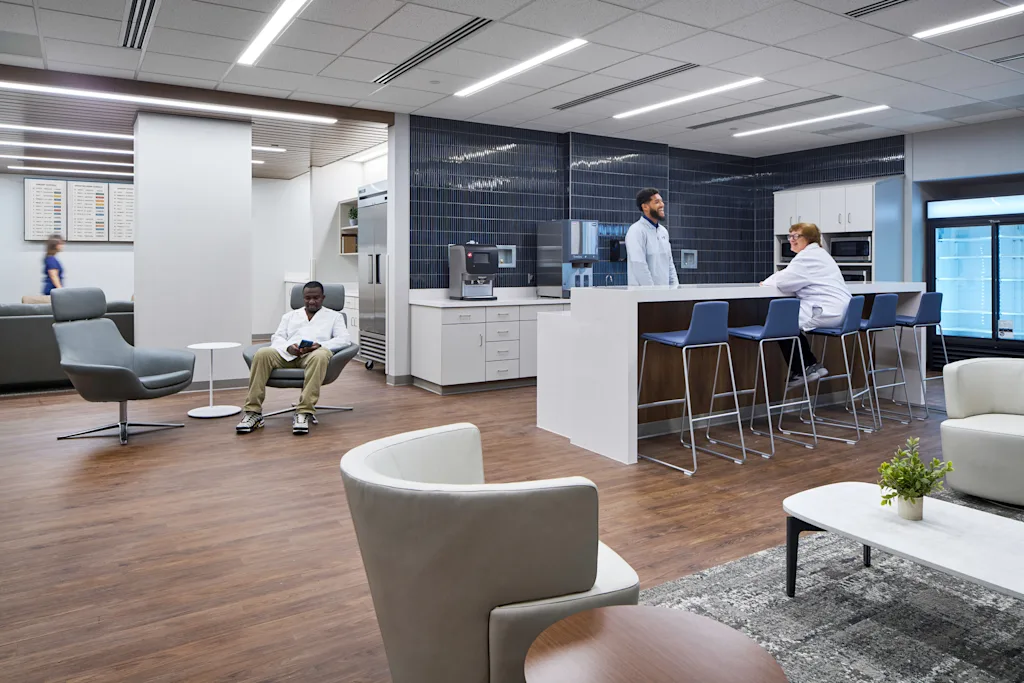
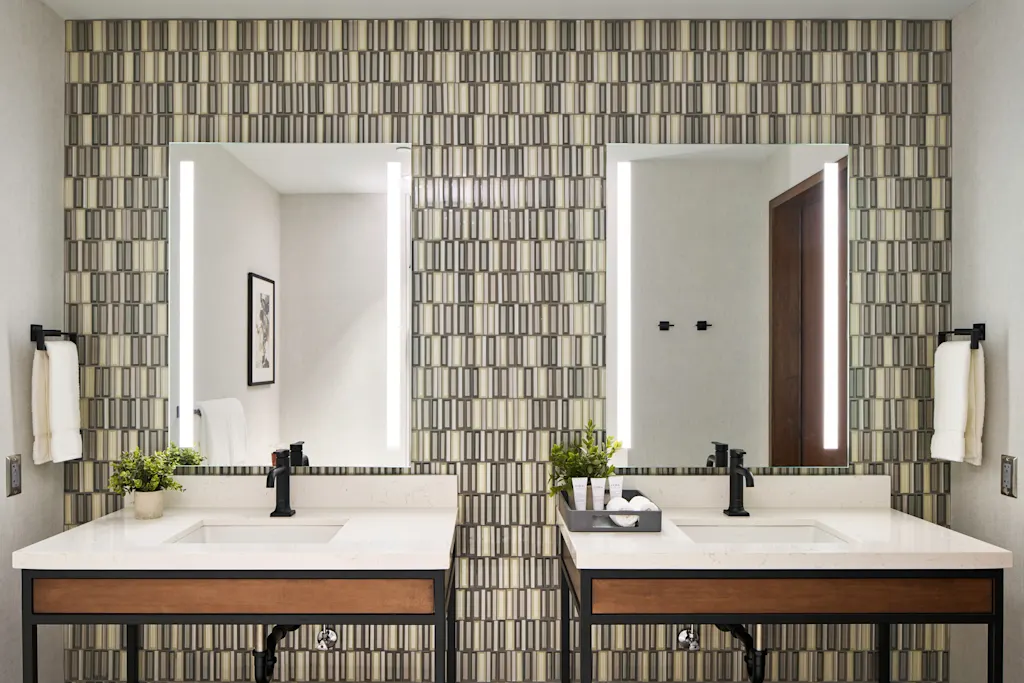
“We had two separate teams doing the interior designs,” he says. The hospital spaces are white-walled and designed for clean functionality. The hotel takes a softer approach, with wood accents and plush furnishings in the rooms and lobby. No one will step into the hotel and confuse it for the hospital, and vice versa.
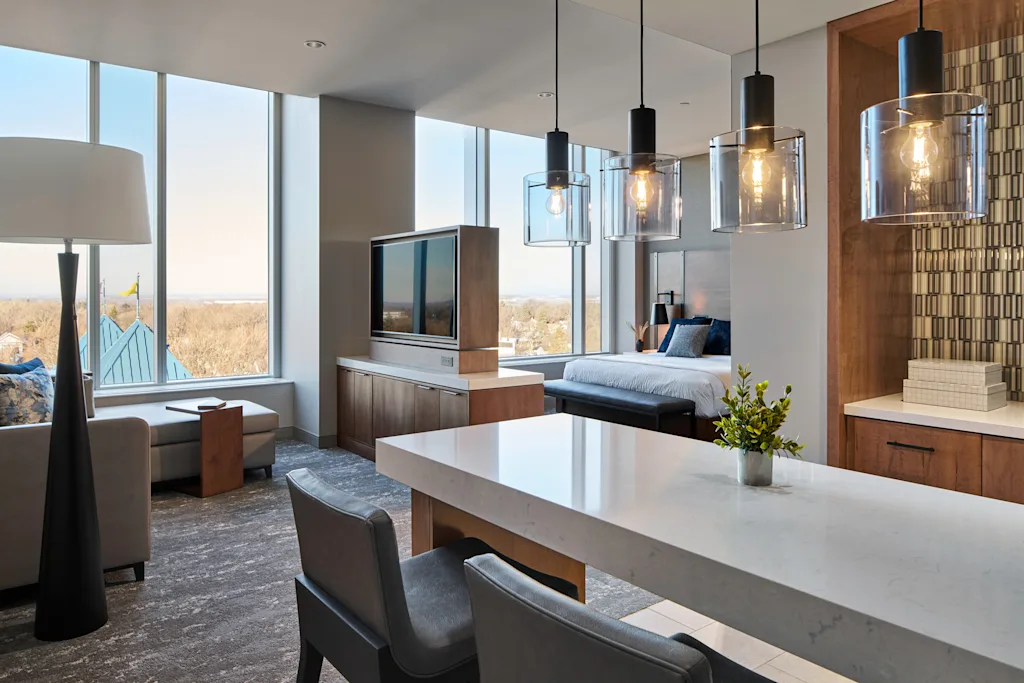
The level of attention even went down to details like smell. “We had conversations about cleaning supplies for the hotel, because the last thing you want is to leave the hospital and come into the hotel and it smells the same as the hospital,” Zapiain says. There are even different laundry services for the hotel and hospital sides of the building.
The dual nature of the building and its shared $188 million budget meant that some compromises had to be made. “The hospital has some functionalities that are unchangeable,” Zapaian says. “Nobody wants to sacrifice the size of our operating rooms because I think the lobby could be cooler.”
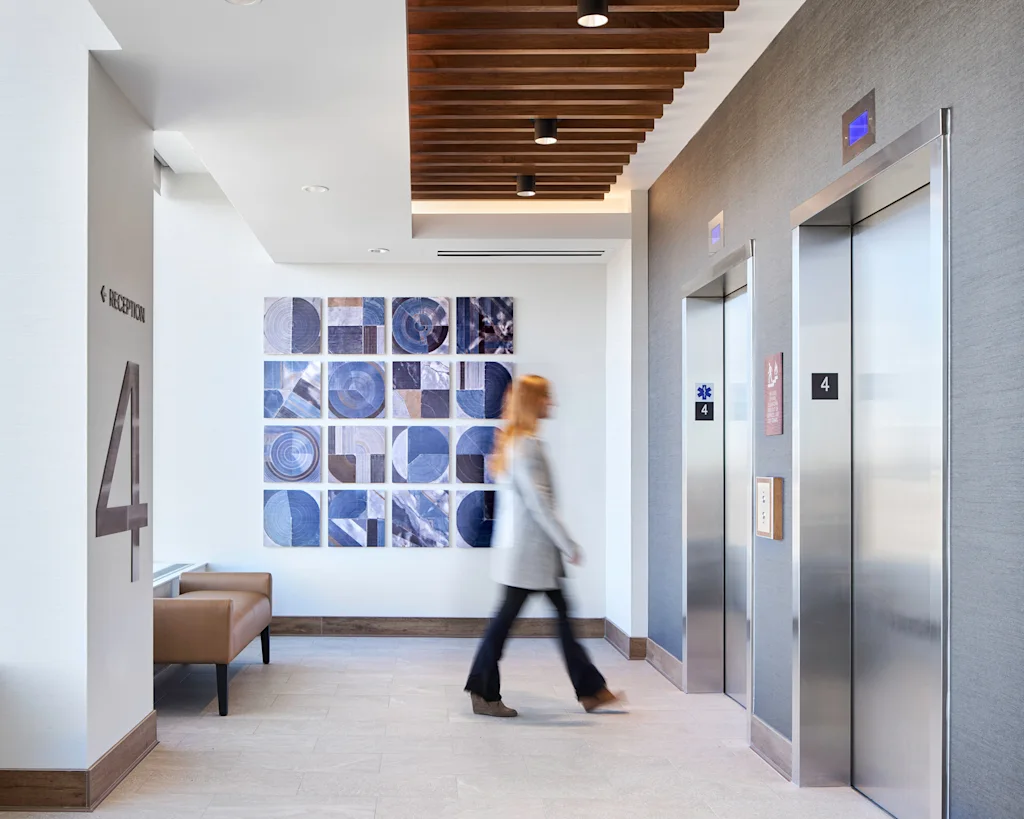
Janhvi Jakkal is a studio practice leader for health at HKS who has worked on hospitals across the country. She says the hotel side of the project was not as complicated to accommodate as she expected. In fact, the biggest challenges were largely dealt with in the earliest stages of design, and concerned infrastructure issues like where elevator bays should be placed, how the mechanical systems would be sited, and how the very different supplies of a hospital and a hotel could come into the same building without disrupting each other.
“The strength of this project is how can you think a little bit differently when you do these typologies of buildings together,” she says.
The hospital-hotel combination has been open for only a few months, but Munce says the high occupancy rates indicate it’s already a success. More than 80% of the stays within the hotel are family members or patients before a procedure, he says.
Standard double rooms start at $159 a night, with reduced rates for hospital staff who might be facing their own long commute or a tumultuous South Dakota storm and would rather stay in town for the night. Other visitors have had nothing to do with the hospital, simply selecting it as a place to stay while in the city, Munce says, noting, “It’s really meeting the need in a multitude of ways.”
