
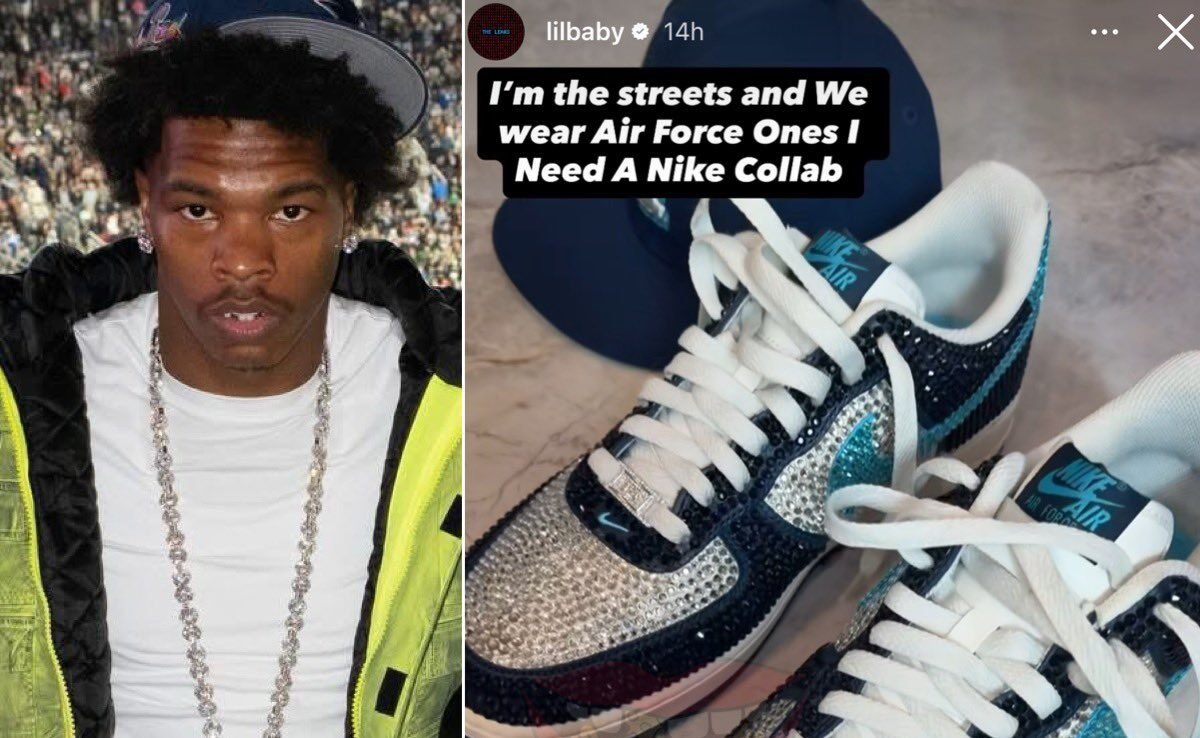
Lil Baby made his intentions clear about wanting to partner with Nike on an Air Force 1 collaboration. The Atlanta rapper’s statement was shared by DailyLoud on social media, sparking conversations about potential future sneaker partnerships.
The Grammy-nominated artist’s interest in working with Nike comes at a time when rapper-sneaker collaborations have become increasingly lucrative and culturally significant. Air Force 1s, in particular, have remained one of Nike’s most coveted collaboration silhouettes since their introduction in 1982.
Lil Baby‘s commercial success over the past few years positions him as a compelling potential partner for Nike. His albums have consistently topped charts, with ‘My Turn’ becoming one of 2020’s best-selling projects. The rapper’s influence extends beyond music, with a dedicated fanbase that spans multiple demographics.
The sneaker collaboration landscape has evolved dramatically in recent years. Artists like Travis Scott, Drake, and Kanye West have proven that musician-designed footwear can generate massive sales and cultural impact. Travis Scott’s Air Jordan collaborations alone have become some of the most sought-after releases in recent memory.
Nike’s Air Force 1 silhouette has served as the canvas for numerous high-profile collaborations. From luxury fashion houses to streetwear brands, the classic basketball shoe has maintained its relevance across different markets. The shoe’s clean design and cultural significance make it particularly appealing for artist partnerships.
Lil Baby’s Atlanta roots could bring an interesting perspective to a potential collaboration. The city has become a major hub for hip-hop culture, and Nike has historically drawn inspiration from regional influences in their partnership projects. An Atlanta-inspired Air Force 1 could resonate strongly with both local and national audiences.
The business case for such a collaboration appears strong. Lil Baby’s streaming numbers consistently rank among the highest in hip-hop, indicating a substantial and engaged fanbase. His social media presence reaches millions of followers across platforms, providing significant marketing potential for any partnership.
Sneaker collaborations have also become important revenue streams for artists beyond traditional music income. Limited releases often sell out within minutes, creating secondary market value that can extend well beyond the initial drop. This phenomenon has made artist partnerships increasingly attractive to both brands and musicians.
Nike hasn’t publicly responded to Lil Baby’s statement about wanting an Air Force 1 collaboration. The brand typically keeps partnership discussions private until official announcements are ready. However, the company has shown willingness to work with hip-hop artists who demonstrate strong commercial appeal and cultural influence.
The timing of Lil Baby’s comment is particularly interesting given the current state of the sneaker market. Collectors and casual consumers alike continue to show strong appetite for limited releases, especially those connected to popular musicians. This demand has created opportunities for artists to leverage their influence into profitable partnerships.
Other rappers have successfully translated their musical success into sneaker deals. Future’s collaboration with Reebok and Pusha T’s partnership with Adidas demonstrate how artists can extend their brand beyond music. These partnerships often result in designs that reflect the artist’s personal style and regional influences.
While no official Nike partnership has been announced, Lil Baby’s public statement suggests he’s serious about entering the sneaker collaboration space. His commercial track record and cultural influence certainly position him as a viable candidate for such a partnership.
The potential collaboration would join a growing list of musician-designed Air Force 1s that have captured both critical acclaim and commercial success. Whether Nike will pursue this opportunity remains to be seen, but the conversation has certainly begun.
