
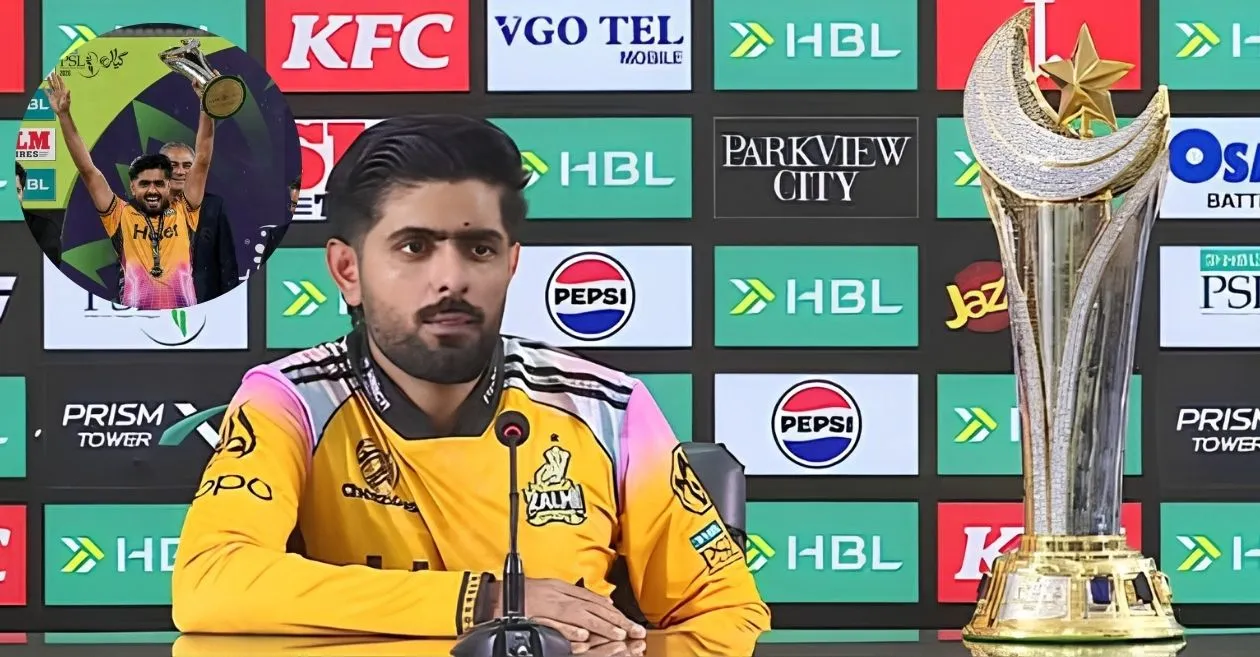
Fresh off the adrenaline of a historic Pakistan Super League (PSL) 11 title victory, Peshawar Zalmi captain Babar Azam has sent a defiant message to his critics. In a post-match press conference that felt more like a statement of intent than a standard briefing, Babar dismissed growing speculation regarding his potential retirement or withdrawal from specific formats to manage his workload.
Babar Azam responds firmly to doubts over his participation across all formats for Pakistan
The talismanic batter, who orchestrated a five-wicket victory over the Hyderabad Kingsmen in the final, was in no mood for compromise. When a reporter attempted to ask if the 31-year-old would consider narrowing his focus to white-ball cricket to prolong his career, Babar cut the question short with a sharp, colloquial retort: “Tension na lein, teeno format kheloonga” (Don’t worry, I will play all three formats).
Babar’s firm stance isn’t just about personal ambition; it’s rooted in a deep-seated cricketing philosophy. Addressing the modern trend of players specializing in shorter formats, the Zalmi skipper argued that the foundational skills of Test cricket are what truly sustain a world-class player across the board.
“It’s not for the player to decide which format to skip; a player’s job is to play,” Babar emphasized. He highlighted that the rigors of the domestic circuit and red-ball cricket teach “the art of the long innings,” a skill he believes is indispensable even in the frantic pace of T20s. According to Babar, the patience developed in five-day matches translates directly into better decision-making during pressure-cooker situations in limited-overs games.
This philosophy clearly paid dividends during PSL 11. Babar ended the season as the top scorer with 588 runs from 11 matches, including two centuries. His ability to anchor the innings while maintaining a high strike rate was the cornerstone of Peshawar Zalmi’s successful campaign, proving that traditional technique still has a massive role in modern T20 leagues.
Babar’s resilience through the rollercoaster of professional sport
Despite the silverware and the individual accolades, Babar remained strikingly candid about his recent struggles. Before this PSL resurgence, the former national captain faced intense scrutiny following a lackluster T20 World Cup performance. He admitted that the transition from international disappointment to domestic success required significant mental fortitude.
“Life is never a stable, flat line; it’s a rollercoaster,” Babar reflected. He revealed that after the World Cup, he spent a ten-day hiatus analyzing his technical flaws and mental shifts. By leaning on his inner circle—family, close friends, and coaches—he was able to strip his game back to basics.
His strategy for the PSL was simple: return to natural cricketing shots rather than trying to force a style that didn’t suit his DNA. This return to form suggests that the Babar Azam 2.0 era is less about transformation and more about a stubborn refinement of the excellence that made him a global icon. For Pakistan fans, his commitment to the green cap in all formats is a reassuring sign that their premier batter is far from finished.
