
Two passengers on the cruise ship that had an outbreak of hantavirus returned to the U.S. before the disease was identified, but they are not showing any symptoms.
They were aboard the MV Hondius, the cruise ship currently traveling in the Atlantic Ocean, that was hit with hantavirus, a rare but potentially deadly respiratory disease spread primarily by rodents.
The U.S. Centers for Disease Control and Prevention has notified the Texas health department that the two passengers, both from the Lone Star State, were on the ship and were contacted by public health workers, according to the Texas Department of State Health Services. Both individuals, who have not been identified and whose locations are unknown, had already returned to the U.S. before the outbreak was identified, officials said.
The department said that it will not release additional personal details about the passengers to protect their privacy.
The two did not have any contact with anyone who was sick while aboard, have agreed to monitor their health, including daily temperature checks, and will contact health officials upon any signs of illness, the department said. Symptoms can become noticeable as late as eight weeks after initial exposure.
Three other passengers have died in the outbreak, and several others are showing symptoms of the virus.
Most hantaviruses are spread through contact with infected rodent droppings or urine. This type of hantavirus, however, is known for being the only strain capable of direct human-to-human transmission in limited circumstances that include close, prolonged contact with a sick person. There have been no documented cases where an asymptomatic person spread it to someone else.
The Dutch-flagged MV Hondius — a ship with roughly 150 passengers and crew that set out for a polar expedition — gained global attention for its viral outbreak. It is currently sailing towards the Spanish Canary Islands after departing the Cape Verde area off the coast of Africa.
A 70-year-old Dutch man was the first MV Hondius passenger to die on April 11 after suffering from symptoms for a few days — two weeks after the expedition cruise left Argentina to begin its voyage.
Argentinian officials recently told The Associated Press that the leading hypothesis is that a Dutch couple — the first to die after contracting the virus — may have been exposed to rodents in a landfill during a bird-watching expedition in Ushuaia, Argentina, before embarking. The region had never recorded a hantavirus case before.
The MV Hondius departed Argentina on April 1.
The World Health Organization’s director of epidemic and pandemic preparedness, Dr. Maria Van Kerkhove, said that because there are no known rats aboard the ship, the virus was likely introduced by an already-infected passenger.
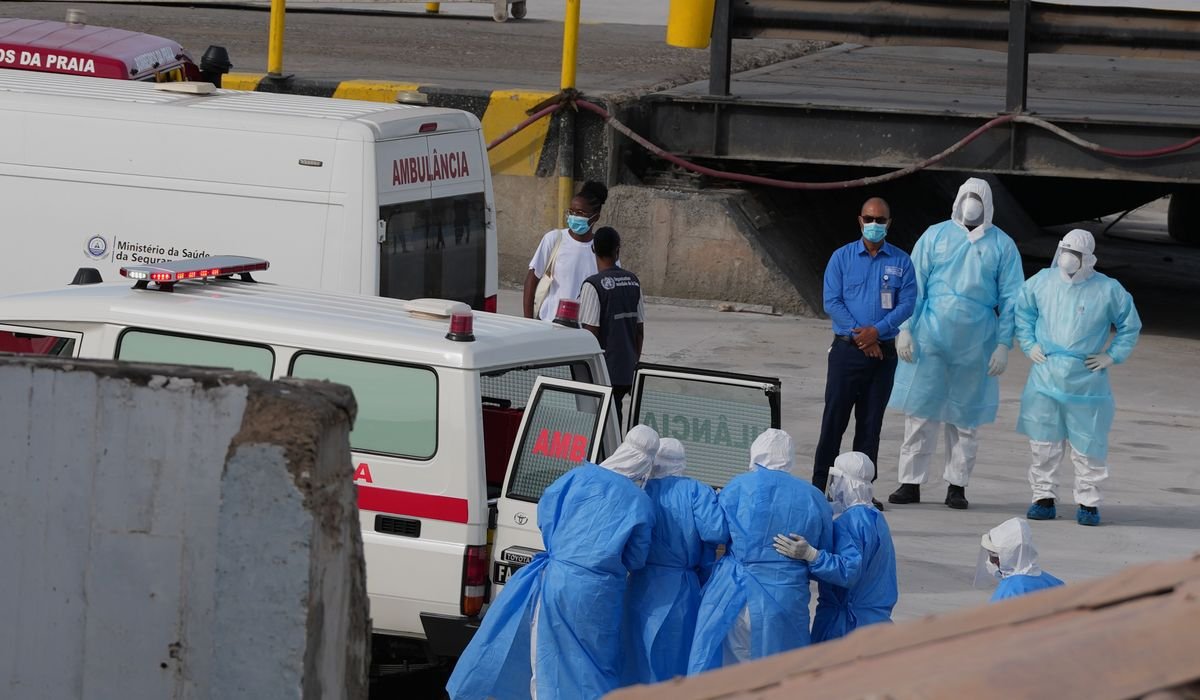
Those remaining on the MV Hondius are under strict precautionary measures. Three passengers, two of whom tested positive for the virus, were evacuated to the Netherlands from Cape Verde on Wednesday.
WHO has reported eight total cases as of Wednesday, five of which have been laboratory-confirmed as the Andes strain of hantavirus.
In a Thursday media briefing, the organization said that “while this is a serious incident, WHO assesses the public health risk as low.”
Almost 900 cases of hantavirus in the U.S. have been confirmed since surveillance began in 1993, with a high mortality rate of 30% to 35%.
