
Opinions expressed by Entrepreneur contributors are their own.
Key Takeaways
- Rideout believes most people fail because they “negotiate” with themselves instead of acting.
- He says taking the easy road early cost him opportunities, including the chance to pursue an MBA.
- After quitting an Ironman race, he vowed never to quit again, no matter the conditions.
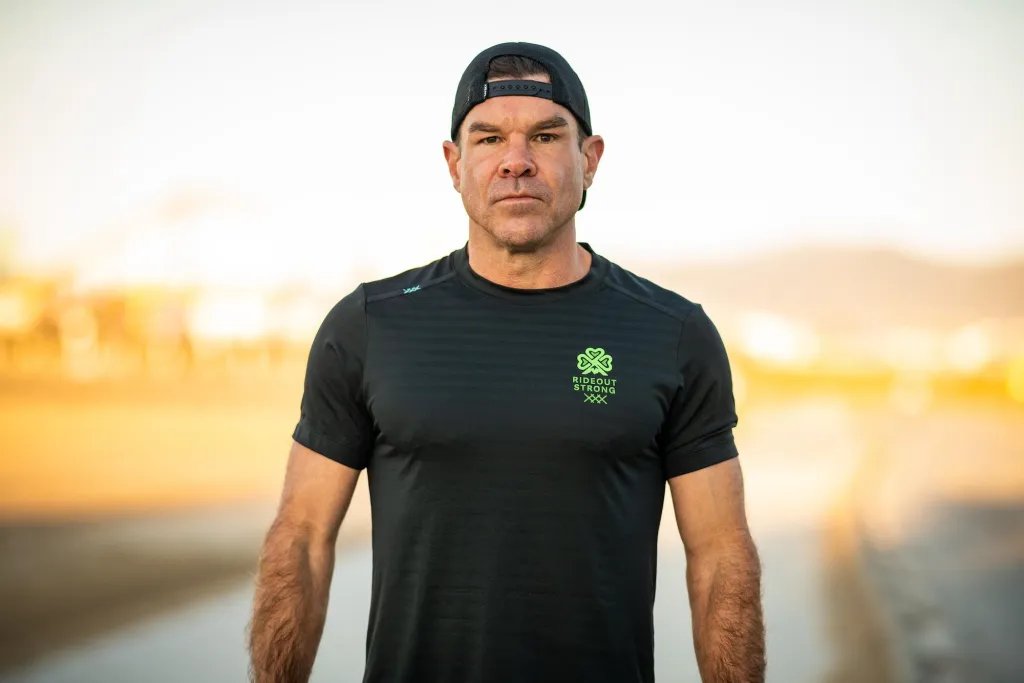
Most authors would take a victory lap when their book becomes a national bestseller. Not Ken Rideout.
“I would have been happier if it made the New York Times list,” he says of his new memoir, Everything You Want Is On the Other Side of Hard.
For Rideout, winning isn’t enough. The real test is how close you get to the standard you set for yourself, and how quickly you raise it again.
Rideout is an elite endurance athlete, entrepreneur and former Wall Street trader. He is also one of the fastest marathoners in the world over 50 and a recovering opioid addict who spent years battling dependency before getting sober in 2010. He appeared recently on the One Day with Jon Bier podcast to talk about discipline, dealing with pain and why most people fall short of their goals.
Stop negotiating with yourself
Rideout doesn’t spend much time deciding whether he feels like doing something. For him, that’s where most people lose the daily battle.
“As soon as you stop negotiating with yourself, it’s amazing what you can accomplish,” he says. “I’m just doing it.”
He sees that internal debate as the real obstacle. The moment you start weighing whether to act, whether it’s getting up early, making a call or pushing through a tough stretch, you’ve already created an exit ramp.
Rideout’s approach is to remove that option entirely. If something needs to get done, he does it. “You get up and you handle your damn business,” he says.
Pay now or pay later
Rideout came to this mindset by watching what happens when you don’t put in the work early.
“I wish I had studied,” he says. “I wish I had the option to go get my MBA at Harvard or Yale.”
Instead, he took what he describes as the easy road through the first half of his life not putting the hard work in academically. That choice didn’t feel costly at the time.
“But by not studying and always taking the easy road, I eliminated the potential to be able to do those things,” he says.
That pattern stuck. It showed up in other parts of his life, from career decisions to habits that followed him for years.
“The easy road never pays well,” he says.
Now he treats effort like a bill that always comes due.
He taught himself how to be tough
Rideout wasn’t always wired this way. He describes himself as “very timid as a kid.” But that changed when he walked into the Somerville Boxing Club. At first, he hated every second of it. He had no natural inclination towards boxing. No hidden left hook. Just a recognition that avoiding fear wasn’t working.
“I said I’d rather get in the ring in a controlled setting and learn how to do this than get into a scrap in the street and be completely a fish out of water,” he says.
That experience became a template because it showed him something he hadn’t believed before.
“You can teach yourself how to be tough,” he says.
The feeling never went away. He still didn’t want to step into the ring. The difference was that he stopped treating that feeling as a reason to back off.
Quitting once was enough
There’s one moment he hasn’t let go of. At the Ironman World Championship in Hawaii, Rideout dropped out mid-race.
It was a mistake he still regrets. “The sting of quitting never leaves you,” he says.
That decision hardened into something he carried forward. Two years later, he came back under worse conditions. He had pneumonia leading into the race and knew early on he was in trouble. This time he says, “I was going to drop dead before I quit.”
He walked, ran and pushed his way through the course, eventually finishing after more than eleven hours. It wasn’t his best performance. But this time, he finished.
His next race
At 55, Rideout has no plans to slow down. He’s encouraged by the early success of his book and is fielding interest from film producers. His main focus now is his talent agency, Rideout Sports and Entertainment, where he works with doctors, scientists and health and wellness leaders (disclaimer: I am a partner in the company). With no races currently scheduled, he admits he can feel a bit unmoored without something like a 155-mile ultramarathon to focus on.
But his approach hasn’t changed. “It’s never a negotiation with yourself,” he says. “You get up and you handle your damn business.”
Key Takeaways
- Rideout believes most people fail because they “negotiate” with themselves instead of acting.
- He says taking the easy road early cost him opportunities, including the chance to pursue an MBA.
- After quitting an Ironman race, he vowed never to quit again, no matter the conditions.
Most authors would take a victory lap when their book becomes a national bestseller. Not Ken Rideout.
“I would have been happier if it made the New York Times list,” he says of his new memoir, Everything You Want Is On the Other Side of Hard.
For Rideout, winning isn’t enough. The real test is how close you get to the standard you set for yourself, and how quickly you raise it again.
