
– New work by Cristian Mungiu, Ryûsuke Hamaguchi, James Gray and Los Javis lead our picks of what to see on the Croisette
The Black Ball by Javier Calvo and Javier Ambrossi
As a man who clearly relishes public speaking, and addressing the film industry’s many stakeholders, one of Thierry Frémaux’s most notable quotes from last month’s Cannes Film Festival press conference was that “[Cannes] is not a French festival, it is a festival that takes place in France.” And whilst France is the most common co-production country across the whole line-up, this year’s competition notably shows two countries in rude health, with three films by Spanish directors, and another three from Japanese. If East Asian cinema has provided some of the most reliably great cinema in recent years, crowned of course by Parasite’s Palme d’Or 2019 win, Spanish-language cinema has been underrepresented. With Óliver Laxe’s Sirāt at the forefront, the millennial generation from Spain (which includes this year’s competition selectees Rodrigo Sorogoyen and “Los Javis”) is injecting new vibrancy into their national cinema.
Beyond the TV festival Canneseries, last month the city also welcomed the World AI Film Festival, where director Mathieu Kassovitz gave provocative comments on the technology’s potential in feature filmmaking. Frémaux and festival President Iris Knobloch have made sceptical remarks on AI themselves, yet Steven Soderbergh’s John Lennon: The Last Interview, playing in Special Screenings, will make heavy use of it. Perhaps once its image-generation capacities take another quantum leap, Cannes and other industry gatekeepers will have no choice but to welcome AI-driven cinema.
Great directors, making use of recognisable stars, will once again be out in force, but the festival is notably missing a big Hollywood blockbuster in its line-up (industry analysts have suggested Joker: Folie à Deux flopping at Venice has made the studios cautious of future festival unveilings). Yet many A-listers are expected for the Rendezvous and Cannes Classics section, with a midnight screening of The Fast and the Furious even playing for its 25th anniversary. Alongside animation and the odd documentary, the festival is forever straining to show the breadth of cinema beyond its home base of the arthouse, even if films from that realm are showing wider audience accessibility than ever.
So, here are fifteen films you should make time for from the line-up. Spoiler alert: the Dupieux movie with the cuboid people didn’t make it.
Too Many Beasts – Sarah Arnold

(France – Directors’ Fortnight)
To begin, some wild boars. Following an acclaimed run of shorts, one of which won the Pardino d’Oro at Locarno, Swiss-Italian director Sarah Arnold makes her debut with this drama about a rural French community whose “crop-ravaging” wild boars are igniting a war between farmers and hunters. When a bankrupt grain farmer gets into a violent alternation and then disappears, a cop (Alexis Manenti) and a psychologist (Ella Rumpf) are called in, and face a sprawling investigation which pushes them to their limits.
Premieres 12.15, Sunday 17 May in the Théâtre Croisette.
The Black Ball – Javier Calvo, Javier Ambrossi

(Spain – Competition)
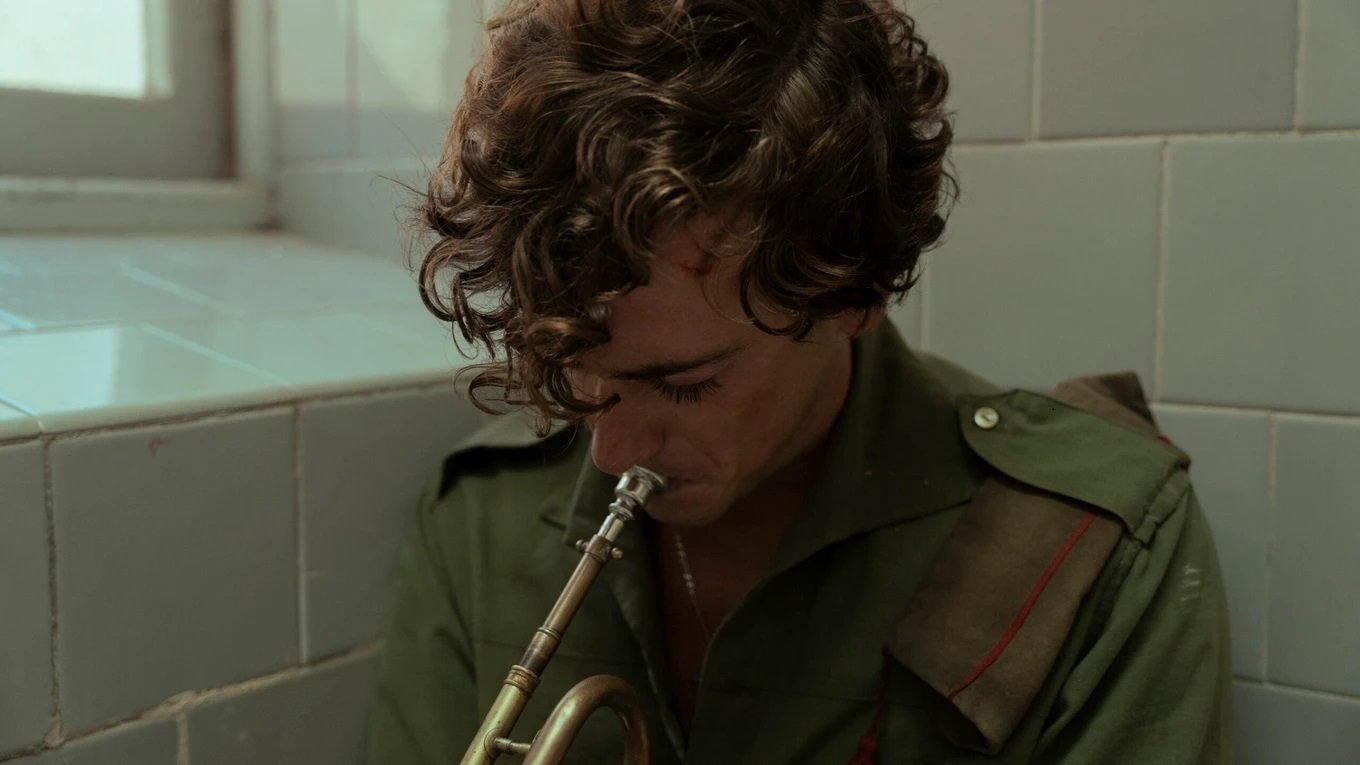
Of the large Spanish competition presence this year, Javier Calvo and Javier Ambrossi (also known as Los Javis) are the least well-known internationally; indeed, their filmmaking reputation comes from their innovative TV series Veneno and La Mesías. Carrying great early buzz, their ambitious feature The Black Ball should change this; inspired by an unfinished play by Federico García Lorca, it follows the interconnected lives of three different queer men at three points in Spanish history, 1932, 1937, and 2017.
Premieres 18.00, Thursday 21 May in the Grand Théâtre Lumière.
Coward – Lukas Dhont

(Belgium/France/Netherlands – Competition)
With a Thursday night slot mimicking Close’s premiere time in 2022, Belgian director Lukas Dhont looks to make it three-for-three with Coward, which finds him tackling period material for the first time. Finding a novel angle on the First World War, it focuses on how on earth those Allied soldiers waiting in the trenches coped as they waited to be called into action: the plot pivots on group of soldiers putting on a theatre show, amidst the uncertainty and violence happening around them.
Premieres 22.00, Thursday 21 May in the Grand Théâtre Lumière.
Ben’Imana – Marie-Clémentine Dusabejambo

(Rwanda/Gabon/France/Norway/Ivory Coast – Un Certain Regard)
Recently picked up by mk2 films for sales, once they saw its completed form, Marie-Clémentine Dusabejambo’s directorial debut looks to be one of the most promising contenders in Un Certain Regard. One of the first films to date tackling its subject matter, it follows the legal reconciliation process in 2002 for the 1994 Rwandan genocide, as Veneranda, a survivor, plays a large role in the proceedings. As new wounds are opened with her daughter’s unexpected pregnancy, and the revelation of the father’s identity, she is forced to “face her own contradictions and the dark parts of her past”.
Premieres 11.00, Tuesday 19 May in the Salle Debussy.
Paper Tiger – James Gray

(USA/Italy/Brazil – Competition)
The love affair between James Gray and French film culture shows no sign of diminishing, with his sixth appearance in competition making him one of the most selected US directors this century. Long described as a ‘classicist”, as he precociously made more earnest and traditionally wrought films than his Gen X peers, it finally seems to be coming together for the sometimes-unappreciated filmmaker, with his new feature so far mooted as one of his best. Adam Driver and Scarlett Johansson lead the cast, in a crime melodrama inspired by his parents’ experiences in 1980s New York.
Premieres 21.45, Saturday 16 May in the Grand Théâtre Lumière.
The Unknown – Arthur Harari

(France/Italy – Competition)
By contrast, the early word on Arthur Harari’s wild sci-fi flick is that it could be one of the line-up’s most polarising. Known for co-writing Anatomy of a Fall, and his own breakthrough directorial work Onoda – 10,000 Nights in the Jungle, the film follows an underachieving photographer (Niels Schneider) who becomes fixated on a “mysterious” woman (Léa Seydoux), only to wake up the next morning in her body. The key still (see above) promises a “body swap” movie of a more existentially harrowing sort.
Premieres 15.30, Monday 18 May in the Grand Théâtre Lumière.
All of a Sudden – Ryûsuke Hamaguchi

(France/Japan/Belgium/Germany – Competition)
The iffy trailers for Christopher Nolan’s The Odyssey show how the blockbuster maestro has spent his post-Oscar win capital. Similarly, it’s hard to imagine the French-Japan co-produced, 196-minute All of a Sudden existing without the surprising, if fully deserved, win for Drive My Car, with Hamaguchi following his muse and idiosyncratic fixations all the way. Early looks and footage promise a story of emotional connection and care – between Virginie Efira’s hospice manager and Tao Okamoto’s dying actress – worthy of his best work.
Premieres 14.00, Friday 15 May in the Grand Théâtre Lumière.
The Diary of a Chambermaid – Radu Jude

(France – Directors’ Fortnight)
The Romanian great heads a Julien Rejl-helmed Fortnight line-up heavier on established names compared to his tenure so far. Working with a far-more concise run-time than his little-loved Dracula from last year, this latest adaptation of Octave Mirbeau’s text finds a Romanian housekeeper for a French bourgeois family joining a theatre troupe, who’re putting on an adaptation of that story itself. Vincent Macaigne, as one half of the French couple, should adapt very well to Jude’s anarchic politico-comic style.
Premieres 12.00, Friday 15 May in the Théâtre Croisette.
Titanic Ocean – Konstantina Kotzamani

One of the most decorated filmmakers on the shorts circuit over the past decade, Greek filmmaker Konstantina Kotzamani’s debut feature takes her to Japan, where she surveys a special boarding school that trains teenage girls to be professional mermaids. The story follows Kyoko, who in the aftermath of her swimming coach saving her life, discovers the devastating effects of her “siren” singing voice, leading her into first love, metamorphosis and the scrutiny of the wider world.
(Greece/Germany/Romania/France/Spain/Japan – Un Certain Regard)
Premieres 16.30, Wednesday 22 May in the Salle Debussy.
Gentle Monster – Marie Kreutzer

(Austria/Germany/France – Competition)
Reemerging after the scandal with her prior leading actor Florian Teichtmeister, Marie Kreutzer dives straight into the heart of toxic masculinity with Gentle Monster, set to be of the competition’s most provocative films. Léa Seydoux is an eminent pianist who upends her blossoming career by moving with her family to the countryside to support her partner Philip, who is suffering from burnout. Soon after, she discovers a shocking secret about him. Providing further French star quality, Catherine Deneuve takes a supporting role.
Premieres 22.00, Friday 15 May in the Grand Théâtre Lumière.
Fjord – Cristian Mungiu
(Romania/France/Norway/Denmark/Sweden/Finland – Competition)

In what could be his most successful film since his Palme d’Or-winner 4 Months, 3 Weeks and 2 Days, Cristian Mungiu looks to have integrated international A-list actors seamlessly into his style. Sebastian Stan – of Romanian descent himself – and Renate Reinsve play a couple moving with their children to the latter’s remote village in Norway, where they face struggles and then suspicion as they attempt to integrate into a new way of life.
Premieres 19.00, Monday 18 May in the Grand Théâtre Lumière.
Hope – Na Hong-jin

(South Korea – Competition)
With shooting commencing in 2023, and a reportedly complex edit, Hope’s competition selection represents a great end to an arduous process for Na Hong-jin, with the film also selling widely pre-festival. The kind of full-throated genre picture that has thrived under Thierry Frémaux’s run as Cannes director, it finds a remote village in a dystopian South Korea under threat first from a tiger appearing out of nowhere, and then far more mysterious forces. Perhaps English-language actors Michael Fassbender and Alicia Vikander – under wraps in the film’s marketing so far – are connected to them?
Premieres 21.30, Sunday 17 May in the Grand Théâtre Lumière.
Fatherland – Pawel Pawlikowski

(Poland/Italy/Germany/France – Competition)
With great roles in Rose and the space travel smash Project Hail Mary already in 2026, we’re expecting great things from Sandra Hüller as she leads Pawel Pawlikowski’s latest feature, where she pairs with Hanns Zischler as the writer Erika Mann and her more famous father, the Nobel laureate Thomas Mann. Adapted from a small slice of Colm Tóibín’s fictionalised study of Mann, The Magician, this is a concise “road movie”, which finds the duo perilously crossing from West to East Germany in the early days of the Cold War.
Premieres 18.00, Thursday 14 May in the Grand Théâtre Lumière.
Teenage Sex and Death at Camp Miasma – Jane Schoenbrun

(USA/Canada – Un Certain Regard)
For many younger cinephiles, trans filmmaker Jane Schoenbrun is one of the most exciting new auteurs to emerge in the 2020’s. And Cannes being where young visionaries stake their claim, now they finds themselves as an unusually high-profile opener for this year’s Un Certain Regard. Hannah Einbinder, who’s been a very vocal pro-Palestinian voice in the US Jewish community, plays a Schoenbrun-esque filmmaker hired to direct a reboot of an ailing slasher franchise, where she becomes obsessed with casting the original version’s “final girl” (Gillian Anderson, showing off a ripe “Southern” accent).
Premieres 19.15, Wednesday 13 May in the Salle Debussy.
Minotaur – Andrey Zvyagintsev

(France/Germany/Latvia – Competition)
Not to be too suggestive, but this plays in the same Tuesday afternoon slot as It Was Just an Accident, which of course saw Jafar Panahi walking off with the top prize after years as a dissident in his home country, Iran. Now exiled in France, Andrey Zvyagintsev hasn’t been quite as direct towards Russia, but his new feature takes him to the foreboding year of 2022, as a Russian businessman, on the verge of laying off his employees, discovers his wife is having an affair. With Frémaux comparing the film to classic Claude Chabrol, expect Zvyagintsev on his icily best form as a dramatist.
Premieres 15.30, Tuesday 19 May in the Grand Théâtre Lumière.
