
In this latest edition of our Americans in Spain newsletter we cover positive changes for Americans wanting to apply for Spain’s Digital Nomad Visa and Spain’s summer plans to celebrate its role in 250 years of American independence.
First up, let’s begin with the practical need-to-know for US remote workers living in or moving to Spain.
The country now accepts US W-2 Certificates of Coverage for the Spain Digital Nomad Visa W2. That’s according to NIM Immigration Lawyers, Moving to Spain Guide and other firms specialising in helping foreigners move to Spain.
The move makes taxation easier for salaried US employees living in Spain, who may now continue paying into the US social security system, rather than having to show compliance with the Spanish system.
The change primarily benefits W-2 employees and may not extend to freelancers living in Spain, who are often classified as autónomos and subject to the country’s self-employment tax and social security system.
At a time when more Americans are leaving the US than ever before, it’s a welcoming sign from Spain.
And it’s not just regulations that flag Spain’s warm relations with Americans, even if attitudes toward the US President are icy.
While Prime Minister Sánchez rallies against Trump and his international politics, the government is deploying soft power in the form of exhibitions, concerts, and seminars.
To commemorate 250 years of US independence, the Spanish Embassy in Washington has scheduled about 30 events to celebrate Spain’s role in securing the United States’ independence from British rule.
The events will include exhibitions, concerts, seminars, and tributes to two figures who played a significant role: Bernardo de Gálvez and Diego de Gardoqui.
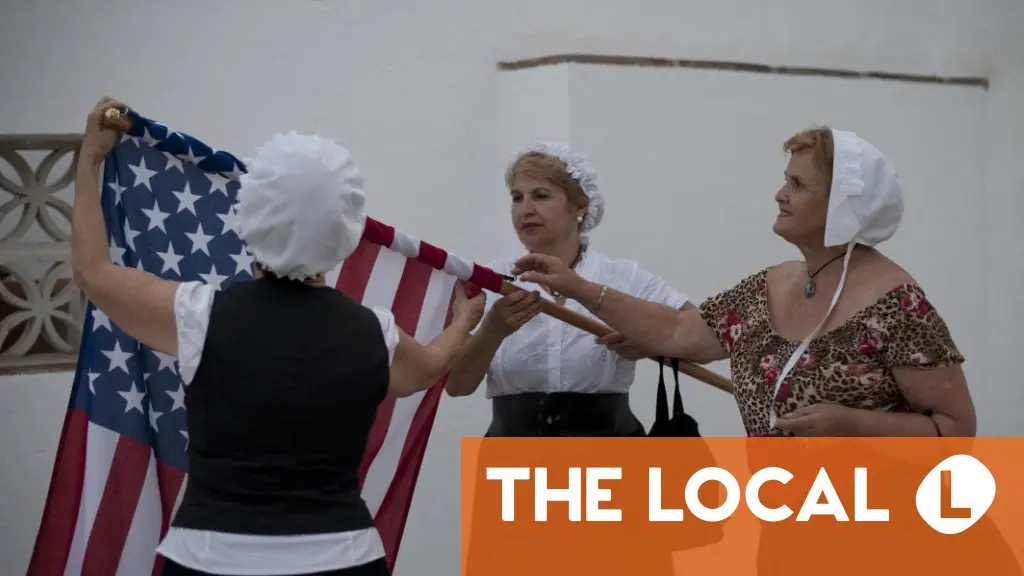
READ ALSO: The Spanish village that celebrates American Independence Day
It will also give Americans a chance to experience some of the Prado’s most famous exhibitions without leaving the US.
The National Museum is planning to take a “Prado in the Streets” exhibition to several American cities, consisting of replicas of some of its most iconic works.
It’s about more than art; the exhibitions signal the deployment of soft power. Spain’s ambassador to the United States, Ángeles Moreno Bau, explained in an interview with El País.
The preparations come at a time when diplomatic relations between the US and Spain seem at peak strain.
In April, the Spanish PM led a two-day progressive conference in Barcelona, billed as the “progressive CPAC.” Attendees included leaders from South Africa, Colombian, Germany, the UK, and Italy’s opposition leader, Elly Schlein, among others.
Pedro Sánchez has been Europe’s most outspoken critic of President Trump, positioning himself as a leader in a growing movement towards the left. Since the joint US-Israel operations in Iran, Sánchez has been even more outspoken, refusing the US military to use Spanish bases or airspace.
In response, the MAGA movement, led by Senator Linsey Graham, proposed that US armed forces leave the military bases, Rota and Morón in Spain. Trump has put a megaphone to the proposal, which insists the United States shouldn’t maintain bases in a country that prevents it from using them.
The American president had also threatened to cut off all trade with Spain.
And it’s not just war that the two countries are clashing over. US Assistant Secretary of State for Human Rights, Riley Barnes, called for an investigation into a Spanish euthanasia case after Spain permitted the procedure for a 25-year-old paraplegic woman whose long legal battle with her father captured attention.
Spain’s Health Minister Mónica García, in an X post, told President Donald Trump to “stop feeding the international extremist agenda by poking his nose everywhere.”
American interference, Trump’s ire, and threats have not changed Spain’s position.
If anything, Trump’s fury is to Sánchez’s advantage, as shown by the “progressive CPAC conference.” Sánchez has become the anti-Trump, and it could be a boost to his political career.
Spaniards now see Trump as the biggest global threat, ahead of Putin. The sentiment has been brewing.
Disapproval over the war in Gaza, Trump’s capture of Venezuela’s Nicolás Maduro, and now the war in Iran, has many Spaniards rallying against what they see as an existential threat: President Donald Trump.
The latest poll, taken by 40dB barometer for El País and Cadena Ser found that 81 percent of respondents perceive Trump as the most dangerous leader for the future of the planet, while Putin is ranked at 79.3 percent and Netanyahu at 71.2 percent. The new Iranian Supreme Leader, Mukhta Khamenei, ranked further behind at 62.9 percent. China’s Xi Jinping didn’t even reach 50 percent.
The feeling is spilling onto the streets. Recently, No Kings Protests organised by Democrats Abroad attracted thousands in Madrid, Barcelona, Valencia, and Seville.
The demonstrations took place in tandem with the No Kings Protests happening across the United States.
We’re living through a whirlwind of geopolitics, and I know many Americans are uneasy and are hopefully considering new lives overseas.
So, for this month’s oops, I want to share some useful knowledge I learned over my years of attending protests in Spain.
Spain still has the “Gag Law”, although in 2022 the Catalan government said it would no longer enforce it. The law forbids such things as speaking against the crown and famously landed rapper Pablo Hassel in prison in 2021.
When attending protests, opt for the peaceful ones, which aren’t hard to find – most demonstrations I’ve been to in Spain involve marching and singing for freedoms.
Avoid taking photos of police officers; it’s illegal to share them if it could endanger their safety, but in my experience, getting caught photographing the police can cause disagreements.
In my experience, Spain is an amazing country to experience civil discourse with lively political discussions and demonstrations.
Knowing the local laws will help you stay out of trouble and engage at the level you choose.
