
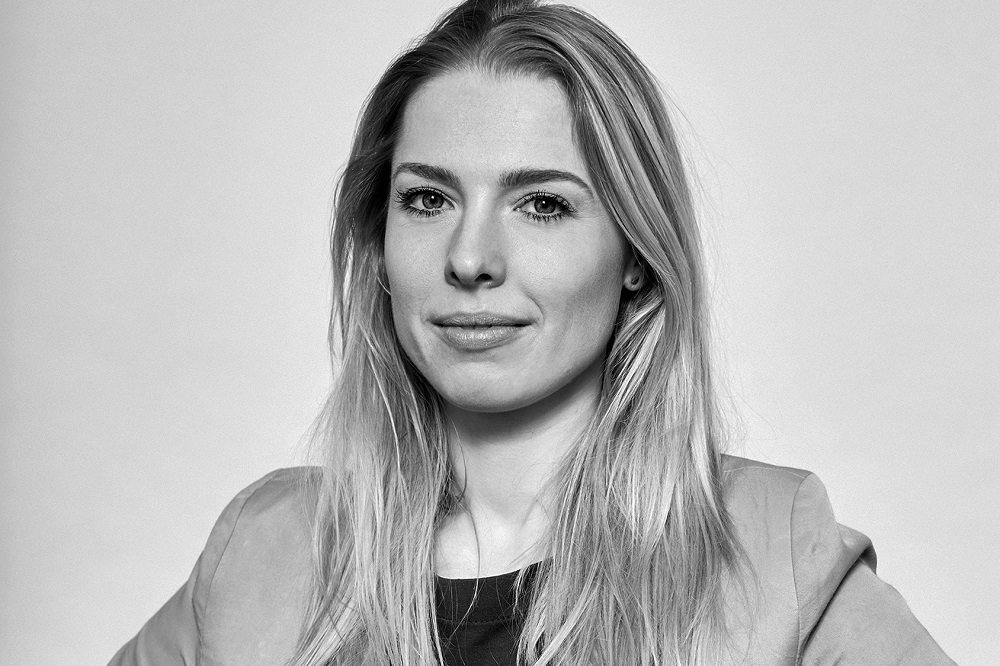
“The strongest documentaries today are just as artistically daring and emotionally layered as fiction”
– The Dutch producer spoke with us about the creative potential of non-fiction storytelling, navigating an increasingly competitive documentary landscape, and building international collaborations
Amsterdam-based producer Olivia Sophie van Leeuwen, co-owner of 100% Film, has been selected as this year’s Dutch participant in the European Film Promotion’s Producers on the Move initiative in Cannes. She has built a strong profile in documentary filmmaking including King of the Cruise by Sophie Dros, Drama Girl by Vincent Boy Kars, and Two Mountains Weighing Down My Chest by Viv Li, which premiered at Berlinale this year. We spoke to her about the power of documentary storytelling, festival positioning, and sustaining creative ambition in a shifting market.
Cineuropa: What initially drew you to non-fiction storytelling, and what keeps you committed to the form today?
Olivia Sophie van Leeuwen: What drew me to documentary was the sense that real life is often stranger, more emotional, and more unexpected than fiction. I have always been fascinated by people, by contradictions, and by what we hide from each other and from ourselves. Documentary gives access to something raw that cannot be scripted. From the start, I wanted to make documentaries that felt cinematic and visually ambitious and never understood why they were approached in a more restrained or traditional visual way. Films that could move an audience in the same way fiction does, while carrying the weight and urgency of reality. That ambition still drives me today. What keeps me committed is that documentaries can shift perspectives. They allow us to enter worlds we would not otherwise encounter. I am always searching for stories that say something larger about the world we live in, but through deeply personal experiences. I’m especially interested in films that live in complexity. Stories where there is no simple hero or villain, where people are struggling with moral ambiguity, identity, loneliness, or systems larger than themselves. Those are the stories that stay with me.
How do you approach positioning documentaries within major festivals, where they often compete with fiction for visibility?
I do not think documentaries should position themselves as less than fiction. The strongest documentaries today are just as artistically daring and emotionally layered. At the same time, audiences are increasingly drawn to documentaries because they offer something rare: a connection to real life. In a time, shaped by AI, manipulation, and endless streams of content, there is a growing hunger for stories that feel authentic. The documentary industry operates differently, often with less financing and more urgency-driven storytelling. Perhaps, that is also why the field has historically created more space for female voices and perspectives. When positioning a documentary for a major festival, it is important to understand what makes it culturally urgent, emotionally universal, and formally distinctive at the same time. Festivals are also looking for cinematic experiences. The festival landscape has become more competitive, especially for documentaries. You can carefully plan strategy and positioning, but there is always an unpredictable element. Sometimes you make all the right decisions and still do not get selected. After a premiere at IDFA, our film House of Hope recently won the Best International Documentary Award at Hot Docs in Toronto. That feels incredibly rewarding. In such a crowded documentary landscape and gives it a longer life. But it is also incredibly scary. We are about to enter the festival landscape with Grace, a very special documentary we have been working on for more than ten years. We have enormous hopes for the film, and we believe in it, but of course there is also fear. If it would not get selected by a major A-festival, that would honestly be heartbreaking.
You’ve worked on a range of internationally oriented projects. What defines a documentary that can travel across borders today?
The documentaries that travel best are usually stories that touch something universal through one very particular experience. Even if the story is deeply rooted in a particular culture, audiences need to recognise something of themselves in it. Form is also increasingly important. Festivals and audiences respond to films that experiment with structure, perspective, archives, hybrid storytelling, or cinematic language. We are very interested in documentaries that push the boundaries of the medium while remaining emotionally accessible.
The documentary field has become increasingly competitive in terms of financing and visibility. How do you navigate the balance between creative ambition and market realities when developing your projects?
It has become more challenging. Financing structures are under pressure, broadcasters are more cautious, streamers have shifted strategies, and there is more competition than ever. As a producer, you are constantly balancing artistic ambition with practical realities. For me, the starting point always has to be the creative vision. If you begin purely from the market, the work quickly becomes interchangeable. The films that truly stand out are usually the ones with a strong and authentic voice. I don’t believe that voice only belongs to the director. Producers can be deeply creative as well. At 100% Film, we develop projects in a very collaborative way, and some of our films are strongly producer-driven from the very beginning. I think producing is not only about financing and logistics. It is actually more about storytelling, intuition and creative strategy. At the same time, I’m also very pragmatic. I run 100% Film together with my partner and co-managing director Sander Koolwijk, and we also have the responsibility of keeping the company healthy and sustainable. We are also very lucky to have a brilliant Head of Documentary, Ruby Deelen, who has brought enormous energy and ambition to our documentary slate.
As one of EFP’s Producers on the Move, what are you hoping to develop or strengthen during Cannes?
For me, Cannes is about building long-term international relationships. Documentary producing is increasingly international, both creatively and financially. I am looking to connect with collaborators who share a similar vision for cinematic storytelling. I will also be presenting new projects, including The Woman Who Made Van Gogh Famous, which I am co-producing with Ruby Deelen and tells the story of Jo van Gogh-Bonger, who preserved and shaped Vincent van Gogh’s legacy yet was largely erased from history herself. It reflects many of the themes I am drawn to, such as hidden histories, identity, and perspective. Director Willemiek Kluijfhout is approaching it in a very contemporary way, combining historical material with reimagined visual language. I will also be talking about our fiction feature Peperclip by Jaime Levinas. More broadly, I hope to further position 100% Film internationally as a company that moves between documentary and fiction while maintaining a strong focus on distinctive voices and cinematic storytelling. I will be together with one of my partners, Gijs Kerbosch, who has some fiction projects in development. Filmmaking can be quite intense at times, so being surrounded by other producers who are equally passionate and equally crazy enough to work in this field feels very inspiring.
