
A bitter spring in the southern part of North America. Tensions between Mexico and the United States are escalating rapidly, straining the very fibers and tendons that, until a few weeks ago, had sustained the bilateral relationship without much difficulty. The smooth and fruitful security cooperation that characterized the first year of Donald Trump’s administration has recently turned into a nightmare, with developments that paint a rather bizarre picture — some of which are cause for concern for the Mexican government led by Claudia Sheinbaum, such as the growing presence of CIA agents in the country. This week, U.S. media outlets revealed that the intelligence agency orchestrated the March car bomb attack against a mid-level operative of the Sinaloa Cartel near the capital. Both governments have denied the information, with varying degrees of intensity.
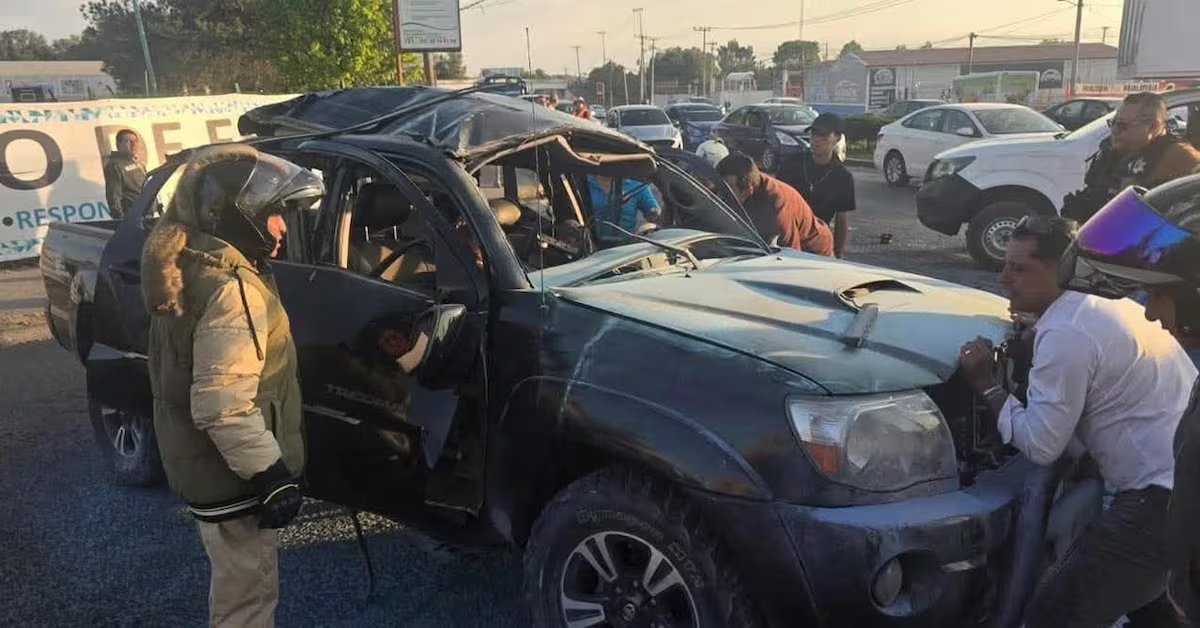
The news broke Tuesday afternoon. In a report co-authored by eight people, CNN reported that the CIA had “facilitated” the attack that killed Francisco Beltrán, alias “El Payín,” a mid-level figure in the criminal organization, on March 28. Beltrán was in a pickup truck with his driver on a highway near Mexico City. The driver had picked him up from Felipe Ángeles Airport, one of the two airports serving the metropolitan area. Video footage from a passing car shows the explosion and then the truck veering across several lanes before crashing. Both men died instantly. The incident, which occurred on a weekend, was surprising, but not enough to halt the news cycle for more than a couple of days. The local prosecutor’s office said it was investigating the matter. Life went on.
On Tuesday, hours after the CNN report, and following statements from both governments denying the information, The New York Times clarified the matter, noting that the CIA had provided “intelligence and planning” for the operation, but that none of its agents had acted on the ground. The newspaper asserted that Mexican authorities had carried out the attack. On Wednesday, Sheinbaum addressed the entire video and, referring to the Times article, called it “a fiction about the size of the universe.” In Washington, the reaction, limited to the CIA, focused on the CNN report. On Tuesday, a spokesperson called the information false and said it “serves as nothing more than a PR campaign for the cartels.”
At different times, the denials from both governments might have resonated more strongly with the public, but in light of the events of recent weeks, doubts now surround their statements. The shadow of the CIA looms large over Mexico, which is now unable to withstand the pressure from Washington. Mass arrests and prisoner transfers to the U.S. are no longer enough. In its renewed war on drugs, the Trump administration wants more. The Republican himself stated a few days ago that they had deployed a “land force” that made things “much easier,” without providing further details — statements that take on a new meaning after the information coming to light in recent days.
This is the second time in less than a month that the presence of CIA agents on the ground in Mexico has unsettled the Sheinbaum administration, which is highly sensitive to the neighboring country’s encroachment on its territory. In April, a car accident involving two CIA agents in Chihuahua revealed their involvement in dismantling a synthetic drug lab in the mountains. Sheinbaum and her security team, headed by Omar García Harfuch, denied any knowledge of the agents’ activities and pointed the finger at the local government, controlled by the opposition National Action Party (PAN). The ruling Morena party’s legislative wing, with a majority in the federal chambers, took up the mantle in the offensive against the local government and requested the governor’s appearance before the Senate. And then, the Rocha case broke.
Ten days after the scandal in Chihuahua and exactly one month after the attack that killed “El Payín,” the U.S. Department of Justice released the drug trafficking indictment against the current governor of Sinaloa, Rubén Rocha, of the Morena party, and nine other current and former officials. The indictment, rich in conclusions but sparse in supporting evidence, which prosecutors are holding back, alleges a scheme of collaboration between Rocha and one of the factions of the Sinaloa Cartel, led by the two sons of Joaquín “El Chapo” Guzmán, one of the organization’s historical leaders, who remain at large. According to the document, Los Chapitos supported Rocha in his electoral campaigns in exchange for preferential treatment in his business dealings.
In Mexico, all these events have complicated the government’s life to a degree that was unimaginable just a few weeks ago. CIA interference and accusations of narco-politics against the ruling party illustrate the depth of U.S. intervention in the country. During these 15 months of shared governance — Trump in Washington and Sheinbaum in Mexico — the suspicion of a growing U.S. presence in the south has been steadily increasing. Major arrests and operations, such as the one that ended the life of Jalisco New Generation Cartel leader Nemesio Oseguera, “El Mencho,” in February, were reported in Mexican government statements, which cited the support of U.S. law enforcement agencies. Intelligence activities, such as drone overflights, were leaked to the press — situations that Mexico acknowledged but limited to the permissiveness of its laws.
What happened next somewhat changes the picture. Layers of strange movements are piling up, fueled by the collaboration of criminals Mexico has sent north in the last year and three months, particularly the old leaders and key figures of the Sinaloa Cartel, specifically El Chapo’s sons and some of his former lieutenants. Their role in the crackdown on Rocha and his associates appears crucial, pending further details from the U.S. Department of Justice. On both sides of the border, questions are now focused on the ultimate goals of the Trump administration. This week, Terry Cole, director of the diminished DEA, remarked, with Rocha in mind, that “this is just the beginning of what’s to come.” He added, “There’s no doubt that the narco-traffickers and high-ranking government officials in Mexico have been in bed for years.”
Sign up for our weekly newsletter to get more English-language news coverage from EL PAÍS USA Edition
