
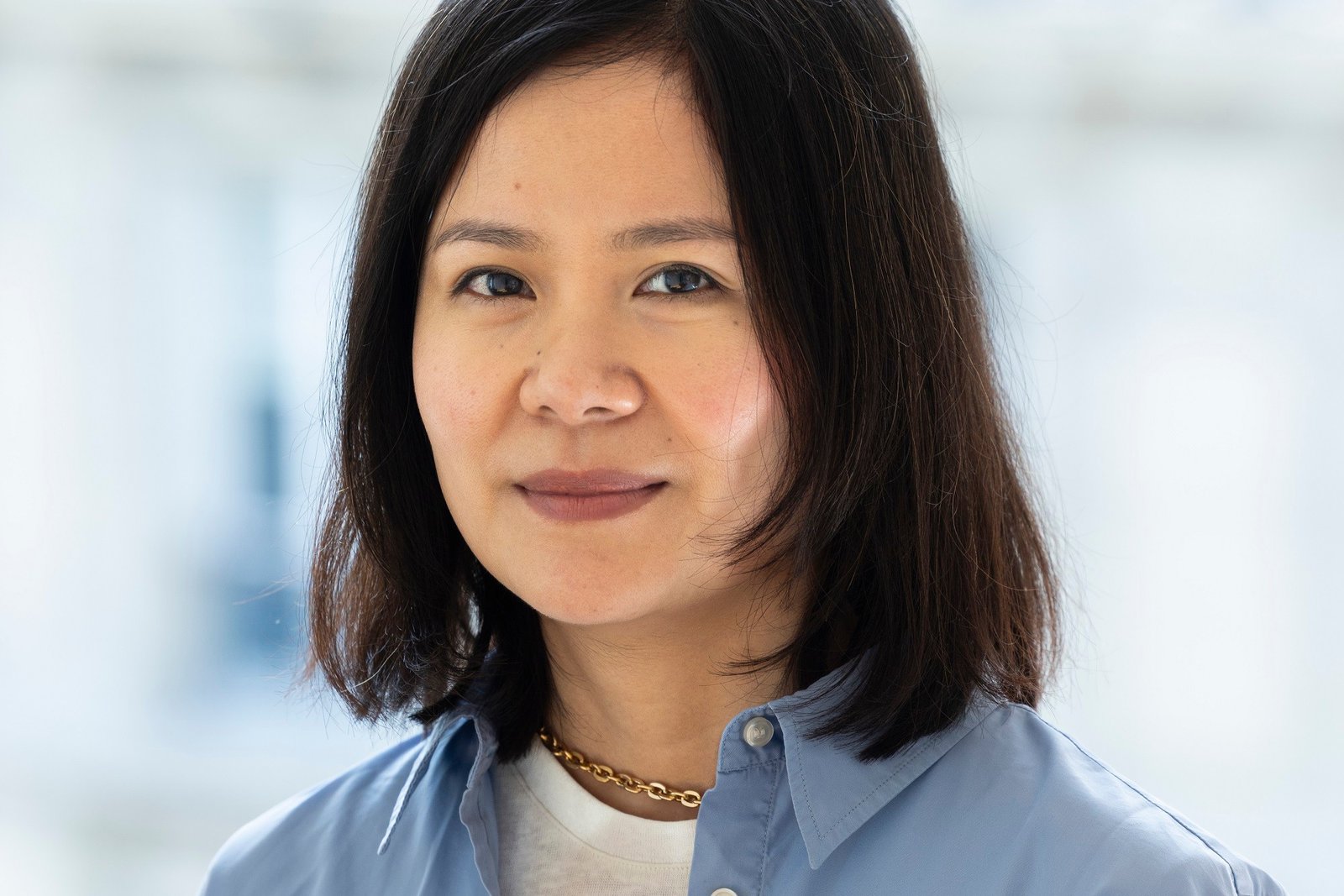
“I wanted to share a story that everyone can relate to, even though it’s deeply personal and intimate”
– CANNES 2026: The Franco-Vietnamese director recounts the genesis and making of her powerful debut animated feature film about love, death and surfing
In Waves, the debut feature film by animator Phuong Mai Nguyen, opened the 65th Critics’ Week at the 79th Cannes Film Festival.
Cineuropa: Why did you decide to bring American artist AJ Dungo’s graphic novel to the big screen?
Phuong Mai Nguyen: Because of the emotional dimension of his work. I respond very instinctively to emotion, both with things I love and things I dislike, without always knowing why. Here, there was something that moved me so deeply that it made me want to share it. When I discovered AJ Dungo’s graphic novel, I wanted everyone around me to read it. By deciding to turn it into a film, I felt as though I were continuing that act of sharing a story that everyone can relate to, even though it’s deeply personal and intimate. The power of the story profoundly affects everyone who discovers it.
How did you approach it visually?
My approach was that there was no need to copy AJ’s very personal drawing style, which is quite different from my own. There was also the question of how things would move once animation itself was introduced. In particular, I worked extensively on Californian colours and different qualities of light, with the idea of conveying emotion and the passage of time through colour.
Surfing lies at the heart of the film. How did you approach its representation?
The sea occupies a major place in the film. I spent a great deal of time observing it, almost obsessively. Watching the waves move, I kept wondering how to recreate that movement — at once cyclical and repetitive, yet also unpredictable. There is a very particular rhythm to that endless back-and-forth motion which suddenly, at any moment, can completely change form. In a way, it’s a metaphor for life. Surfing that wave means throwing oneself into life’s events and confronting them — how we survive them and how we continue on our path. That is what I find so moving in the philosophy associated with surfing.
How did you manage to portray the dramatic dimension of this powerful love story without slipping into excessive pathos?
By meeting AJ and spending a great deal of time with him and with members of Kristen’s family, I realised that there was ultimately something rather joyful within this group of friends, despite Kristen’s absence, which nevertheless remains ever-present. They were incredibly generous with me, particularly in sharing many photos and videos of Kristen when she was still alive. It would have been a shame — and reductive — to tell this story solely through sadness, because there is also so much youthfulness and joy for life within it. Bringing that into the film helps rebalance the drama, because life continues afterwards and one has to keep moving forward despite everything. There is something deeply moving about people who manage to keep smiling in spite of grief.
What about the sequences dealing with the distant Hawaiian past connected to the history of surfing?
That was a choice we made during the writing process with Fanny Burdino and Samuel Doux. It felt important to retrace the history of surfing from its origins in Hawaii to its rise in the United States through the legendary figure of Duke Kahanamoku. It occupied a major place in AJ’s graphic novel, but placing too much emphasis on that highly documentary dimension in the film risked distancing the audience somewhat. Fanny and Samuel then discovered a book by the French anthropologist Jérémie Lemarié on the origins of surfing and its rituals: the call of the wave, the awakening of the sea. I found that deeply poetic — these human beings trying to speak to the elements and reconnect with them. There was also this idea of the cyclical wave, of life and death, a philosophical and spiritual reflection on surfing in Hawaii and on the relationship with the ocean. That is what we wanted to convey through these slightly mysterious passages, which create a kind of magic.
What were your intentions regarding the score composed by Oklou and Rob?
From the very beginning of the project in 2021, they started experimenting with ideas for an initial teaser. Oklou’s voice — so ethereal, airy and soft — evokes the song of sirens and reconnects us both to ancestral surfing and to human existence within nature. There was something deeply moving about combining that voice with electronic sounds, because this is a contemporary story interwoven with an orchestral dimension. It draws us back into something universal.
(Translated from French)
