
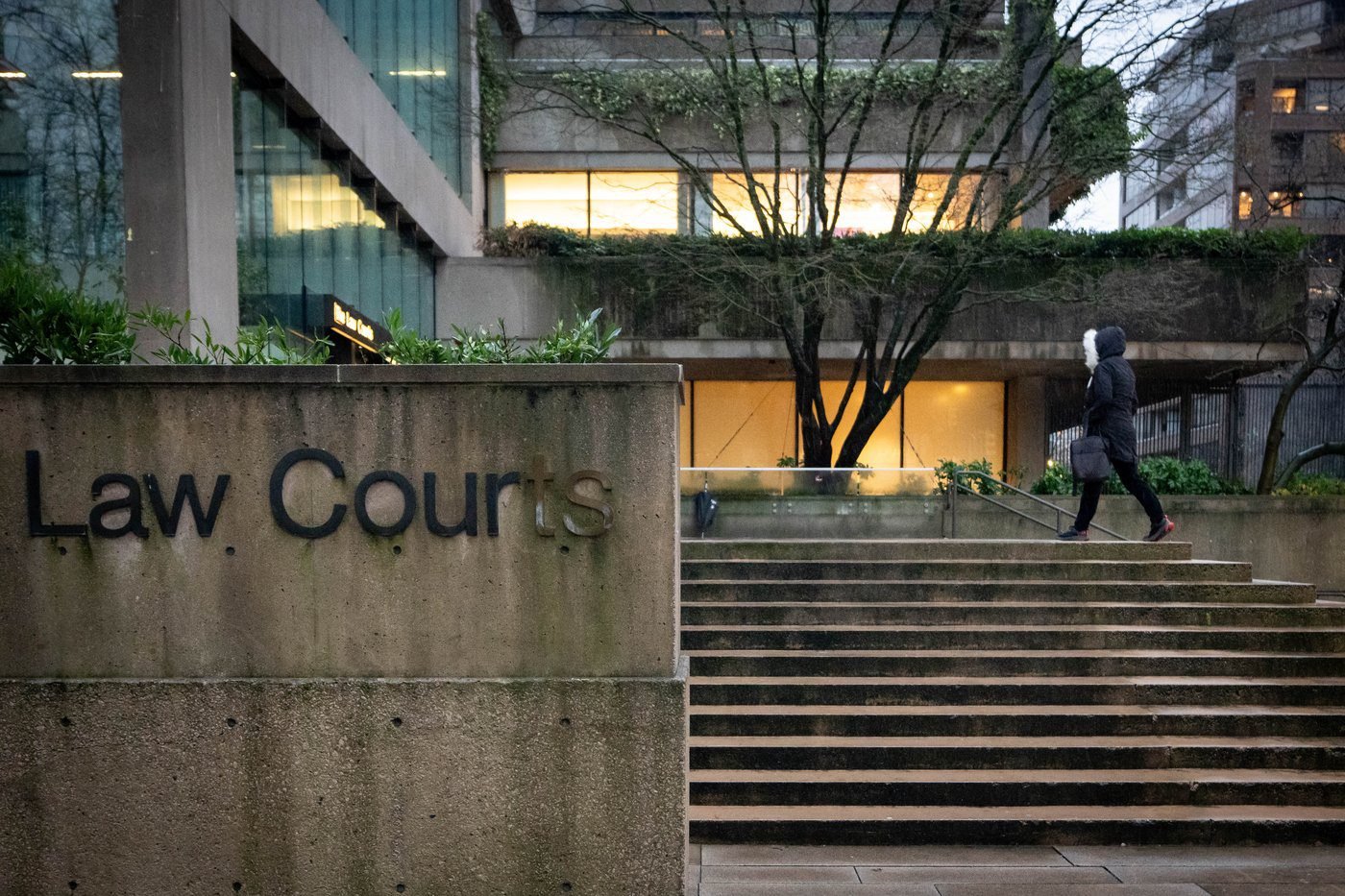
VANCOUVER — A British Columbia Crown counsel says prosecutors were between a “rock and a hard place” in a sexual assault case that was tossed out over delays last year when they were ordered to disclose thousands of text messages from a complainant’s phone.
Lara Vizsolyi told a three-judge panel of the B.C. Court of Appeal that the privacy rights of the complainants would’ve been “extinguished” had prosecutors complied with the order to give them to the defence.
The case was thrown out by B.C. provincial court Judge Ted Gouge last April over unreasonable delays in getting to trial, where a Vancouver Island man was charged with sexual assault against one complainant, and assault against another woman.
The man, whose name is under a publication ban, was arrested in July 2023, two weeks after the alleged assaults occurred, and the provincial court found that the trial had been delayed beyond deadlines set by the Supreme Court of Canada.
Vizsolyi told the B.C. Court of Appeal on Friday that prosecutors were in a difficult situation after the court ordered the text messages to be disclosed, and they tried to give the complainants time to challenge the order.
Defence lawyer Tony Paisana says the delays that led to the case being tossed were not the fault of the defence, and the text messages were potentially important evidence showing the complainants “conspired to lie to police.”
The provincial court judge’s ruling said the Crown had not claimed that there were exceptional circumstances or delays caused by the defence in the case, and he was not told why prosecutors hadn’t completed disclosure as the trial and deadline approached.
Paisana says it was unfair for the Crown to now “suggest that this is all the defence’s fault.”
“You have to identify a period of time at which you can say, ‘this is the defence’s fault,’ and the Crown hasn’t even really done that.”
The court heard how the victims’ lawyers were also involved in the case, and the procedural issues that arose from the phone evidence being ordered disclosed had a “cascading” effect on the delays.
“Was the Crown’s conduct perfect? No. Was the complainants’ conduct perfect? No,” Vizsolyi told the panel. “But everyone was thrown into an extremely difficult situation with a very tight timeline in which to make difficult and complicated decisions.”
Vizsolyi urged the panel to allow the appeal and order a new trial, and the court reserved its decision when the hearing concluded.
This report by The Canadian Press was first published May 15, 2026.
The Canadian Press
