
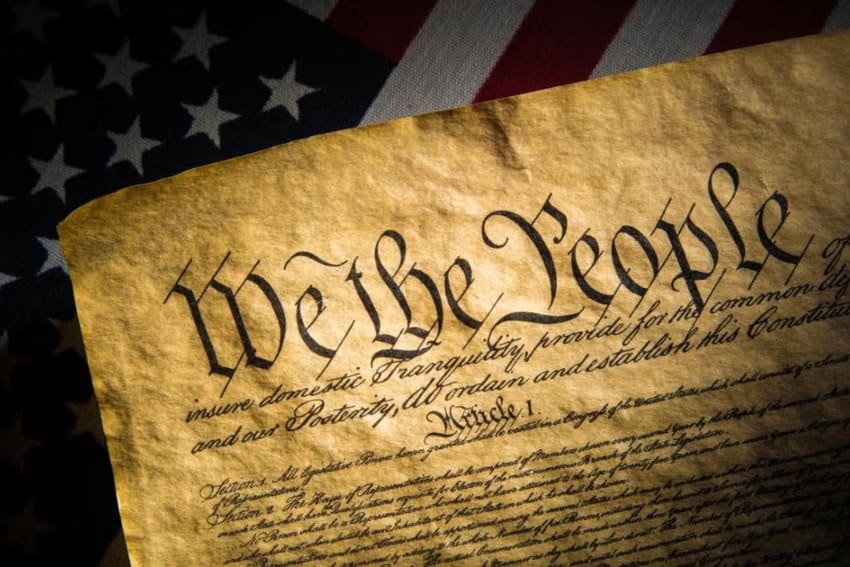
Like most kids growing up in the 1950s, I recited the United States’ Pledge of Allegiance every morning in school, along with singing “God Bless America” and “America the Beautiful” in school assemblies. I was conditioned to believe the United States was the best country, superior to any other in our democracy, equality and freedom. That fabled motto, “the land of opportunity,” is one example of what we call exceptionalism.
It’s more than that, though. Extreme versions of exceptionalism include the belief, especially among the world’s major powers, that not only are we better, but that our nation’s values confer a special status. The core message is, “My country, tribe or group is so special that we don’t have to play by the same rules that everyone else does. Unlike you, we’re uniquely good, advanced and enlightened, and we don’t answer to anyone but ourselves.”
Overcoming US exceptionalism
Fortunately, my dad was a diplomat, and my exposure to other countries while growing up was my first influence in outgrowing my sense of U.S. exceptionalism. At school assemblies in Argentina and Ecuador, for example, I sang their national anthems too, and in Pakistan, I studied the history of the Indian subcontinent, including the tragic story of the Partition.
An international childhood, though, didn’t completely immunize me from exceptionalism, as I discovered when I moved to Vancouver in the early 1970s. After graduating from college, I was surprised — and embarrassed — to discover that Canadians knew a lot more about American history and politics than I knew about Canada. My understanding of Canadian culture consisted of images of the Royal Canadian Mounted Police and “Anne of Green Gables.” Indeed, ignorance of other countries is an example of exceptionalism.
I would be reminded of my ignorance again, 40 years later, when one of my Spanish teachers in Guanajuato — where my husband and I live part of the year — gently corrected my misconceptions about the Mexican-American War. I believed that Mexico had invaded the U.S., whereas the war actually began in a disputed area. My teacher was so gracious and polite about it; he didn’t make me feel stupid, but I was still embarrassed.
Why ‘Americans’ know so little about other countries
While I don’t defend it, there’s a reason why folks from the U.S. know less about Mexicans and Canadians — and many other countries, for that matter — than vice versa. Throughout history, lesser powers have had to know more about dominant empires in order to survive. Because the odds are against them, they study their potential adversary carefully and strategically. We who belong to a more powerful nation, on the other hand, often suffer from complacency and arrogance.
The U.S. is not unique in its exceptionalism. When I married a Brit, he pointed out that the United Kingdom is the only country in the world that doesn’t include its name on its postage stamps.

Recently, the issue came up again. An article I wrote for Business Insider was titled, “We’re Americans who own a home in Mexico.”
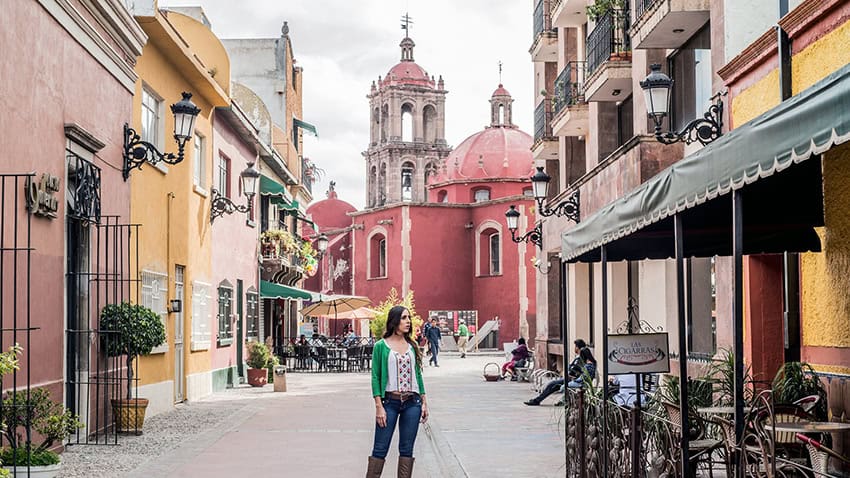
“You shouldn’t have allowed the editors to describe us as ‘Americans,’” my husband objected.
He was right, but the truth is, I hadn’t noticed — again, my internalized exceptionalism.
U.S. citizens often use the term “American” to describe ourselves, while people all the way from Canada to Chile are residents of “the Americas.” In Mexico, I don’t refer to myself as norteamericana, because “North America” includes Canada and Mexico. Instead, I say, estadounidense.
Living in Mexico for the last 21 years has been an ongoing wake-up call about how U.S. exceptionalism teaches you that everything is better in the U.S. Here are just three areas where Mexico excels:
Health care
Medical costs in Mexico are at least 50% lower than in the U.S., making services highly accessible without massive insurance premiums or deductibles. Plus, Mexican doctors spend more time with patients, offering a more personal experience.
Homelessness
Unlike the U.S, it’s rare to see Mexicans living in tent camps or on the street. Homelessness is less common in Mexico due to strong extended families that make it a priority to support relatives.
Indigenous rights
Also unlike the U.S., which historically operated with racial segregation, Mexico recognizes a vast number of Indigenous rights in its constitution, reflecting its unique, complex history.

As a U.S. citizen who has chosen to live abroad, I don’t denigrate the U.S., and I haven’t given up on it. It’s the country of my birth, my family and my culture. And I am indeed proud of some aspects of it — its Constitution and its national parks, to name two.
But my long-term vision is for the U.S. to cultivate a more respectful, egalitarian and mature approach to globalism. To put it in kindergarten terms: “Our country is great, and so is yours. We each excel in different ways, so let’s learn from each other.”
I know, this sounds almost stupidly naive, as though I were five years old. But as the poet Robert Browning, himself an internationalist, said, “A man’s reach should exceed his grasp / Or what’s a heaven for?”
Meanwhile, my personal goal is to notice my exceptionalism, get past my initial defensiveness and keep on waking up, however long it takes.
Louisa Rogers and her husband Barry Evans divide their lives between Guanajuato and Eureka, on California’s North Coast. Louisa writes articles and essays about expat life, Mexico, travel, physical and psychological health, retirement and spirituality. Her recent articles are available on her website, authory.com/LouisaRogers.
