
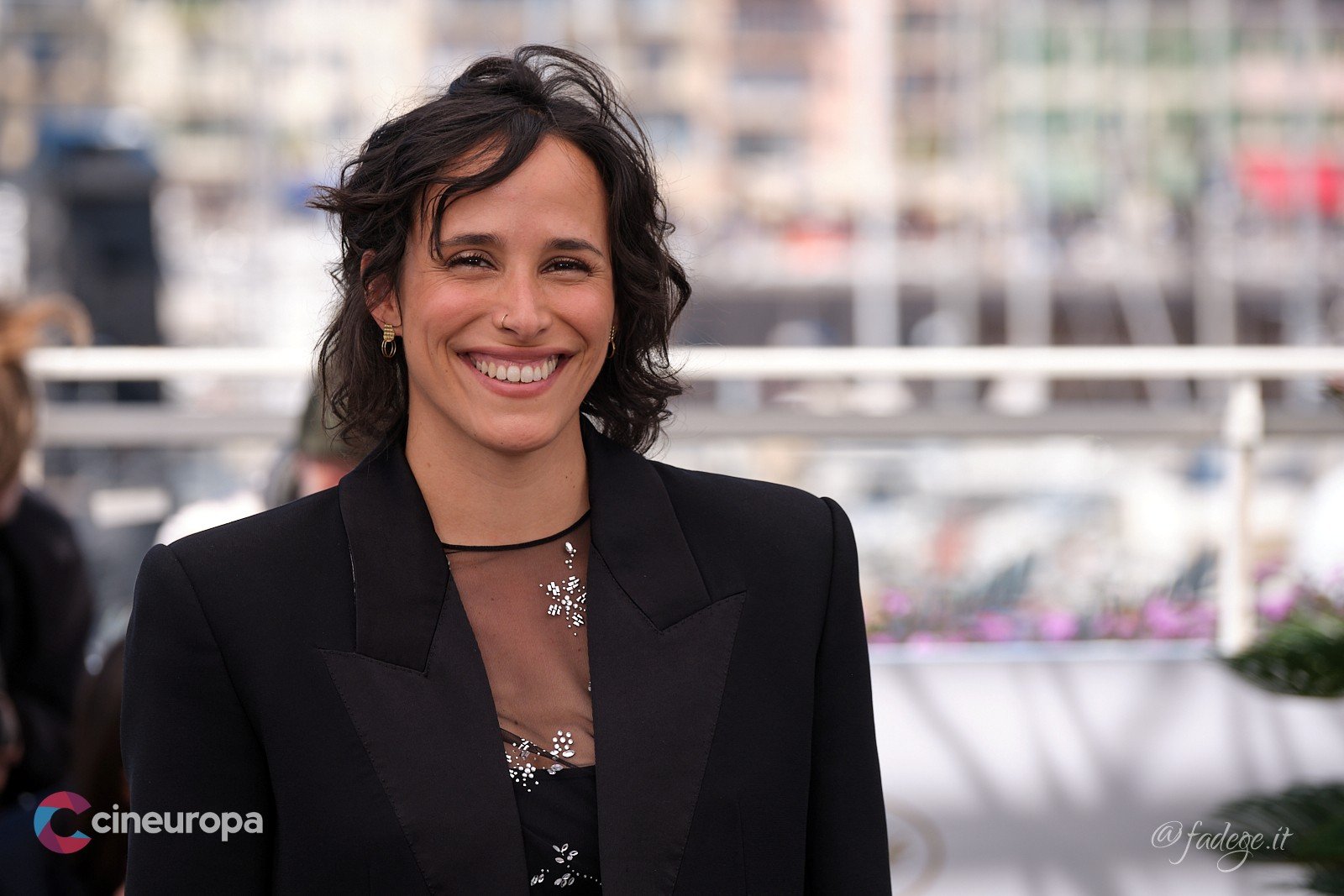
– CANNES 2026: The French filmmaker explains how her first feature film, a story set within the insular world of extreme wealth, came about
(© 2026 Fabrizio de Gennaro for Cineuropa – fadege.it, @fadege.it)
French filmmaker Hélène Rosselet-Ruiz has just presented her debut feature film, Madame, as a Special Screening during the 79th Cannes Film Festival.
Cineuropa: Where did the idea for this encounter between two women from diametrically opposed social backgrounds come from?
Hélène Rosselet-Ruiz: I come from a very precarious background and a few years ago, I was really in need of money. I had a full-time bread-and-butter job as a hostess and a consumer loan, when a colleague suggested I do some housework for a very wealthy Saudi woman to supplement my income, which I did for a whole summer. That’s where the film’s story came from. I then joined La Fémis through the “Equal Opportunities” scheme, and in my third year we were asked to make a 20-minute fiction film. First, I spoke to Dominik Moll about this experience, which had made me reflect on the concept of extreme wealth, and he encouraged me to turn it into a film one day. I also met, on that occasion, the woman who went on to become my producer, Marie-Ange Luciani, and, after I left school, she suggested I work on a feature-length project based on this experience. It is a film about power relations in the broadest sense, and a reflection on my own experiences of class-based violence At the same time, it explores what it means to be a woman and the experiences that are both different and shared by the two characters. Marie-Ange suggested I work on the screenplay with Pauline Guéna, who brings a documentary, almost journalistic, approach that is incredibly valuable. We met many people involved in social movements and spoke with numerous women, particularly Saudi women. This wealth of information enriched the screenplay.
What about the private mansion, which is a real character in the film, particularly with its CCTV cameras that you incorporated into the narrative?
I wanted the setting to be a real place rather than a film studio, because I wanted to recapture the sense of unease I’d felt in that huge flat where I’d been working: the work is hidden away, so the workrooms are tiny, whereas the living areas are very large and sparsely furnished. It was these contrasts that interested me, along with the mix of genuine luxury materials and very fake things, like all the plants, because these places aren’t always lived in all year round. So we eventually found this house in the heart of Paris’ wealthiest neighbourhood. As for CCTV, it was included quite early on in the script, because the location was meant to embody a sort of third main character and we needed to weave this issue of surveillance into the narrative and the film. Who is watching? Who is being watched? Who is being observed? How is the gaze used? These questions served as a guiding thread throughout the writing, and CCTV cameras are also a contemporary reality: we are being filmed more and more.
How did you develop the tone of the film, a closed-set drama that shifts from a social commentary to something almost thriller-like?
For Laura’s character, it soon becomes not just a matter of working for Madame, but also of keeping an eye on her. This opened the door to a certain narrative tension and this surveillance implies a sense of danger that goes beyond the social issue, even though the two themes are intertwined.
You also highlight the alluring aspects of extreme wealth for Laura’s character.
I didn’t want the way it was portrayed to convey a sense of fascination, but rather to show the power that such immense wealth bestows. The capitalist society we live in is, in a way, sick. Great wealth means enormous consumption, things being thrown away, wasted. And people, too, are disposable. However, I wanted this world — which is sold to us as desirable, fascinating, as something to aspire to — to attract and appeal to Laura, a character from a working-class background. The film’s perspective had to be conscious of what it was depicting, of what it was saying about social relations; but at the same time, it needed to not dismiss the fascination with this world that is sold to us as an object of desire. Because there is no reason why someone who is poor should necessarily have moral qualms about this.
(Translated from French)
