
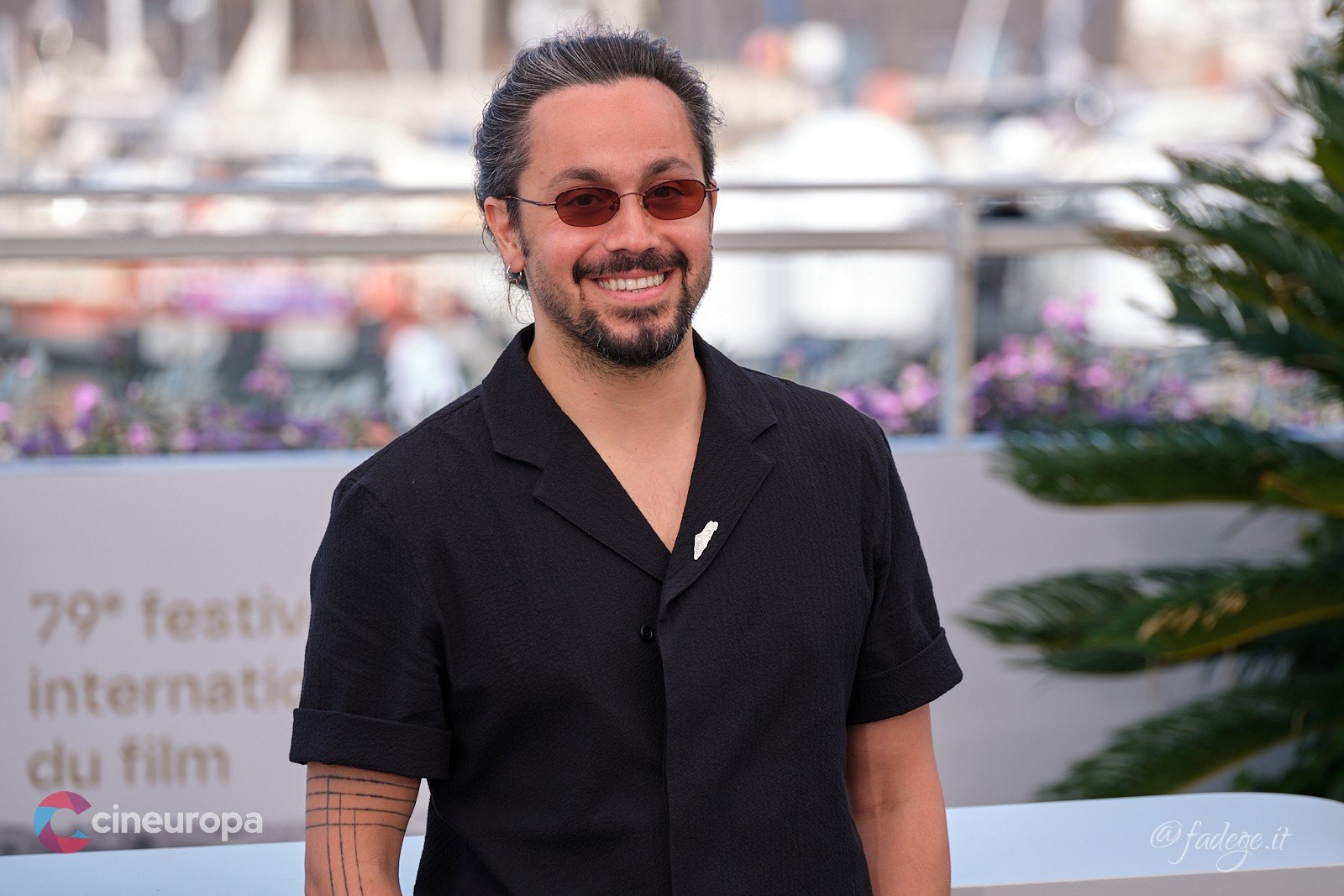
– CANNES 2026: The director talks to us about his film, which draws on the documentary-style realism of its characters, about two sisters fighting against their fate in Lebanon
(© 2026 Fabrizio de Gennaro for Cineuropa – fadege.it, @fadege.it)
Rakan Mayasi, a Brussels-based Palestinian director, unveiled his debut feature film, Yesterday the Eye Didn’t Sleep, in the Un Certain Regard section of the 79th Cannes Film Festival. It is a unique cinematic experience, telling the story of two sisters battling against their fate in Lebanon’s Bekaa Valley, a land torn apart by man-made violence.
Cineuropa: How did the project come about?
Rakan Mayasi: I wanted to pay tribute to my grandmother, who was married at the age of 14. She was getting older and I felt a sense of urgency to make a film about her experience of forced marriage. So I tried to make a hybrid film – not a documentary, but what I call a “non-fictional fiction”, with no script, but a narrative framework, a plot. And I tried to find a place where this kind of forced marriage could still happen. At the heart of the story are two young women who have no say in the fate imposed upon them, two sisters, with two different reactions. One resists in her own way, as far as she can; the other accepts the system. And all is set against a contemporary backdrop.
The film begins with a third young woman, a rebellious young woman who has gone missing.
Lebanon, even though I live in Brussels, is my home, and I go back there regularly. Every time, I would go to the Bekaa Valley and talk to the locals. It’s a narrative thread woven around the village where we filmed, inspired by their experiences: a young girl in love with a young boy, who ultimately marries another woman. One night, his truck burns down and she is accused of setting it alight, even though she has disappeared. This disappearance is a form of rebellion.
The two sisters are collateral victims of a vendetta, of a conflict between tribes. They are to be given in marriage against their will.
I did not want to demonise men or victimise women. Nevertheless, within the existing system, in the context of a vendetta, some resort to sacrifice. Marrying off a girl without her consent is one option.
The film is visually very poetic, yet it also features many scenes depicting everyday life, adopting a more documentary-style approach.
It’s not a plot-driven film, but one of atmosphere; what matters to me is showing the daily rhythm of life. It is, above all, a character study, conducted with the villagers. I filmed with a real family, who play a family in the film. I spent a lot of time with them during my preparatory visits; we ate and cooked together, along with my director of photography. I rewrote the script to suit their personalities, especially the sisters – one was more comfortable with dialogue, the other with expressing her feelings through gestures. I didn’t want them to act; I wanted them to be themselves. I wanted the fiction to reflect real life. We were a very small technical crew; we didn’t have a boom pole, for example. The production, the writing, the directing – it was all part of a process aimed at achieving that goal. And of course, I was incredibly lucky to find this very open and generous family.
There are many frames within the frame, which undoubtedly represent the boundaries of their existence, alternating between static shots and more dynamic ones.
The only way to see life unfold is to feel time passing. The idea isn’t to be slow, but to take one’s time, with long takes and improvisations that leave room for life. Clearly, aesthetics matter a great deal; when there’s a window in the frame, I want the audience to feel how the characters are observing the outside world and how they feel trapped in a certain way. Cinema has the right to show beauty even when dealing with the toughest subjects. We discussed it at length, for over six months, before deciding whether to shoot with static shots or handheld camera. In the end, I decided to go with the energy of the scene: handheld when the plot is moving forward — we’re closer to the characters, it’s more tense — and then static shots to slow things down, to get closer to the character itself.
What does this selection at Cannes mean to you?
It’s very exciting. The film is about the tribal system, about a young woman who rebels. In my own way, I’m rebelling against a certain vision of cinema that the industry might have by making a low-budget film without a script. It goes against everything I was taught at school. So this recognition has a special flavour to it. It wasn’t easy, but this unorthodox approach to filmmaking, with a pace that defies current commercial standards, can also have its place.
(Translated from French)
