
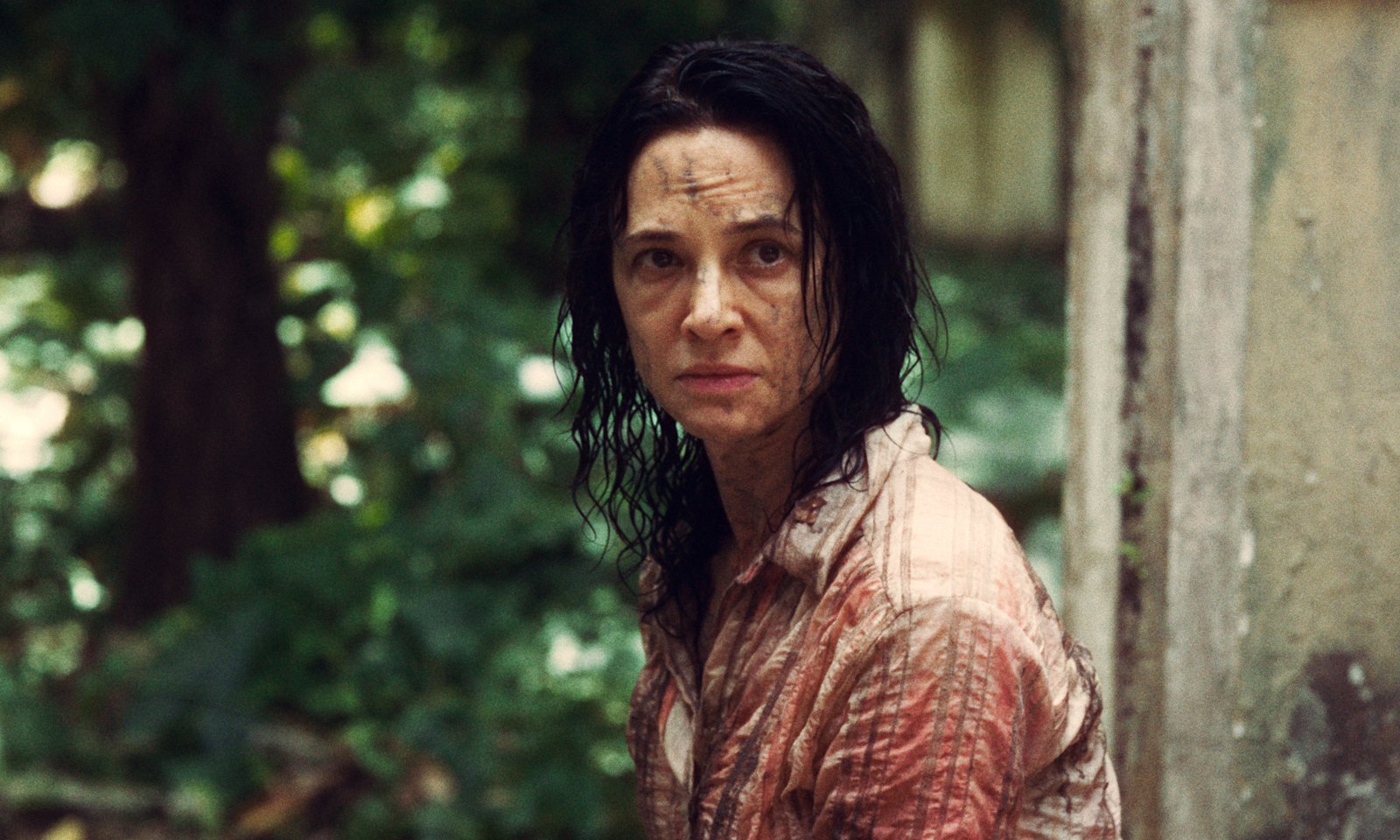
– CANNES 2026: Jorge Thielen Armand puts us in the shoes of a plantation heiress played by Asia Argento, who is forced into confronting her family’s colonial demons
Asia Argento in Death Has No Master
“Amore amore,” cheerfully reads the pink lettering on Caro’s (Asia Argento) grievously out-of-place white T-shirt when we first meet her in Venezuela. The Italian woman has finally come to take back her late father’s long-abandoned house, lived in and rented out by squatters who used to work for his cacao plantation. In the third feature by Venezuelan writer-director Jorge Thielen Armand, Death Has No Master, Caro may be our protagonist – but she is certainly not our hero.

This Cannes Directors’ Fortnight entry could be seen as an extension of a so-called “colonialism horror” subgenre, with a combination of content and style blending the emotional trauma and bodily terror of the colonised. However, Thielen Armand makes the choice to centre the story of the neocoloniser, deliberately forcing the viewer into an uncomfortable distance from the start. The slow burn is reliant on the reverse-colonial revenge narrative that is predictable but nonetheless still potent, as karma seems to take its course – violence, of course, always begets violence.
“Here’s your cacao – your heritage,” says the elderly Yoni (Arturo Rodríguez), who has empathy for her as he witnessed her growing up. At the same time, eerie whispers seem to emerge from the earth itself, warning Caro if she tries to reclaim it: “There is no land, there is no God, there is no house. There is nothing.” Her quest begins to fall apart when the local police refuse to affirm the imperial logic that underpins her reality. As Caro grows more and more into the colonial skin her forefathers inhabited, her primary ally becomes her lawyer, Roque (played by the filmmaker’s father, Jorge Thielen Hedderich).
Everything boils down to control as our association with her grows increasingly thin, allowing Thielen Armand to play with the audience’s own developing sense of disgust with Caro. She could choose to divorce herself from her father’s legacy, but instead, she stands by it. Her insistence that black Venezuelan former housekeeper Sonia (a brilliantly caustic Dogreika Tovar) and her young son Maiko (Yermain Sequera) move off the property consumes her, her suspicions fuelling increasingly violent fantasies.
In this deeply unsettling, bleak post-colonial landscape constantly occupied by shadows, atmosphere is key. Thielen Armand leans heavily on minimal dialogue, an all-encompassing soundscape (sound direction by Pablo Villegas) and a pulsating original score (by Vittorio Giampietro) that permeates the entire movie, rumbling through sequences of labour. The film’s aural components ultimately make Death Has No Master what it is: the sounds of machinery clinking, instrumental wails, ambient whistles and beating drums merge to create a nightmarish environment.
In our heart of hearts, we know the end of this colonial narrative – or we hope we do. Thielen Armand’s take on it is ultimately no different in its path to a bitter, gruesome end, but the sheer overpowering nature of the film’s dark mise-en-scène and sound literally and metaphorically rings in the ears.
Death Has No Master is a Venezuelan-Canadian-Italian-Luxembourgish production by La Faena, Volos Films Italia and Faits Divers Media, in co-production with Tres and Deal Productions. Lucky Number holds the rights to its world sales.
