
NEW YORK — Breta Meria Conole was in a state psychiatric hospital for more than two decades. But the reason why is a family mystery.
Debby Hannigan, her great grandniece, tried for years to access Conole’s medical records, because she thought they might hold clues to mental health issues in her family, including her oldest daughter’s depression.
Hannigan twice wrote to the state of New York for the records. The second time she included a supporting note from her daughter’s therapist, who said the details would help “to know their family medical history better.” Both times she was turned away.
Her experience is hardly unique.
Frustrated family members and others have been pushing for law changes in New York and other states that would allow the release of mental health records of long-dead ancestors. Their efforts have resulted in access policy changes in some states, including Massachusetts and Washington, but elsewhere reforms are happening slowly or not at all.
“It really does piss me off that we couldn’t just say, ‘Hey, we’re the descendants, here’s the proof, now tell us what you know!’” said Doug Clarke of Alfred, New York, who tried unsuccessfully to get records of a great-grandfather. The records might help explain the depression and bipolar syndrome seen in his generation of his family, he said.
Here’s a look at the problem and what people are doing about it.
The cruel history of state mental institutions
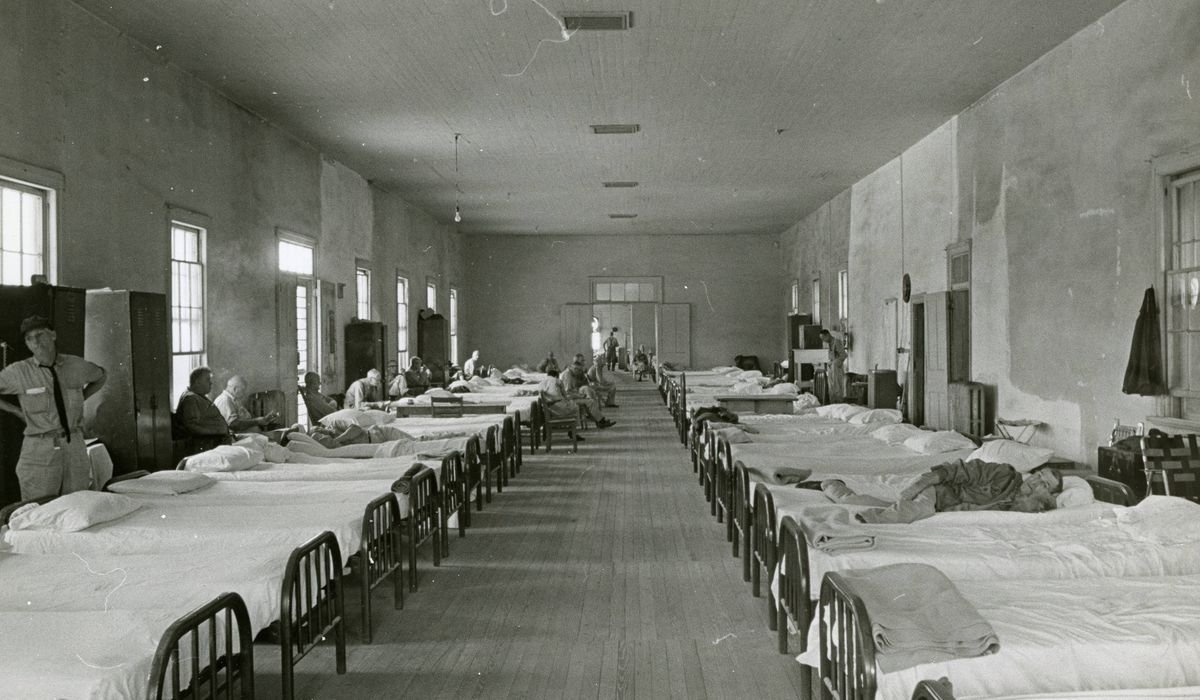
In the 1800s, the U.S. saw a boom in state institutions for the confinement of people with mental illness; every state had at least one by 1890. They were called lunatic or insane asylums, but the reasons for admission ranged from “brain fever” and “grief and anxiety” to “laziness,” “religious excitement” and ”desertion by husband,” according to historical records.
Conditions varied, but some asylums gained reputations as brutal, overcrowded warehouses where patients were neglected and restrained. Asylums gradually became psychiatric hospitals, but practices didn’t necessarily improve: In the 1900s, they were the settings of since-discredited treatments including lobotomies and induced comas.
But staff at the hospitals often took extensive notes, with detailed descriptions of patients and their symptoms. They also took photographs and had other materials, said Dr. Laurence Guttmacher, a former clinical director of one of New York’s state hospitals, the Rochester Psychiatric Center.
Records at some facilities were likely damaged, destroyed or lost through the years. And the surviving documents may not be well organized or cataloged. But a lot of information still exists, Guttmacher said.
“We had this incredibly rich trove of records” at the Rochester hospital, he said.
How old records can be helpful today
Such records have drawn the interest of some people whose families are struggling with depression, suicide or other issues.
“Would you want to know if your grandfather died of a heart attack?” said Dr. Christine Moutier, chief medical officer for the American Foundation for Suicide Prevention. “It’s information that you can use to understand how vigilant to be.”
An untold number of patients died at state hospitals, and some were buried in unmarked graves. Some families haven’t been able to establish when a relative died, let alone how, said Alexandra Lord, a historian writing a book about suicide in her family. She struggled to gain access to New York state records about her great-grandmother.
Guttmacher said: “About twice a month I would get a request from a family member to get access to records, to try to learn the story of their families.” State officials told him he couldn’t release that kind of information.
Patient privacy protections can last decades
A federal law enacted in 1996 protects the privacy of each patient’s health information, including diagnosed conditions and what care they received. The law, known as HIPAA, protects health information for 50 years after someone dies.
Some states have similar guidelines. Ohio law allows the closest living relative of a deceased patient to request information from state mental health facility records, and they can be requested by anyone 50 years after a patient’s death. Maine also offers fairly easy access to records dating back that far.
But many other states are more restrictive. New York allows such records to stay sealed “in perpetuity,” according to a statement from New York’s Office of Mental Health. Records can be released to patients and their immediate family members, but generally not to more distant descendants. They also have been released to medical professionals “with a justification,” and to historians who agree not to name individual patients, state officials say.
Massachusetts was similarly restrictive, but a reform push resulted in a new law last year that made public state hospital records that were at least 75 years old, plus records for people dead at least 50 years.
The change followed a report from a commission that discussed state institutions’ history of abuse and neglect, including patient sterilizations at a state hospital in Monson. One of the commission’s members, Alex Green, suggested the state’s nondisclosure of records amounted to a “cover-up” of the decades of abuse disabled people endured.
Now some are working to change New York’s law. This year, state Sen. Pat Fahy introduced a bill that designates records and information relating to a patient who has been deceased for 50 years or longer as historic records – no longer subject to privacy protections.
Fahy noted New York’s psychiatric facilities have their own troubled history. She cited the Willowbrook State School, a Staten Island facility where developmentally disabled children once lived in deplorable conditions.
“If the person is deceased, there should be an availability of these records to help give the family closure,” said Fahy, a Democrat from the Albany area. “Leaning from our history is one of the best ways to give us insight into how we do better in the future.”
How to find records on institutionalized ancestors
Families do have some other routes to information on ancestors’ mental health history, according to historians.
Online services such as Ancestry.com provide – for a price – access to old records, including census information that can reveal if someone was in a state institution at the time a census was taken.
Veterans’ military pension files have contained details on a person’s mental health.
Old newspapers were packed with items about residents, including about when people were sent to state institutions.
There may be many more people interested in family mental health history than is commonly realized, said Ryan Thibodeau, a St. John Fisher University researcher who has been involved in the push to change New York’s law. In the 1950s, at the peak of institutionalization in America, more than 500,000 people were in state hospitals.
“Their descendants are everywhere,” he said.
___
The Associated Press Health and Science Department receives support from the Howard Hughes Medical Institute’s Department of Science Education and the Robert Wood Johnson Foundation. The AP is solely responsible for all content.
