
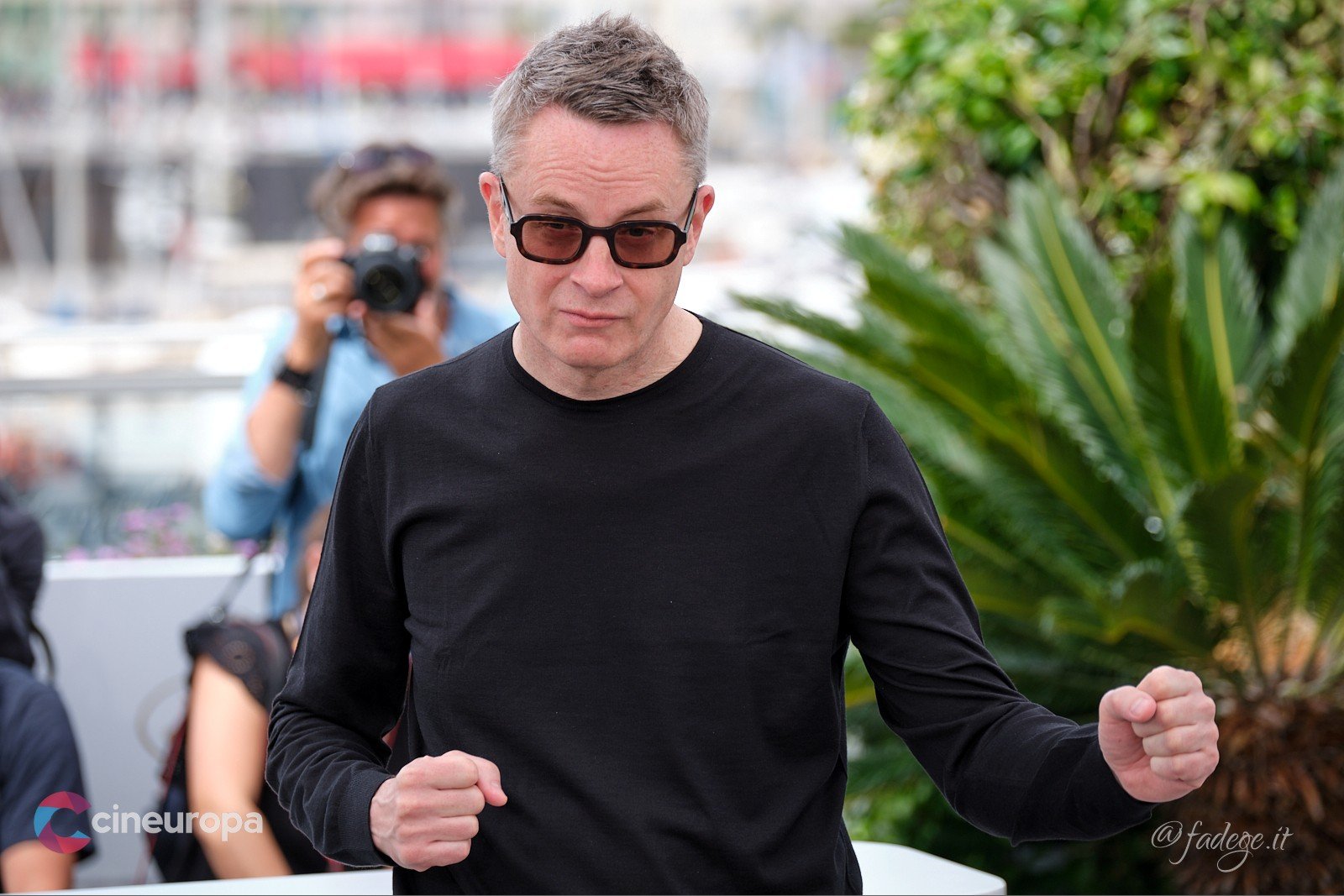
“The film is an algorithm that is everything I like; think of it like an app called ‘byNWR’, and then just scroll away”
– CANNES 2026: The Danish director unpicks his personal blend of the darker sides of life and death, involving some distinctly dysfunctional protagonists and demons
(© 2026 Fabrizio de Gennaro for Cineuropa – fadege.it, @fadege.it)
Once again come Cannes, Nicolas Winding Refn represents “the Danish connection”, as his latest outing, Her Private Hell, premieres out of competition at the 79th Cannes International Film Festival. It’s the director’s fourth consecutive feature to open on the Croisette since Drive in 2011, and as usual, it’s a personal blend of the darker sides of life and death, involving some distinctly dysfunctional protagonists and demons, both mental and real ones, often seen bathed in neon lights.

Cineuropa: On at least one previous occasion, we’ve talked about your “byNWR” brand upon the screen, and you compared it to a perfume bottle. In Her Private Hell, we first see it on the screen at the end. Still, your style has become so identifiable to seasoned film watchers that one could really walk into one of your movies midway and immediately identify the director.
Nicolas Winding Refn: It’s not the first time I’ve heard that. And as hard as it is for me to comment, as I refrain as much as possible from analysing myself, there will be a point when one starts to shape some kind of style, later even starting to own that style. Some directors out there, and you and I will know them, have that ability. The important challenge for me is that every time I’ve finished a work, I’ll try to forget everything and start anew. That said, I’m unable to change who I am or what I’m attracted to. That will always remain with me, as a burden and as a strength.
You’re both a recognised and a self-confessed lover and connoisseur of film as well as popular culture. What kinds of inspirations made their way into Her Private Hell? Let’s start with that expression – “private hell”.
There’s an English film with that title from the late 1960s, a pretty great one actually, but I came across a US paperback, also from the 1960s, with a woman looking at herself in a mirror. When I saw it, I just started warming up to some idea that I instantly felt good about. I started to shape two concrete ideas: the story of Private K and the story of Elle, and how the two could gel together. I then came up with the Leather Man character as the connection.
At one point, it was said that Her Private Hell was going to be shot in Tokyo, which later turned out not to be the case; rather, it was created on interior sets in Copenhagen. Still, a certain Tokyo vibe can be felt, including some Japanese actors and possibly also a whiff of the yakuza cinema of Seijun Suzuki.
That’s a good name and a good vibe. But more than anything, the film is an algorithm that is everything I like. Think of it like an app called “byNWR”, and then just scroll away. You’ll get influences and aesthetics and ideas that I happen to find exciting and entertaining, and that is me, quite simply. I can’t be anything else, now, can I?
Her Private Hell is your fourth Cannes entry in a suite that started with Drive in 2010. How do you think it came to be, and what is the process, if any?
It has to do with Cannes being very good to me through the years, and we’ve cultivated a relationship with each other. But nothing is certain, and you will always have to be able to confront any problems. But I have to say that Cannes remains a shrine for cinematic purity.
As for making anything in Danish, which you haven’t done for the big screen since 2005, have you started to warm to any such plan?
It’s not that I don’t want to; it’s that there are certain things that attract me, and the fact that they’re easier to finalise financially [in English] draws me to make them in the English language. It’s an economic situation, quite simply.
Let’s end on a light note and with a seemingly banal question, just to make sure, once and for all: Nicolas Winding Refn, what’s your favourite colour?
Red! That’s pretty obvious, isn’t it?
