
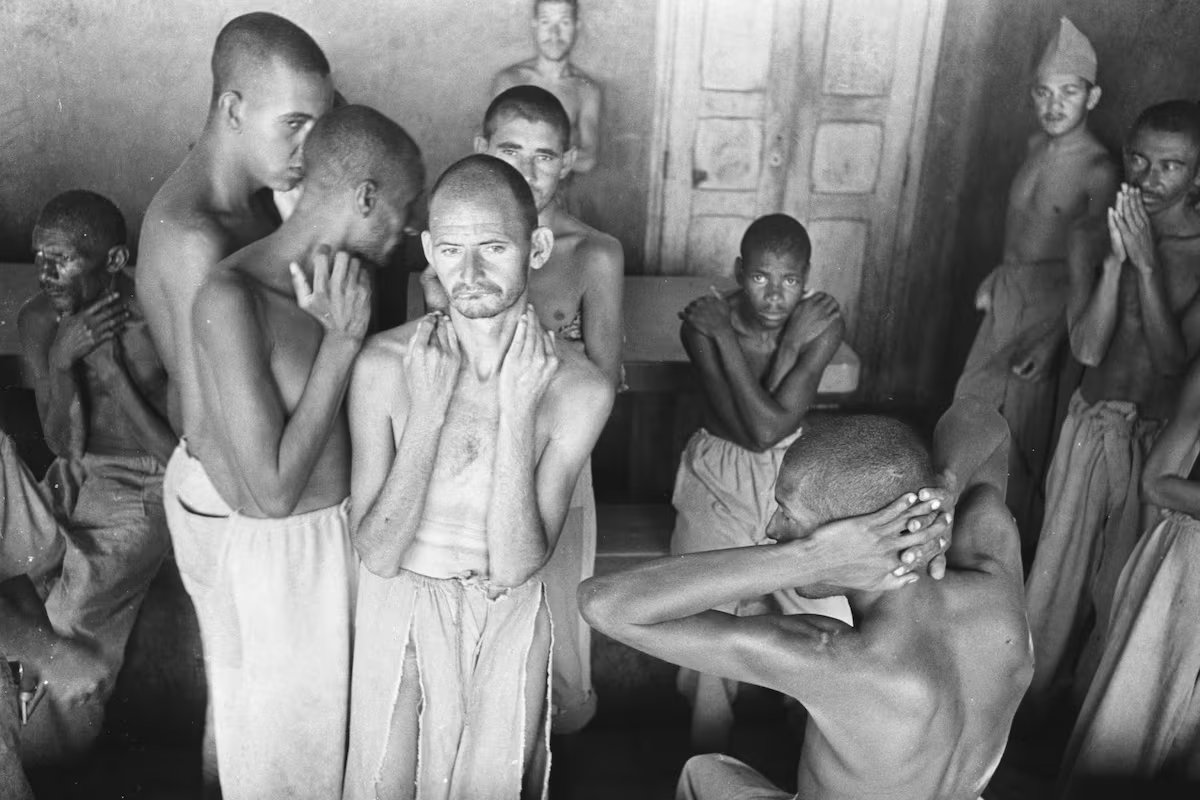
One of them, Marcos, refuses to wear clothes or shoes. He also cannot tolerate being touched or interacting with others. He is unable to speak. Such are the consequences of decades of neglect and inhuman treatment at an asylum where he was sent at age 10, the most infamous one in Brazil’s history. On Monday the Hospital-Colônia de Barbacena, where some 60,000 Brazilians died of hunger, cold and diarrhea up through the 1980s, closed its doors for good, and with it the cruellest chapter in Brazilian psychiatry. The last surviving patients — 14 elderly, ill people with no families and severe aftereffects, including Marcos — have been given a new home: a house in the rural area of Barbacena, still known as the city of the madmen.
A padlock on the main gate of the Hospital-Colônia, originally founded as a sanatorium for the wealthy and converted into an asylum in 1903, symbolized the momentousness of the act. “It is a moment of historical redress, of placing a definitive padlock on this history of pain and of remembering a past that must not be repeated,” said one victim, a patient named Bento, as reported by G1.
The departure of the final 14 patients ends a gradual relocation process for the more than one hundred survivors, who are heavily dependent and have for many years received humane medical care. Some were able to return to their families; therapeutic communities were created in the city for the rest. They live in small houses in groups, cared for by several professionals, as this correspondent observed when visiting one of those homes in 2021. On the Hospital-Colônia grounds, the Museum of Madness was opened to recount the grim history of what happened behind those walls up until the hospital’s closure in the 1990s. Barbacena learned from its own past and became a reference point for psychiatric care.
For much of the 20th century, Barbacena’s first and largest asylum functioned as a kind of dumping ground for supposed undesirables — women and men that society wanted to be rid of. Thousands of people — alcoholics, single mothers, homosexuals, epileptics, nonconformists, prostitutes, rebellious girls — were sent there by police, employers or their own families. Most were not mentally ill; they simply did not fit the prevailing social norms and people wanted them out of sight. So many people ended up there that a railway line ran all the way up to the door. The city specialized in rose cultivation and in institutions for the mentally ill.
The 14 remaining patients were the most disabled among the survivors. The initiative to move them to a new home came from the regional government of Minas Gerais. After renovating the facilities and humanizing psychiatric care, “it was believed they were very well cared for and that there was no need to remove them from there. But that is the place where they were dumped. You could give them the greatest affection in the world, the best food, the best care, and yet they would still always feel like they were in an asylum,” state health secretary Fábio Baccheretti told O Globo.
“So we decided that even a resident who has no contact with other people, who has many associated illnesses, who cannot walk outside, must leave that place to feel that he is not in an institution.” Everything suggests he was referring to Marcos.
The man who rejects clothes and footwear, who was institutionalized at age 10, is not actually named Marcos. Minas health authorities shared personal details of the last survivors with Radio Itatiaia but changed their names and mixed some characteristics to protect their identities. Amanda was dropped off at the asylum at age 13 because she suffered fits of rage and, moreover, was the daughter of a single mother. Simone is a sweet elderly woman confined to a wheelchair who has aggressive outbursts. Gabriel, who is blind, spends his days humming. We also know that one of them has reached 91 years of age, a feat after so much cruelty and deprivation.

For decades, Hospital-Colônia had no doctors or nurses, only guards to watch thousands of people who wandered the cells and yards naked, and who slept in circles to keep warm on cold winter nights.
There was a time when treatment was limited to two options: pink or blue pills, depending on the symptoms. Treatments once considered innovative, like lobotomy or electroshock, were also used for a time. Forced restraint and punishments were routine. In the name of security, cutlery was banned. Because they were fed putrid purees, many lost their teeth. They also lacked potable water.
So many people died that the hospital had its own cemetery. But even then not everyone received a burial. Some 2,000 corpses were sold to local universities. Recently the Federal Universities of Minas Gerais and Juiz de Fora publicly apologized for violating the dignity of those people.

In 1979 a foreign doctor visited Barbacena and testified to what was happening behind the walls. “Today I have been in a Nazi concentration camp. Nowhere have I seen anything like this,” said psychiatrist Franco Basaglia, a driving force behind psychiatric reform in Italy. Those words caused shock and gave impetus to the movement to profoundly reform and humanize psychiatric care in Brazil. The first photos of those starving human beings wandering with lost expressions were published in the 1960s in black and white by a Brazilian magazine, but they did not prompt drastic change.
The atrocities committed in the name of psychiatry had limited resonance outside and even within Minas Gerais. They were forgotten. When the reform began that turned asylums into psychiatric hospitals, journalist Daniela Arbex uncovered the story, investigated it, interviewed survivors, nurses and guards, and compiled her findings in a book titled Holocausto brasileiro, which became a bestseller and later a TV docuseries. She estimates that 70% of inmates were sane and that 80% of them were Black. Yes, there was a racist logic at work there as well.
Sign up for our weekly newsletter to get more English-language news coverage from EL PAÍS USA Edition
