
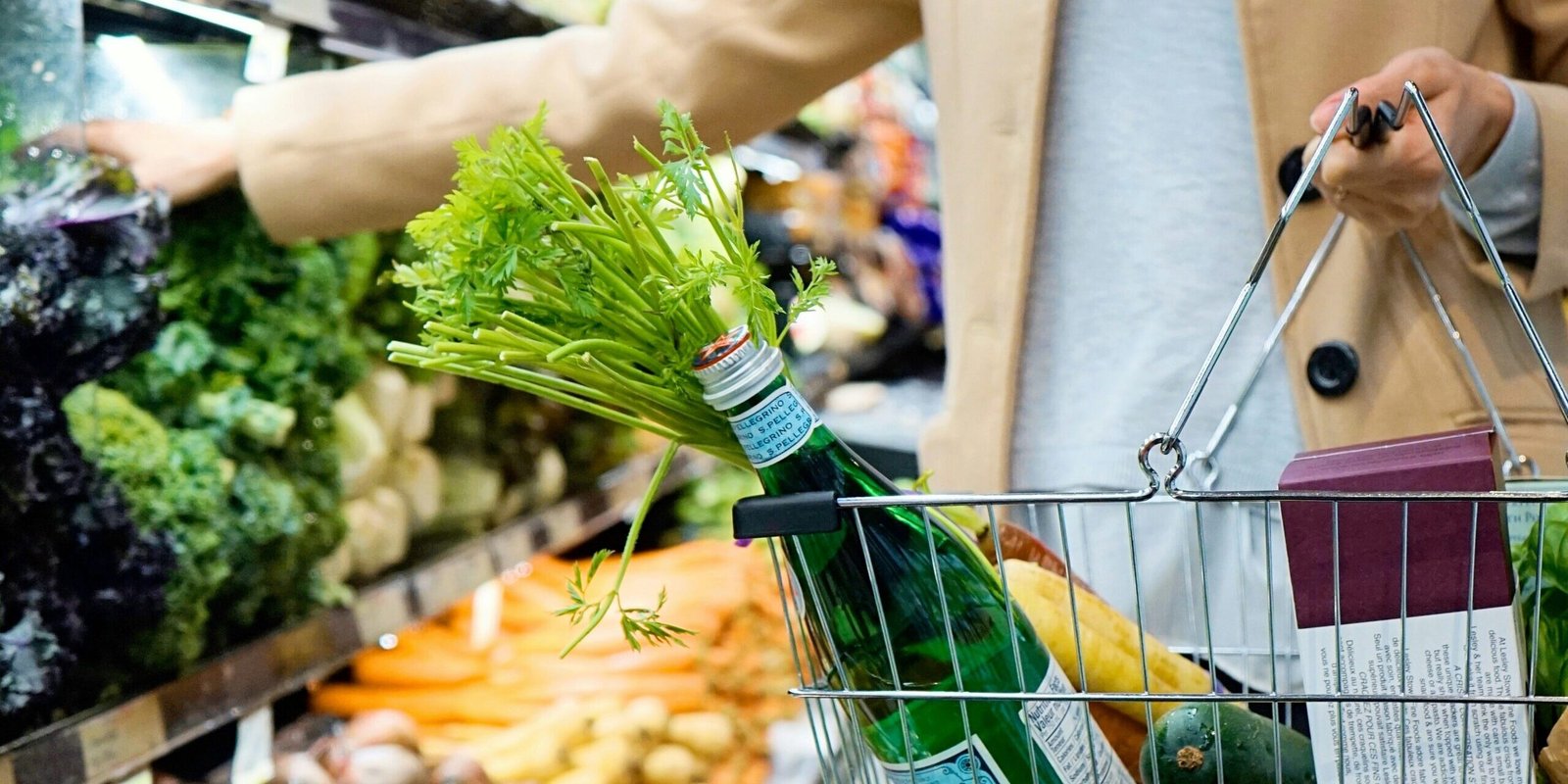
An increasingly prominent issue these days is the cost of food and discussion of various options to control the pricing and profiteering by food corporations across Canada.
Depending on what you are purchasing or where you live, the cost of groceries has increased at least 30 per cent since 2020. The cost of food is ranked as the main issue for more than 75 per cent of Canadians – above housing and above gas prices.
As noted in previous columns, the sale and distribution of food in Canada is concentrated. As is just five corporations – Loblaws, Metro, Sobeys, Costco and Walmart – control the market.
It’s estimated that one in four Canadians cannot afford the cost of food, and that figure rises to more than 40 per cent among Indigenous and Black communities.
The issue of food costs has been festering for some time. Now, the discussion about public grocery stores is heating up.
A few weeks ago I sat in on a webinar on public grocery stores organized by the Food Communities Network, a coalition of food policy groups and individuals working on food security. Within minutes of my logging on to the zoom presentation, the hosts had welcomed more than 300 participants just as eager as I was to learn more. The turnout amazed the hosts.
The webinar explored the possibilities of building a network of public grocery stores and shared knowledge from panellists in the US and Canada related to the investment required, accessing public distribution networks to ensure sourcing of food, and how best to maintain sustainable and affordable food systems. There was also important discussion about how family farmers and small producers might be linked into the public grocery store system. It’s clear that people, from consumers, community groups, to family farmers, have latched on to the possibilities. A recording of that online event is available here.
During the webinar, panelists also underscored that family farmers are not the cause of food inflation. Farmers’ income has declined in the past 20 years, and was not a rich living even prior to that. In fact for the past 20 years net income for farmers has been stagnant at close to 0.
The National Farmers Union (NFU) on April 23 2026 released a report titled “Fair Food Prices? The Declining Farmers’ Share and Food Inflation” which provides ample evidence of how farmers are being exploited for profit as well. The report graphically details farmers’ share of grocery prices by analyzing 14 farm gate products and their retail equivalent. The data confirms that corporate concentration in the food industry is creating bad outcomes for both farmers and consumers, and that it is a major contributor to a farm succession and ownership crisis that is jeopardizing national food security.
The NFU report emphasizes that four companies control 80 per cent of Canada’s grocery sales, four companies account for 88 per cent of Canada’s grain handling capacity, and two companies dominate Canada’s meat processing.
As “Fair Food Prices?” notes, last year alone the grocery oligarchs raked in over $6 billion in profits, an astounding 200 per cent increase over their average net profit of $2 billion a year between 2015-2019.
And large farms are not the solution – as witnessed by the credit protection recently sought by a large western Canadian farm and the largest in North America, Monette Farms.
The NFU report concludes that farmers and consumers must organize to compel the federal government to establish profit caps on the grocery oligarchs and to set up public grocery stores as non-profit competitors.
This video titled “Why Canada needs public grocery stores”, created by Food Secure Canada and its Food Analyst Aaron Vansintjan, offers some insight into the possibilities of a sustainable alternative public grocery store and distribution system.
Food Secure Canada also recently launched a campaign around public grocery stores bringing together players from across the food security movement.
Here is a snippet of the rationale behind the campaign. You can read more here.
“Why public grocery stores — and why now? — Food prices have risen nearly 30% since 2020, while supermarket chain profits have more than doubled. Farmers are struggling to make ends meet, and Canadians can’t even access food grown in their own country. A recent poll found that the grocery prices are the #1 economic concern. People are frustrated — and they’re looking for real solutions.
Public grocery stores are a proven model. Mexico and the United States military have been running them for decades. Our initial analysis shows that a network of 50 public grocery stores across Canada could save families between 30–45% on their grocery bills. But initial analysis is just the start. To bring this idea to our leaders, we need rigorous research into what models could work in Canada, deep knowledge of what has succeeded and failed elsewhere, and a broad public movement that makes the idea impossible to ignore.”
Meanwhile, in order to ensure longevity of a network of public grocery stores, it will also be necessary to have public food distribution systems, as well as access to quality food sources and supply chains. In other words, to build a viable alternative to the current retail and distribution food oligopolies, it will be necessary to break corporate control of the food chain – no small task. You can see why planning and strategizing is important.
It will also be necessary to ensure that the public grocery system cannot easily be dismantled by governments, as has been the case with other Crown Corporations and public federal programs in the past, as well as once publicly-owned transportation systems such as Via Rail. Would worker control be the answer? No doubt that aspect is under discussion.
This video from The Class Line is insightful and provides a deep dive into the issue.
The Canadian Centre for Policy Alternatives (CCPA) published a commentary a few months ago on its website. The commentary provides plenty of information on both the potential downsides of trying to organize public grocery stores as well as practices that could help maintain and support the initiative. For one, it is much more affordable than most might think and really puts the lie to the naysayers who believe it would be too expensive. It really is a matter of priorities and whether governments think that food should be used for profiteering, or indeed if it is a human right!
Take these few lines from the CCPA commentary:
“It would cost approximately $350 million for initial infrastructure to open 50 stores (40 in urban centres, 10 in remote regions), six distribution hubs, and run associated logistics. Annual operating costs, with government covering labour and overhead like rent, would be an additional $290 million—less than half the lifetime cost of one F-35 fighter jet. Canada recently cut a deal with the U.S. to buy 88 of them.”
Given this scenario, savings for a family could range from $2,500 to $10,000 annually. That is a chunk of change that many, many families and individuals could well use.
It really is a matter of priorities – fighter jets or food for the masses!
