
– Noufissa Charaï’s brilliant, intimist documentary focuses on Karima Nadir, one of a number of female activists in Morocco who are dedicating their lives to gaining recognition for women’s rights
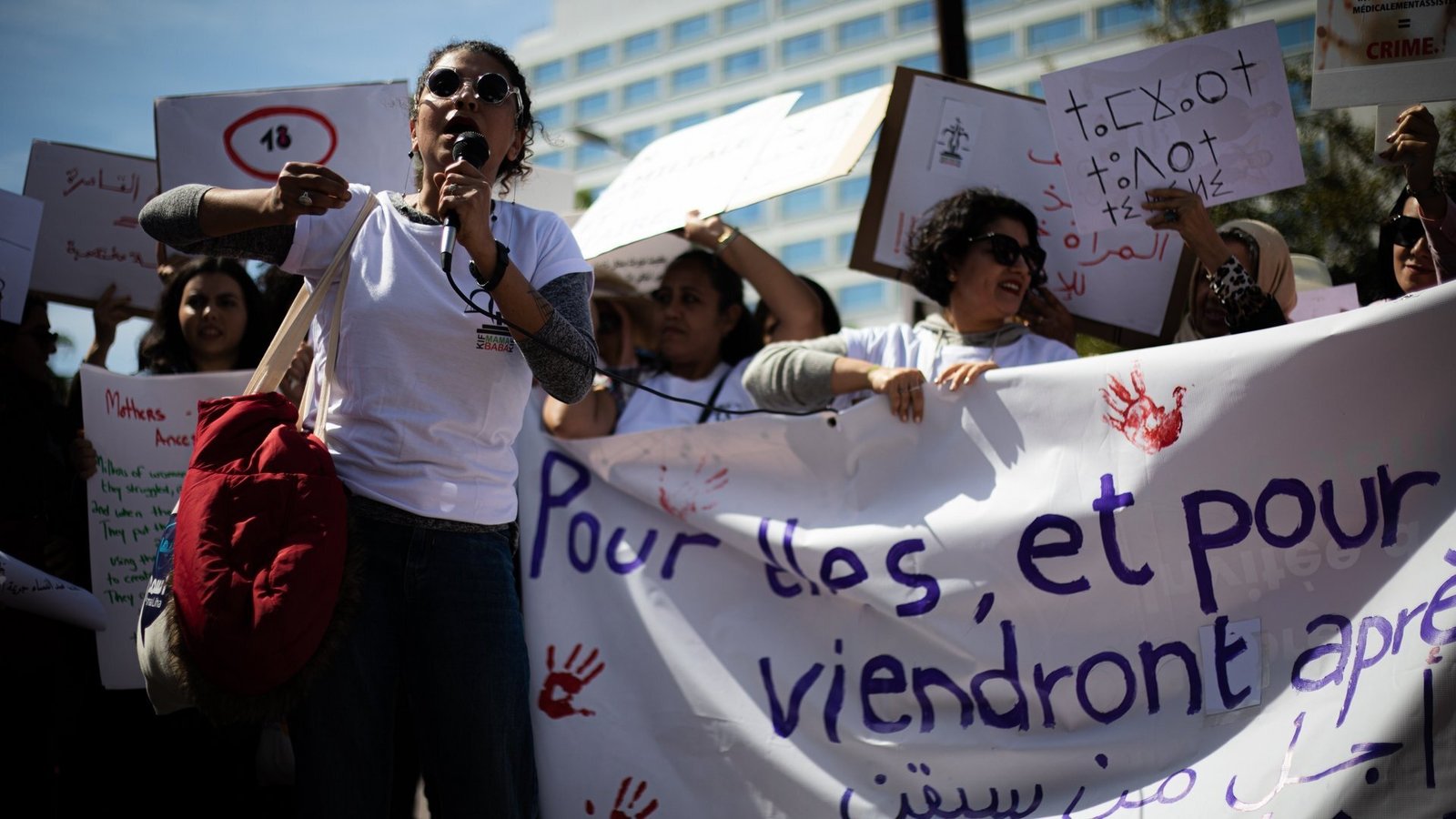
Leila Ahmed, who was the first professor of women’s studies in religion in Harvard, argued that the ethical philosophy of Islam, which presents an egalitarian view of the sexes, co-exists alongside a hierarchical view of marriage and gender relations which has been codified in the fqih legal system. Steeped in patriarchal ideas, the latter view has prevailed in the family codes of various Muslim countries. During and after the co-called Arab Spring, sexual and gender norms were called into question in new ways. In Morocco, the debate around abortion, which kicked off in the Nineties, accelerated in 2014-2015, alongside campaigns against violence against women and in support of gender equality, which were formally recognised by the Constitution in 2011. Women of Sin, a documentary by filmmaker Noufissa Charaï which world premiered in Berlin’s Doxumentale, homes in on Karima Nadir, one of a number of female activists in Morocco who are dedicating their lives to gaining recognition for women’s rights within the country’s Family Code.
As amply demonstrated by the documentary, the debate mostly revolves around article 490 of the penal code, which still treats sexual relations outside of marriage as a crime, turning thousands of women into outlaws. And as a 39-year-old single woman with a son, Karima Nadir has herself been stigmatised and considered “immoral”. After studying journalism and political science in Paris and San Diego, Noufissa Charaï joined France 24, working on its daily flagship TV show, Le débat, among other programmes, and was also the Paris correspondent for the Huffington Post Maghreb as well as for the Moroccan and African editions of L’Observateur. It stands to reason that her documentary is “investigative” in its approach, but it brings together Karima’s private and public lives seamlessly, to the point they’re practically indistinguishable, further aided by Benoît Sauvage’s accomplished editing.
Ultimately, every single morning, upon waking, Karima Nadir takes care of her elderly mother and her teenage son, Hakim, with whom she’s forged a very loving relationship, imparting her scrupulously ethical teachings. That same care continues throughout the day upon meeting women who have been raped at 13 years of age and who’ve had to suffer the humiliation of prison and subsequent social marginalisation while their abusers walked away practically scot-free. Her commitment continues within the remit of her collective, Kif Mama Kif Baba, which fights for women’s rights in Morocco and which Karima founded with lawyer Ghizlane Mamouni. From the demonstrations in the main square in Casablanca to the hearings in Parliament and at the Royal Commission in Rabat in November 2023 for the long-awaited reform of the Family Code, Noufissa Charaï shares the journey embarked upon by the women within this association, who end up playing a key role in the country’s debate on parental equality and single mothers’ rights. We also observe their most intimate moments, their jokes and their laughter, alongside family discussions which are lyrical, at times, enhanced by Otmane Oulad Si Haida and Ayoub El Bardii’s evocative photography. At one point, Karima writes a letter to her son: “I’m not a perfect mother. Over time, you’ll understand that my activism is a burden, but you’re not obliged to share this struggle, which I’m also leading for us”.
Following pleas from King Mohammed VI for urgent changes to the Family Code, in December 2023 the Moroccan government revealed the broader lines of the proposed reform. Measures include custody of children for mothers, even if they remarry, and shared custody of children, even following divorce. Measures around the need for DNA proof to establish paternity have been rejected, however, as have rules on equal inheritance. “The reform is a victory reassuring us that change is coming. But the situation of single mothers isn’t a priority for national politics”, Karima reflects bitterly. “But I won’t stop here, the fight goes on”.
Women of Sin is a co-production between France and Morocco via Babel Doc and Hiya Production.
(Translated from Italian)
