
– Gar O’Rourke’s second documentary examines the increasingly overstimulated ecosystem of tourists and beleaguered locals in the northwest Italian region of Cinque Terre
Of the four million tourists who visit the five small villages that make up Cinque Terre, most prefer to take photos of themselves with the iconic houses perched on the cliffs in the background. The 3,000-odd locals, however, say the opposite: that one must turn away from the ocean and face the land to truly understand the region. Embedded in this anecdote is the embattled situation faced down by Irish filmmaker Gar O’Rourke (Sanatorium, Ireland’s 2026 Oscars submission) in his newest documentary, The Siege of Paradise.
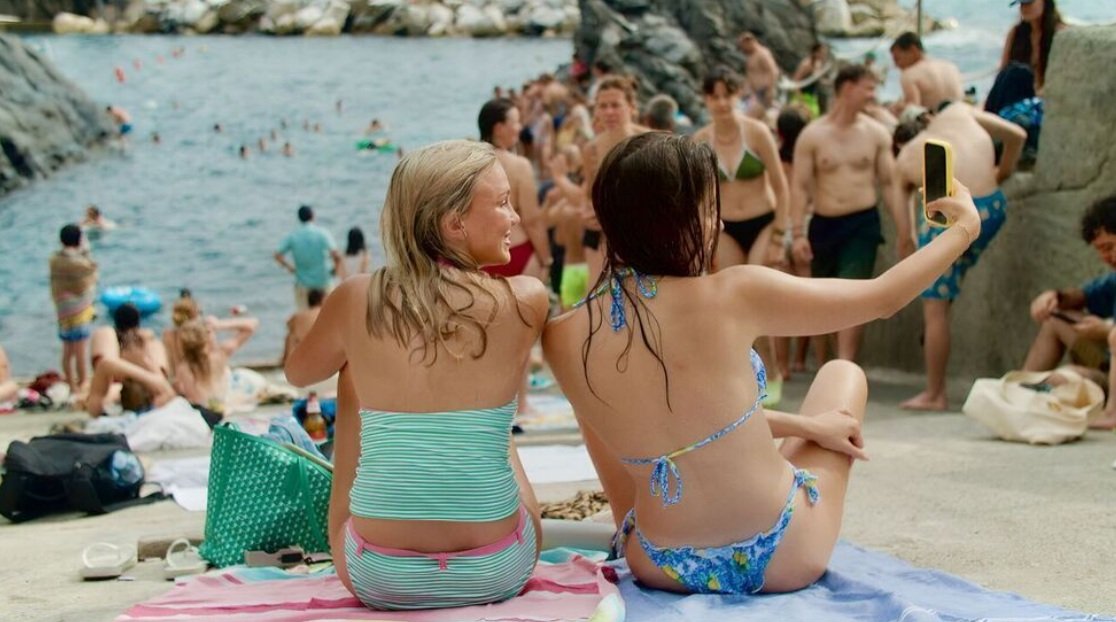
The film moves through a series of intertwined vignettes in the northwest Italian region: of Vernazza winemaker Bartalo Lerici with his ailing wife, Lise Bertram; a Corniglia restaurant owner and his daughter (Carmelo and Giorgia Verduci); Riomaggiore mayor Fabrizia Pecunia; and the travels of two Chicago-based influencers (Grace Andrews and Izabel Stewart). Yet, in spite of its suggestive title, The Siege of Paradise – which has just made its bow in the Tribeca Film Festival’s Documentary Competition – is surprisingly gentle in its indictment of the tourism industry.
Despite the mildly foreboding music that accompanies the first sighting of tourist ships, as if carrying a legion of soldiers ready to descend on the area, O’Rourke paints what looks to be a balanced picture of coexistence within this overwhelmed ecosystem. Grace and Izabel, though often hilariously oblivious, are depicted as genuinely well-meaning in their attempts to experience “Italian culture” – such as plastic buckets of Aperol spritz. Bartalo and Carmelo, meanwhile, begrudgingly accept that they need tourists for their businesses to thrive and occasionally enjoy sharing their knowledge. Perhaps the most fraught situation is that of Fabrizia, frustrated by not being able to legally stem the flow of tourists, as demanded by many locals.
In a region awash with painterly colours, from the waters to the terraced buildings, DoP Lukas Gut (who has just collected a Special Jury Mention for his work) brings them to the fore in full strength, combining the place’s warm beauty with a gentle sense of oversaturated unease. With this set of balanced tonal choices, O’Rourke lets images of shop transactions and beach crowds speak for themselves, rather than hammering home a particular call to arms. This is never a threatening tale: there is no subtextual message saying, “Do not come here.” All signs point to the filmmaker suggesting that tourists maybe aren’t innately the problem. Rather, it’s the sheer number of them that only keeps growing.
As if to lull us into a false sense of security, the film fully shouts its warnings and sounds the alarm bells only in its final scenes and moments. Nighttime shots of overcrowded train stations and city squares appear more nightmarish than welcoming, leaving the viewer to mull over these bleaker images as the credits roll. At a time where the same issue has befallen so many places worldwide, The Siege of Paradise doesn’t take a purely didactic approach to its perspective; it’s up to the viewer to be critical enough to read between the lines.
The Siege of Paradise is a production by Ireland’s Venom Film and Switzerland’s Dynamic Frame Production. MetFilm Sales has the rights to its world sales.
