
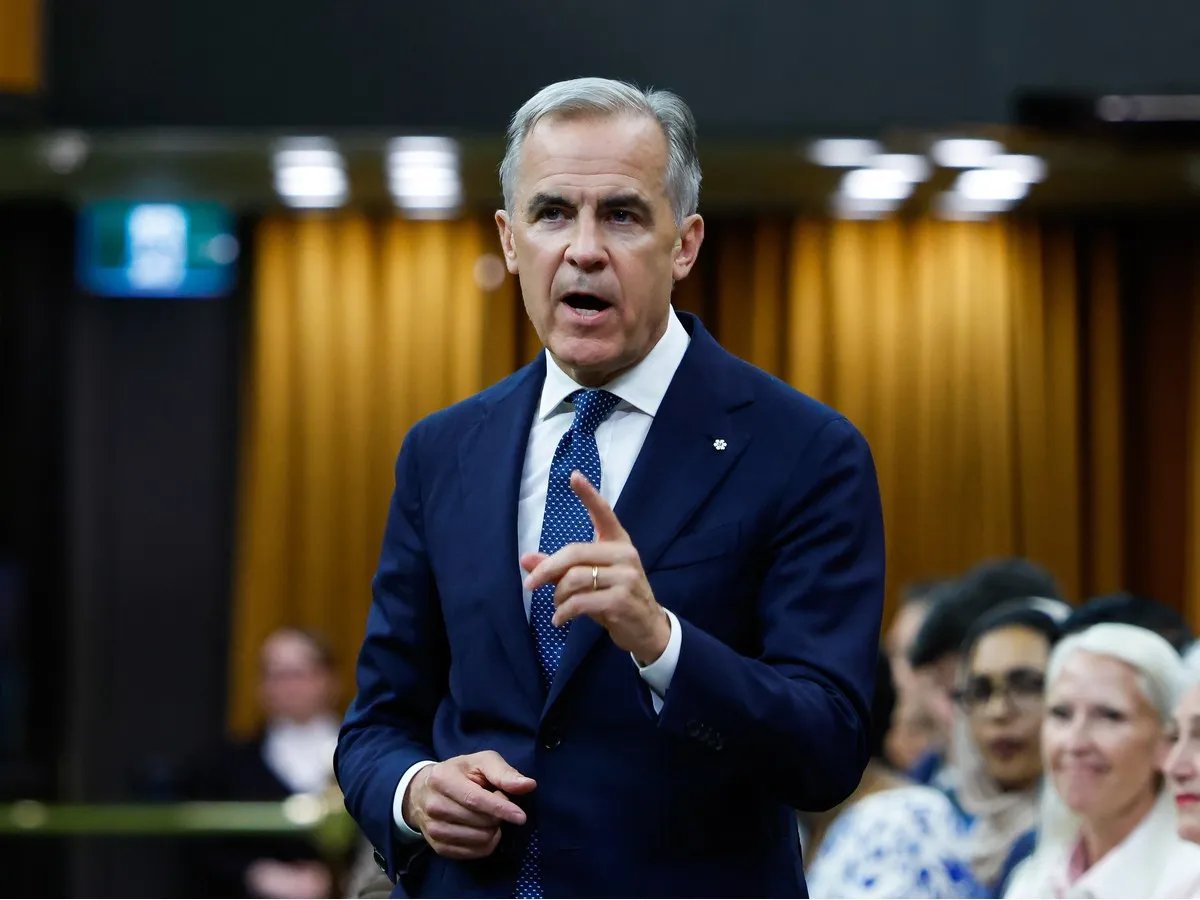
OTTAWA — Mark Carney’s Liberal government is using its majority to expedite the adoption of some controversial bills in the last week of sitting in the House of Commons, just before MPs head off to their constituencies for the barbecue circuit this summer.
Among the legislation that is fast-tracked this week is C-9, the Liberals’ anti-hate bill which has gotten backlash for a potential chilling effect on the preaching of religious texts , and C-30, the spring economic update bill which critics say could deregulate pesticide laws.
Opposition parties protested the use of time allocation motions, saying they are becoming routine with this government.
“Why is this government, once again, bringing the guillotine of closure and limiting debate?” Conservative MP Kelly McCauley said in the House on Monday. “Canadians sent us here to debate the issues, not have the government shut down debate.”
Wayne Long, who is secretary of state of the Canada Revenue Agency, said there had been a nearly 30-hour filibuster about C-30 in the finance committee. “We need to move on.”
The Conservatives used up much of that time asking about the bill’s aim to lower Canada Pension Plan (CPP) contributions. The bill would also seek to modify labour mobility for eligible tradespeople and to temporarily suspend the excise tax on gas and diesel.
A motion passed in the House late Monday evening instructed the finance committee to get moving on C-30, which it adopted on Tuesday morning in less than an hour.
Green Party Leader Elizabeth May attempted to temper the bill’s changes to the Pest Control Product Act — which she claimed would allow the use of potentially harmful pesticides in Canada in the name of national economic security.
“Stephen Harper’s government never touched toxic chemicals,” May said.
“Nobody has ever, in any government, of any political stripe, in my experience, proposed anything as appalling as this,” she said.
Bloc Québécois MP Alexis Deschênes decried that that section of C-30 has not been studied in committee and that many scientists were ready to speak on the matter.
Ryan Turnbull, parliamentary secretary to the minister of finance, has said that the changes would allow to include the consideration of food security and the costs of food and that the government would provide millions more to support Health Canada.
May’s amendments were ultimately defeated by the Liberals and the Conservatives, with only the Bloc Québécois voting in favour.
“It’s been wonderful to spend so much time with you, particularly over the last week,” said finance committee chair, Liberal MP Karina Gould, at the end of the meeting.
Meanwhile, the Senate — which is scheduled to sit until June 23 — is also expediting some of the government’s priority legislation, but not without some frustration as well.
The government’s representative in the upper chamber, Pierre Moreau, introduced a motion to pass C-16, which seeks to protect victims of crime, especially women and children, C-25, which amends the Canada Elections Act, as well as C-30 by Friday.
Paul Prosper, a senator from Nova Scotia, said that Senators have rushed through C-25, focusing their studies mainly on privacy concerns and the issue of the “longest ballot” advocacy campaign but have not have enough time to study foreign interference in elections.
“Yet, once again, the government is using a number of tactics in the book to curb debate,” he said. “Competing priorities, other Senate business and proper meals and sleep are, apparently, not within the government’s problem.”
Prosper proposed that the study on C-25 be extended until October to allow the Senate to do its work properly. Other senators, like Julie Miville-Dechêne, agreed, saying, “We’re being asked to rubber-stamp bills. We’re being asked to act like doormats.”
Moreau said the government could not support Prosper’s amendment because Elections Canada has indicated it needs approximately six months to implement the changes, and the government will have to hold by-elections to replace a number of departing MPs.
Prosper’s amendment to extend the study of C-25 was defeated in the Senate.
Despite claims from the government that opposition parties are obstructing parliamentary work, some bills have managed to go through all stages. That is the case for the government’s bill on bail reform, C-14, which received royal assent on Monday.
Justice Minister Sean Fraser praised the premiers, municipal leaders and law enforcement officials, which he said all contributed to the success of this legislation — now law.
“This bill, very importantly, was not designed behind closed doors on Parliament Hill. Its strength is really from the source of collaboration we’ve had from different partners from across the country,” Fraser said during a press conference on Tuesday.
“We’ve taken a major step forward,” he added. “And the reason why we were able to do it is because we’ve done it together.”
Minutes later, his colleague at public safety, Gary Anandasangaree, complained that C-22 — a contentious bill which gives police and intelligence agencies invasive powers — was not moving quickly enough in parliamentary committee and blamed the Conservative opposition.
The government is, once again, restricting debate to pass C-22 by Friday.
National Post
calevesque@postmedia.com
Our website is the place for the latest breaking news, exclusive scoops, longreads and provocative commentary. Please bookmark nationalpost.com and sign up for our newsletters here.
