
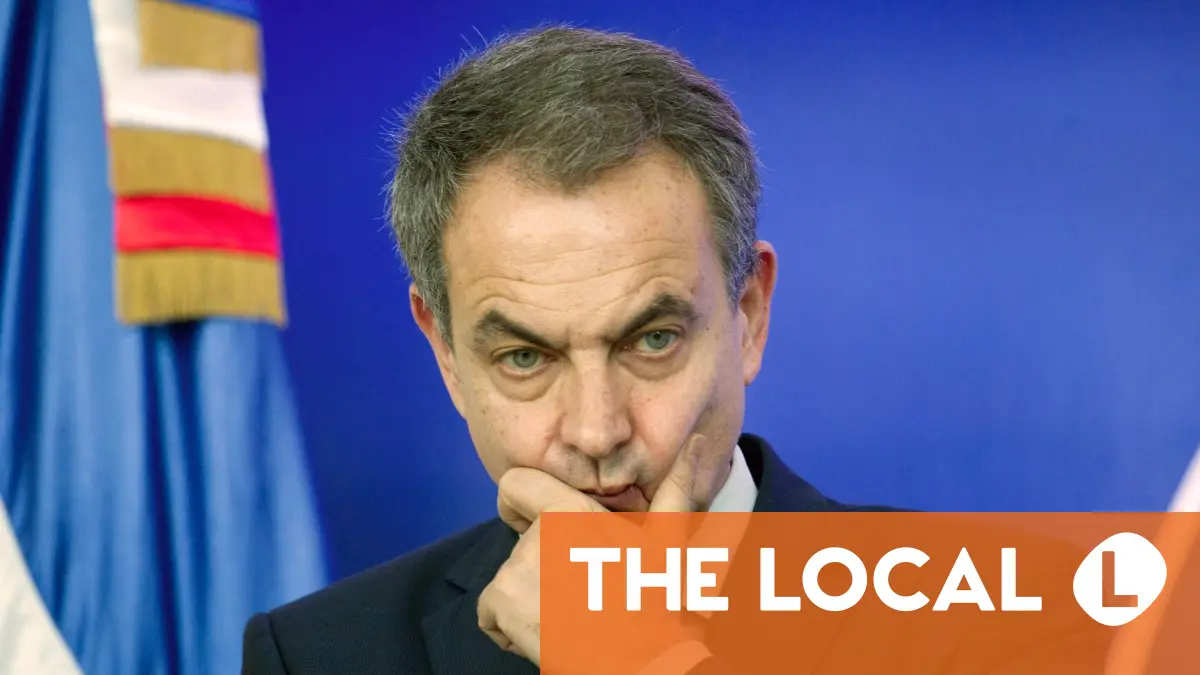
José Luis Rodríguez Zapatero spearheaded landmark social reforms during a seven-year premiership that endeared him to the Spanish left – but recent suspicions of corruption have tarnished his once spotless reputation.
The Socialist titan, who governed Spain from 2004 to 2011, was an asset for a party currently grappling with a series of scandals that have damaged its popularity ahead of a general election expected in 2027.
“What matters in life? Trying to help others, living together, showing solidarity, caring about those suffering discrimination, about those who suffer the most, the weak. That is what lets you breathe easy,” Zapatero told a Socialist rally in May.
A few days later, the 65-year-old former constitutional law professor became the first serving or former Spanish prime minister to be placed under formal legal investigation.
The case centres on the €53-million ($61.5 million) state bailout of small airline Plus Ultra in 2021, and whether Zapatero used his influence to secure the money in exchange for commissions.
The shock for the left deepened after a police search of Zapatero’s office found a safe containing jewellery worth €1.3 million, expanding the probe to include alleged tax fraud.
Zapatero denies the allegations against him. “Everything that I have earned is the result of my work, it’s declared under income tax,” he told Onda Cero radio.
No to Iraq War
The popularity of Zapatero’s premiership rested on key social reforms: same-sex marriage, social care, abortion, and a “historical memory” law to honour the victims of General Francisco Franco’s dictatorship.
The latter issue was particularly dear to Zapatero, whose grandfather was shot dead in 1936, the year in which the civil war that brought Franco to power broke out.
His victory in a 2004 general election came against the odds as the ruling conservative Popular Party (PP) was expected to secure another triumph.
But jihadist bombings on several trains in the Madrid region just days before the vote killed more than 190 people and ripped up the script.
Voters believed the bombings were retaliation for Spain’s support for US president George W. Bush’s widely unpopular invasion of Iraq in 2003 and punished the PP at the ballot box.
“I took charge of the government of Spain three days after the worst terrorist attack in our country’s history… comparable to the political shock that the Twin Towers attack caused in the United States,” Zapatero wrote in his book “The Peaceful Solution”.
As opposition leader, Zapatero had refused to stand before a US flag during a military parade, a gesture of resistance compared with Prime Minister Pedro Sanchez’s rift with the current occupant of the White House, Donald Trump.
Zapatero won plaudits for withdrawing Spain from Iraq in 2004, while armed Basque separatist group ETA, which killed almost 900 people, announced the end of its activities during his tenure.
‘Bambi’ image
Zapatero prided himself on moderation and dialogue. While supporters praised his kindly image, critics mockingly nicknamed him “Bambi”.
“Bambi was the film that my elder daughter made me put on time after time when she was little. I love Bambi. There remains the idea that the character is a little naive. I don’t think I am,” he told El Mundo daily in 2014.
The global recession of 2008 undid some of his government’s social progress through the implementation of harsh austerity measures, including cuts to public wages and a freeze on pensions.
Zapatero was blamed for neither foreseeing nor handling the risk in time, with the threat of external intervention by international institutions looming over the country at one point.
Zapatero called early elections in 2011 but declined to run as the PP dealt a stinging defeat to the Socialists, who would have to wait until 2018 to return to power under Sanchez.
Article by Alfons Luna.
