
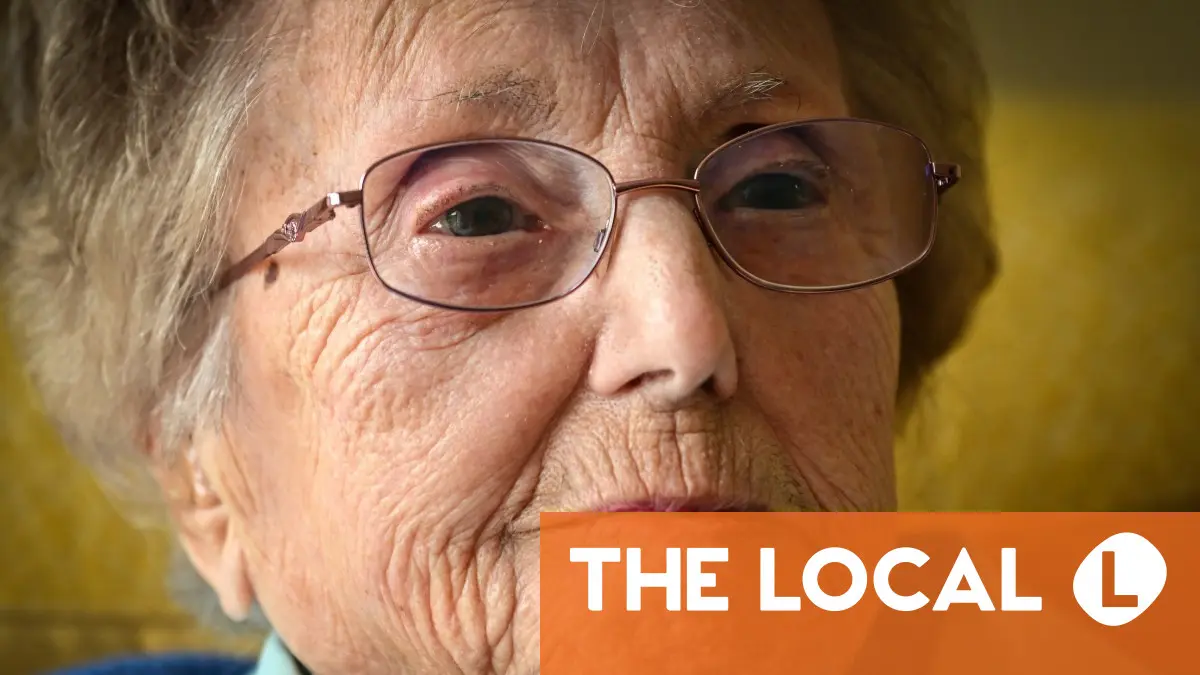
Carmen Cid was just eight when in 1937 she boarded a ship with 4,000 other children bound for Britain to escape the Spanish Civil War. She was among those who never returned home.
“We thought we were going on holiday,” the now 97-year-old told AFP.
Travelling with her sister Edurne, 11, and her brother Jose Luis, 10, they left their home in Bilbao, in Spain’s northern Basque region, onboard the SS Habana for Southampton, England.
“My mother took us to the boat and we never knew anything else,” recalled Cid, speaking at her home in Carlisle, northwest England, where she lives with her son, Luis Eckersley, 66, and daughter-in-law.
“We were told that we would return in three months’ time when the armies of Franco had been thrown back from a safe distance from Bilbao,” she said, referring to Spanish dictator Francisco Franco.
“I can remember all the kids were screaming and crying for their parents. I’ll never forget that.”
Civil war broke out in Spain in 1936, bringing Franco to power in 1939. He set up an authoritarian regime which lasted until his death in 1975.
READ ALSO: How disinformation about Franco flourishes online in Spain
Cid’s father, Francisco — a shipyard worker in Bilbao who supported the Republican side loyal to the then-government — was imprisoned from 1937 to 1949.
Her mother, Frutosa, a nurse, heard about the evacuations and decided to send her children away to protect them from the conflict.
A stolen life
The April 26th 1937, bombing and devastation of Guernica, near Bilbao, by Nazi Germany and Italian forces who backed Franco, led to the evacuation of between 32,000 to 50,000 children from northern Spain.
They went mainly to France, Britain, the Soviet Union and Belgium.
Those who left on the steamboat Habana to the UK were kitted with small cardboard hexagons with their name, an identification number and the words “Expedición a Inglaterra” (Voyage to England).
READ ALSO: Eleven must-watch films about the Spanish Civil War
To preserve the memory of the kids who became known as the “Children of the War”, the Basque Children ’37 association was founded in 2002.
It now only counts four surviving members of those child evacuees in the UK, including Cid.
97-year-old Carmen Cid (R) pictured with her son Luis Eckersley. (Photo by Andy BUCHANAN / AFP)
“I feel like I was robbed in my life. And I made sure, when I had any children, I would never separate my children from me,” Cid said.
The nonagenarian says she can still understand Spanish, but struggles to speak it, and prefers to express herself in English.
READ ALSO: How Spain has paved the way to citizenship for descendants of Franco-era exiles
After his release from prison in 1949, Cid’s father went into exile with his wife, first to southern France and then to Glasgow in Scotland, where two of their children lived.
Francisco found work in the shipyards and the couple initially stayed with their other daughter, Edurne, before getting a home of their own.
Foster Families
While most of the 4,000 children who landed in Southampton in May 1937 eventually returned to Spain, around 500 could not, as their parents were imprisoned or had died.
Carmen and her siblings were first housed, along with about 100 other children, in a hostel in Brampton, near Carlisle, before being placed with foster families.
Carmen was taken in by the family of Norman Alford, a young lithographer and supporter of the Spanish Republicans, who persuaded his parents to host a war child.
READ ALSO: Spain to grant citizenship to 170 descendants of International Brigades
Edurne and José Luis were taken in by Scottish families in the Glasgow area.
“My uncle (José Luis) wasn’t as lucky because he ended up being seriously ill and in hospital because the family that looked after him didn’t have sufficient funds and didn’t care for him in the same way,” said Eckersley, Cid’s son.
Cid, who visited the rest of her family whenever she could, remained with her foster family in Carlisle until she married at 23.
She left school at 14, worked in a clothing factory, and later met Clifford Eckersley, a Carlisle hairdresser.
Thanks to her married name, Cid was able to travel to Spain several times with her husband and their two children while Franco was still in power.
But like her parents and siblings — who have now all passed away — she remained in the United Kingdom, building a new life in the country.
Article by Pablo San Román
