
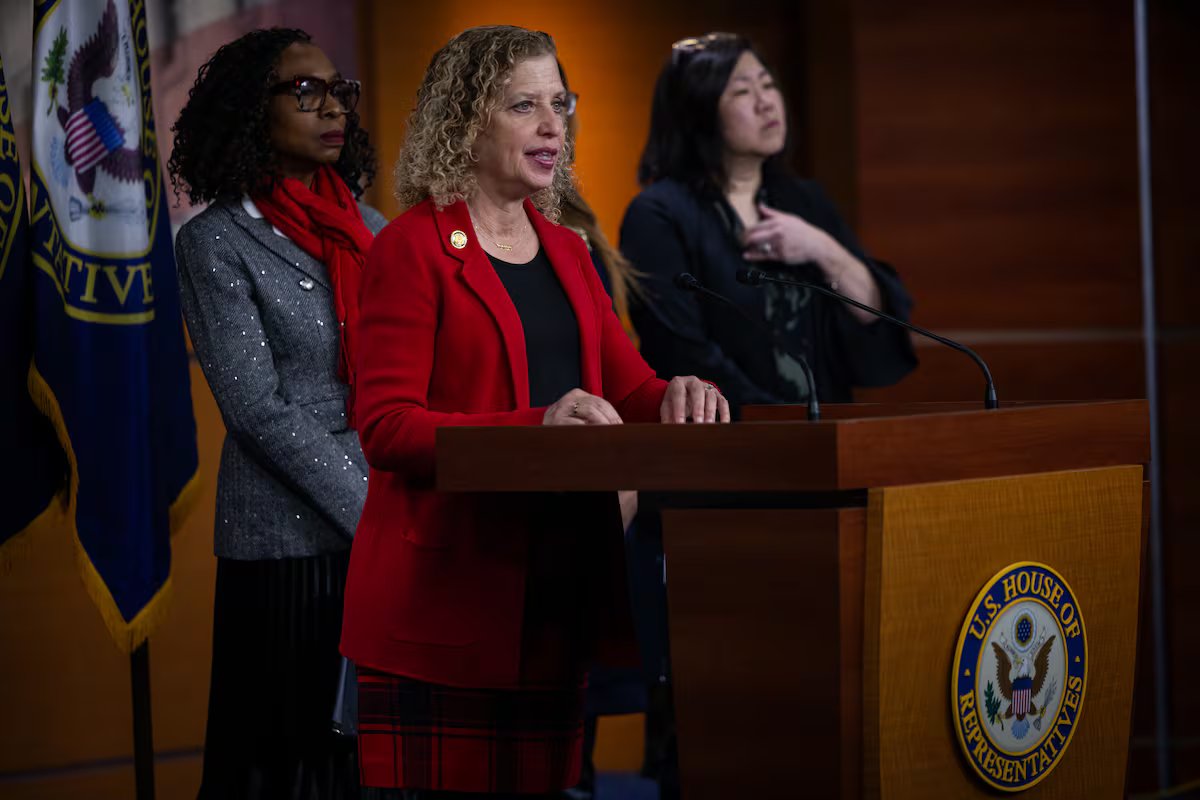
The ripple effect of the Republicans’ political maneuvering to secure a congressional majority has opened a rift within the Democratic Party in Florida. The new electoral map promoted by Governor Ron DeSantis altered the electoral geography so dramatically that it erased District 25, the seat Debbie Wasserman Schultz previously held in Broward, north of Miami, leaving the congresswoman living in another district and her voters dispersed into other, more Republican-leaning districts.
Wasserman Schultz is now running for the nomination in District 20, a Black-majority Democratic stronghold north of Miami that became vacant after Sheila Cherfilus-McCormick resigned in April. For Wasserman Schultz, who has represented Broward voters for more than 20 years, District 20 is one of the few viable options to remain in Washington.
But the fact that Wasserman Schultz is white and is seeking to represent a Black-majority congressional district in Florida has highlighted a dilemma for Democrats: redistricting has cornered them ahead of the November elections, forcing them to compete against one another for a shrinking number of safe seats while the new map has reduced minorities’ opportunities for representation.
According to Andra Gillespie, an expert on Black politics and electoral participation, the dispute is a direct consequence of redistricting. “Republicans are taking advantage of the lack of oversight to redraw districts to their advantage. If that means combining a Black-majority Democratic district with a white-majority Democratic district so Democrats have to compete against each other for the same seat, they will do it.”
In April, the U.S. Supreme Court struck down a key part of the Voting Rights Act of 1965, a cornerstone of the U.S. electoral system that prohibits racial discrimination in elections. DeSantis had been waiting for that ruling to advance his new map, designed to give his party four additional seats, and last week the Florida Supreme Court allowed it to be used in the upcoming elections. Florida’s primary elections are scheduled for August 18.
Florida retains only one Black-majority congressional district, District 24, represented by Frederica Wilson in Miami-Dade and Broward. But District 20 — which covers parts of northwest Broward County and southern Palm Beach County and has been represented since its creation by Black legislators — remains a Black access district, one of the few where Black voters retain sufficient electoral weight to elect candidates of their choice. Both are considered the state’s most solidly Democratic districts.
Tensions were evident on Wednesday at a forum organized by Black Democratic leaders in Broward, where the contenders shared the stage, including Wasserman Schultz, whom they accused of political intrusion, before an audience of about 150 people, mostly Black voters. The congresswoman defended her candidacy during the nearly two-hour event, appealing to her experience in Washington and the federal resources she has secured for her district over her career.
Cherfilus-McCormick, who has filed to run again after resigning in April amid accusations of diverting federal funds —which she has denied— said during the debate, referring to Wasserman Schultz, that it was necessary “to talk about what is wrong right now: someone coming into our district looking for a more favorable political opportunity.” Another candidate, Elijah Manley, a teacher and activist from Fort Lauderdale, said the community would not return “to a time when there were no Black people in Congress,” and that while Republicans were “doing everything they can to silence Black voices,” he did not expect members of his own party to do the same.
In a statement sent to EL PAÍS, Wasserman Schultz said she has dedicated her life “to fighting for Broward County,” and that she wants “to keep working to make life more affordable for families in Congressional District 20, who are stretched thin because of Trump’s MAGA agenda.” “Over the years I have secured billions of dollars in funding for parks, drinking water, public transit and many other projects in Broward, as well as the jobs those resources create. That is why I am running: to continue bringing resources to Broward residents who know me, trust me and want me to continue this crucial fight for our families against Trump’s costly and corrupt agenda,” she said.
The debate has reached the Democratic Party leadership. Nikki Fried, chair of the Florida Democratic Party, said she was “disappointed” by “the congresswoman’s refusal to engage in meaningful dialogue about her decision, especially after our Democratic ecosystem worked so coordinatedly to oppose the Republicans’ redistricting.”
House Democratic Leader Hakeem Jeffries declined to endorse Wasserman Schultz’s candidacy, despite saying he supports all sitting Democratic members of Congress.
In a statement issued late last month, the Florida Black Democratic Caucus said that for generations Black Americans have fought for the right to vote so that it “translates into meaningful representation.” District 20 “was designed to remedy decades of racial exclusion and ensure that Black communities have the opportunity to elect leaders who truly reflect their experiences and needs,” the organization said.
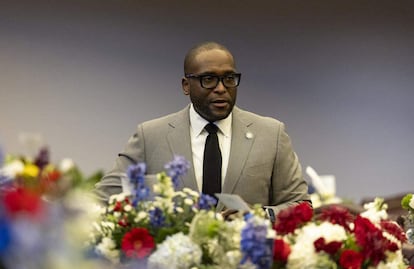
State Senator Shevrin Jones of Miami, who is Black and an ally of Wasserman Schultz, has said he will not support her candidacy. “This is not about Debbie [Wasserman Schultz], because she has shown she can lead. My fight is for Black representation, and my goal is to expand it, not reduce it,” he said.
According to Gillespie, the controversy is not solely about the candidate’s race, since other white legislators have effectively represented Black-majority districts, but about the broader impact on representation. “What is at stake is that there will be fewer Black Americans in Congress relative to their share of the U.S. population.”
“There is a loss when Congress does not reflect the country’s composition. Black representatives represent their districts in ways that benefit Black voters. For example, although Democrats in general tend to take more progressive stances on civil rights than Republicans — and therefore it would be preferable to have any Democrat in a congressional seat rather than a Republican on those issues — differences remain between Black Democrats and white Democrats. That is a question long established by studies of how lawmakers vote,” she explained.
“Moreover, Black voters represented by Black legislators tend to give them higher approval ratings, and Black representation also increases political participation and electoral mobilization,” she concluded.
Sign up for our weekly newsletter to get more English-language news coverage from EL PAÍS USA Edition
